

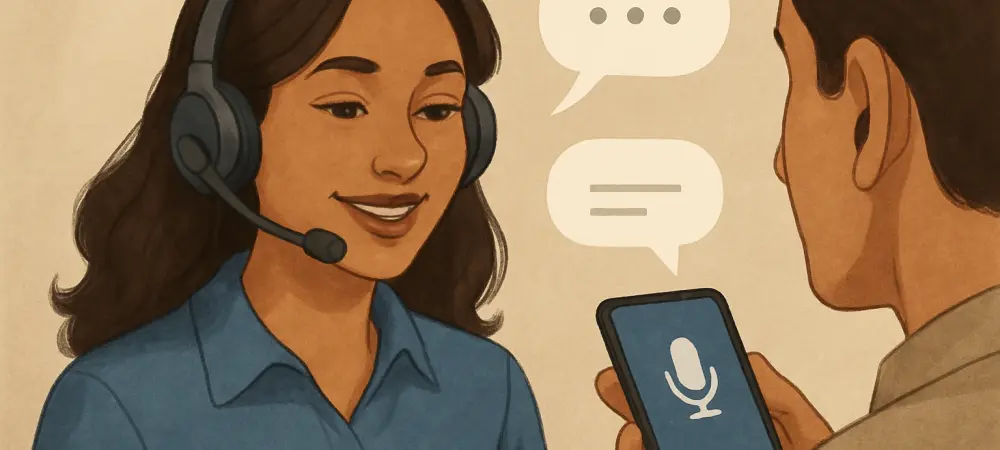
I’m thrilled to sit down with Aisha Amaira, a renowned MarTech expert whose passion for blending technology with marketing has reshaped how businesses uncover critical customer insights. With her deep expertise in CRM marketing technology and customer data platforms, Aisha brings a unique perspective to the evolving world of customer service. Today, we’ll dive into her thoughts on the transformative power of voicebots, the shift away from outdated systems, and the exciting future of human-AI collaboration in contact centers.
How did your experience at Customer Contact Week in Nashville shape your perspective on the role of voicebots in customer service?
Attending Customer Contact Week in Nashville was a real eye-opener for me. I got to see firsthand how voicebots are no longer just a futuristic idea but a practical solution that’s already changing the game. The energy around Conversational AI was palpable, and it reinforced my belief that we’re on the cusp of a major shift in how businesses interact with customers. What struck me most was the focus on making technology feel more human—voicebots aren’t just about efficiency; they’re about creating better experiences.
What frustrations have customers faced with traditional touch-tone IVR systems, and why do you think they’ve been such a pain point?
Traditional touch-tone IVR systems have been a source of frustration for years because they often feel like a barrier rather than a bridge to help. Customers get stuck in endless menus, pressing buttons without getting to the right department, and often have to repeat themselves when they finally reach someone. It’s time-consuming and impersonal. These systems were built for structure, not flexibility, and they just can’t handle the nuances of real human needs or emotions.
How do voicebots, powered by Conversational AI, offer a better solution to those long-standing customer frustrations?
Voicebots are a game-changer because they can actually listen and understand, thanks to technologies like Natural Language Processing and Generative Large Language Models. Unlike IVR systems, they don’t force customers into rigid paths. They pick up on intent, even if someone’s upset or unclear, and respond in a natural, conversational way. This cuts down on wait times and makes the interaction feel less like a chore and more like talking to a helpful person.
Can you explain the concept of the ‘bionic contact center’ and why it’s such an important model for the future?
The bionic contact center is this incredible hybrid approach where AI and human agents work hand in hand. AI handles repetitive, data-heavy tasks—like pulling up customer info or solving straightforward issues—while humans step in for empathy, complex decisions, or situations needing a personal touch. It’s important because it balances scale with care. Businesses can manage huge volumes of calls efficiently, but customers still get that human connection when it matters most.
What role do advancements like reduced latency and better noise handling play in making voicebots more effective for customers?
These advancements are huge because they make conversations with voicebots feel seamless. Reduced latency means there’s no awkward delay when you speak—the bot responds almost instantly, just like a person would. Better noise handling ensures the bot can understand you even if there’s chaos in the background, like kids yelling or traffic noise. Together, these improvements create a smoother, more reliable experience that doesn’t leave customers frustrated or misunderstood.
Between full call automation and human-AI collaboration, which approach do you think will have a bigger impact on customer satisfaction in the long run?
I think human-AI collaboration will ultimately have the bigger impact on satisfaction. Full automation is fantastic for quick, routine stuff—like checking an order status—and it definitely reduces wait times. But when things get tricky or emotional, having a human supported by AI ensures the customer feels heard and valued. That blend of speed from AI and empathy from humans builds trust, which is the foundation of lasting satisfaction.
How do you envision the future of voice AI evolving to further enhance the customer journey?
I see voice AI becoming even more proactive and intuitive through what’s called agentic AI. These systems will be able to think on their feet, pulling from various tools and data sources to solve unique problems without sticking to a script. Imagine a voicebot that not only resolves your issue but anticipates your next question or offers personalized suggestions. The focus will be on making every interaction effortless, while still keeping the human element at the core of the experience.
What’s your forecast for the role of voicebots in customer service over the next decade?
Over the next decade, I believe voicebots will become the standard first point of contact for most customer interactions. They’ll handle an even wider range of issues with greater accuracy, thanks to ongoing improvements in AI. At the same time, I expect the collaboration between AI and human agents to deepen, creating a truly seamless experience where customers won’t even notice the transitions. The ultimate goal will be to make customer service so intuitive and personalized that it feels less like a transaction and more like a conversation with a trusted friend.