

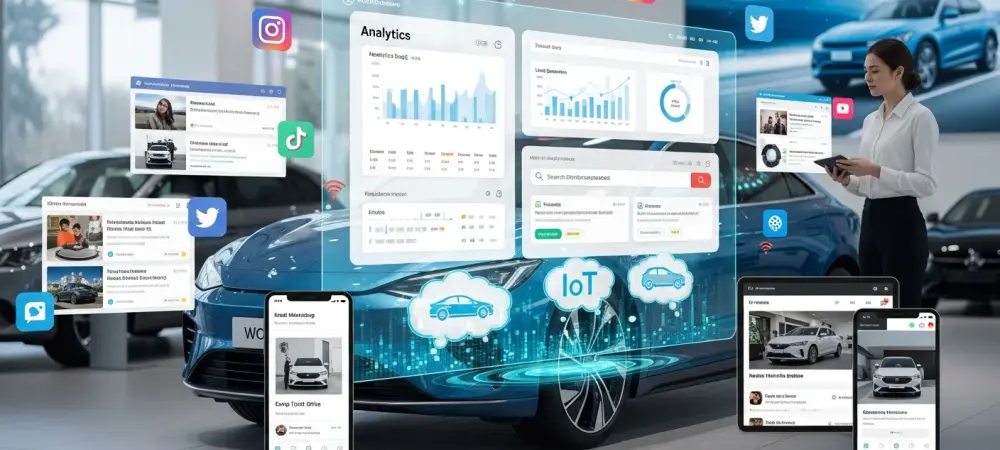
The era of measuring automotive marketing success through vague engagement metrics has finally collapsed under the weight of sophisticated consumer expectations and tightening digital privacy standards. Today, the modern dealership survives not on the volume of its digital activity, but on the precision of its outcomes. As buyers move fluidly between third-party marketplaces, social media platforms, and direct search, the demand for a hyper-focused, outcome-based digital operation has become the baseline for profitability. This transition represents a fundamental move away from traditional advertising toward a sophisticated marketing operating system that prioritizes data integrity and lead optimization over simple brand awareness.
The significance of this evolution cannot be overstated, particularly as privacy controls and shifting buyer behaviors force a more disciplined approach to customer acquisition. The modern shopper no longer follows a linear path; instead, they expect speed, relevance, and a sense of reassurance at every digital touchpoint. Retailers who fail to provide this seamless transition often find that their marketing spend effectively subsidizes their competitors by driving interest that they cannot adequately capture. To combat this, industry leaders are adopting a rigorous ten-step discipline that integrates automation with high-quality human follow-up. This methodology ensures that every dollar spent on digital visibility is backed by a robust infrastructure designed to prevent lead waste and maximize the return on investment.
This ten-step discipline serves as a repeatable operating model rather than a series of isolated projects. By covering everything from the foundational accuracy of customer data to the integration of advanced predictive analytics, this approach sets a clear expectation for performance. It moves the conversation away from “how many clicks did we get” toward “how many vehicles were sold and what was the precise cost of that acquisition.” As this trend accelerates, the gap between the top-performing dealer groups and those relying on outdated methods continues to widen, making the adoption of a unified digital journey an urgent commercial necessity.
The Shift Toward Performance-Driven Digital Strategies
Market Evolution and Adoption Statistics
The disparity between high-intensity marketing activity and actual sales results has become increasingly apparent in the current automotive landscape. While many dealerships continue to flood digital channels with content, the most successful retailers have pivoted toward precision. Recent data indicates that automated campaigns are no longer just a convenience but a primary driver of high-value interactions. For instance, finance renewal outreach programs have demonstrated an impressive 62% open rate, suggesting that customers are highly receptive to personalized, timely communication that addresses their specific ownership cycle. This shift proves that relevance, rather than sheer volume, is the most effective tool for maintaining a healthy sales funnel.
Performance metrics are also undergoing a significant transformation, moving from “fuzzy” lead counts to more concrete benchmarks like Customer Acquisition Cost (CAC) and Cost Per Lead (CPL). Dealerships are finding that a high volume of low-quality leads often does more harm than good by overwhelming sales teams and obscuring the truly motivated buyers. By focusing on the cost required to generate a legitimate sale, retailers can more effectively allocate their budgets toward channels that deliver the highest conversion rates. This level of granularity allows for a more agile response to market fluctuations, ensuring that marketing spend is always working toward a measurable bottom line rather than just inflating engagement statistics.
The rise of artificial intelligence in the research phase has further complicated the buyer journey, as tools like ChatGPT now influence how modern buyers shortlist local dealerships. These AI-driven research tools allow consumers to ask complex questions about stock availability, reputation, and pricing before they ever visit a dealership website. Consequently, the importance of maintaining an accurate and visible digital footprint has skyrocketed. Dealerships must now ensure that their data is not only accessible to human searchers but also structured in a way that AI discovery tools can parse and recommend. This new layer of search optimization is quickly becoming a critical component of a comprehensive digital strategy.
Real-World Applications of the Digital Operating System
Leading dealer groups are actively dismantling their disconnected marketing silos in favor of a unified digital journey. This shift involves moving away from isolated social media campaigns or search engine marketing and instead viewing the entire digital presence as a single, cohesive experience. By creating a frictionless path from the initial discovery on a third-party marketplace to the final finance application on the dealer’s own site, these retailers are significantly reducing the chances of customer drop-off. The goal is to provide a consistent brand voice and a seamless technical experience that reflects the professionalism found in the physical showroom.
Central to this unified journey is the implementation of “clean data” protocols that allow retailers to overlay vehicle data with specific customer behaviors. By integrating back-office systems with marketing platforms, dealerships can generate highly personalized contact plans that reach the customer at the exact moment they are likely to be considering a purchase or service. For example, if a customer’s finance agreement is nearing its end and they have recently searched for SUV models on the dealership website, the system can automatically trigger a tailored offer for a new vehicle. This level of predictive marketing ensures that the dealership remains at the forefront of the customer’s mind without the need for manual intervention by sales staff.
Social media ROI tracking has also evolved from likes and shares to a sophisticated tool for matching ad views to actual vehicle sales. By using offline conversion tools, retailers can now bridge the gap between digital impressions and physical transactions. This allows marketing managers to see exactly which social media platforms are driving showroom footfall and which are merely providing vanity metrics. This data-driven approach to social media advertising ensures that spend is directed toward the platforms that contribute to the dealership’s profitability, making social media a core part of the sales engine rather than an optional add-on.
The transition toward frictionless online experiences is further exemplified by the widespread adoption of self-serve tools, such as digital service bookings and online finance applications. Customers now expect the same level of digital autonomy in car buying as they find in other retail sectors. By providing these tools, dealerships are not only meeting consumer expectations but also gathering valuable data that can be used to further refine the marketing process. A customer who begins a finance application online is a much higher-intent lead than someone who simply views a gallery, and prioritizing these interactions allows the sales team to focus their energy where it is most likely to result in a transaction.
Industry Perspectives on Marketing Integration and Discipline
Vicky Hart of Waylands emphasizes that the speed and quality of lead follow-up have become non-negotiable commercial requirements. In an era where consumers are accustomed to instant gratification, a delayed response can be the difference between a sale and a lost opportunity. Hart argues that even the most creative and expensive marketing campaigns will ultimately fail if the dealership does not have the infrastructure to respond to enquiries within minutes. She advocates for standardized follow-up journeys that ensure every lead is treated with the same level of urgency and professionalism, regardless of the time or day it arrives.
Neil Smith, representing Motorvait, points out a persistent “visibility gap” in many dealership operations where managers cannot clearly see the link between marketing spend and sales outcomes. He suggests that the solution lies in establishing a small, focused set of anchor metrics that drive profitability. Rather than drowning in a sea of data, dealerships should focus on CPL and CAC to gain a clear view of which channels are performing and which are wasting resources. Smith believes that this level of transparency is essential for making informed decisions about budget allocation and for holding marketing teams accountable for their contribution to the business’s overall success.
The “leaky bucket” theory, championed by James Leese of Impel, highlights a critical flaw in many digital strategies: the tendency to prioritize lead volume over lead quality and management. Leese argues that fixing lead waste is often more cost-effective than simply increasing the number of enquiries. If a dealership is already losing a significant percentage of its leads due to poor follow-up or lack of persistence, adding more leads to the top of the funnel will only amplify the problem. By plugging these leaks and ensuring that every lead is worked to its full potential, dealerships can achieve better results with their existing marketing spend, significantly improving their overall efficiency.
Jeremy Evans of Marketing Delivery focuses on the foundational role of continuous data cleansing in preventing the amplification of marketing errors. He notes that automation is a powerful tool, but it relies entirely on the accuracy of the underlying data. If a dealership’s CRM is filled with duplicate records, incorrect contact information, or outdated vehicle details, automated campaigns will be ineffective and potentially damaging to the brand’s reputation. Evans advocates for a disciplined approach to data management that includes regular checks against third-party sources and a commitment to keeping customer records current. This ensures that every automated interaction is relevant and timely, maximizing its impact.
Monique Limerick of the Vines Group offers a stern warning against the pursuit of “vanity metrics” that do not directly correlate with business growth. She believes that while open rates and click-through rates provide some insight, they should never be the primary measure of a marketing campaign’s success. Instead, the focus must remain on hard outcomes, such as the number of vehicles sold and the volume of aftersales invoices generated. Limerick encourages marketing teams to align their goals with the sales and service departments, creating a culture of shared accountability where every digital initiative is judged by its ability to drive actual revenue.
The Future of Automotive Retail: AI, Automation, and Beyond
The trajectory of AI-assisted discovery suggests that dealerships must rapidly adapt their local search strategies to remain visible in an increasingly automated world. As search engines and AI assistants become more adept at answering specific queries, the traditional model of keyword-heavy SEO is giving way to a more nuanced approach centered on data structure and authority. Dealerships that provide clear, well-organized information about their stock, pricing, and services will be more likely to be recommended by AI tools. This shift requires a move toward treating the dealership’s digital presence as a source of truth that AI can rely on to provide accurate recommendations to potential buyers.
Deeper CRM integration will likely provide a 360-degree view of the customer, enabling automation that feels remarkably human. By centralizing every interaction—from website visits and social media engagement to service history and finance status—dealerships can create a comprehensive profile for every individual. This data allows for “human-like” automated responses that are tailored to the customer’s specific needs and preferences. When an automated system can reference a customer’s previous vehicle or their preferred service interval, the interaction feels less like a generic marketing message and more like a personalized service, building trust and loyalty over time.
A significant challenge for the future will be balancing the efficiency of increased automation with the consumer’s persistent desire for physical interaction and reassurance. While digital tools can handle many aspects of the research and application process, the purchase of a vehicle remains a high-stakes emotional decision for most buyers. Dealerships must find a way to use automation to enhance the physical experience rather than replace it. For example, a salesperson could use the data gathered through digital channels to prepare for a test drive, ensuring that they can address the customer’s specific concerns and provide a more personalized experience once they arrive at the showroom.
Predictive analytics will play an increasingly important role in managing vehicle stock-mix and anticipating finance renewal cycles before customers even realize they are back in the market. By analyzing historical data and market trends, dealerships can identify which models are likely to be in high demand and adjust their inventory accordingly. Similarly, predictive tools can flag customers who are reaching the “sweet spot” of their finance agreement, allowing the dealership to reach out with a proactive offer. This anticipatory approach to marketing allows retailers to stay one step ahead of the competition and maintain a consistent flow of high-quality opportunities.
The evolution of the dealership workforce is another critical trend, as the traditional boundaries between marketing and sales roles continue to converge. In a data-driven environment, sales teams must be proficient in using digital tools to manage leads, while marketing teams must understand the operational realities of the sales floor. This convergence requires shared data and mutual performance accountability, where both teams are focused on the same core objective: selling vehicles and retaining customers. As these roles merge, the dealership of the future will be staffed by professionals who are equally comfortable with digital analytics and face-to-face negotiation, creating a more agile and effective organization.
Summary of Essential Digital Disciplines
Effective marketing in the automotive sector was demonstrated to be a repeatable discipline rather than a series of one-off projects. The transition toward outcome-based digital operations proved that success depended on the integration of clean data, rapid lead follow-up, and the strategic use of automation. Retailers who prioritized these foundational elements found that they were better equipped to handle the complexities of the modern buyer journey, ensuring that their marketing efforts resulted in measurable sales and service revenue. By treating digital marketing as an operating system, these businesses established a sustainable model for growth that remained resilient despite shifting market conditions and evolving privacy regulations. The importance of plugging the “leaky bucket” of lead waste emerged as a central theme, reinforcing the idea that maximizing existing enquiries was more valuable than simply generating more volume. Data accuracy was highlighted as a critical prerequisite for any successful digital initiative, as it underpinned the effectiveness of both automation and personalized customer interactions. The adoption of concrete metrics like Customer Acquisition Cost allowed for a more transparent and accountable approach to budget management, moving the industry away from vague engagement statistics toward a clear focus on profitability. These disciplines together formed a robust framework that allowed dealerships to maintain a competitive edge in a crowded marketplace.
Agility remained a fundamental necessity in an era where the gap between digital activity and revenue results was exposed faster than ever before. Dealerships that were willing to adapt their strategies in response to new technologies, such as AI-assisted discovery and predictive analytics, were able to stay ahead of consumer expectations and competitor actions. The convergence of marketing and sales roles further strengthened the internal alignment of the business, ensuring that every digital interaction was geared toward a successful commercial outcome. Ultimately, the future of automotive retail was shown to belong to those who could balance technological efficiency with the human touch, creating a seamless and trustworthy experience for the modern buyer.