

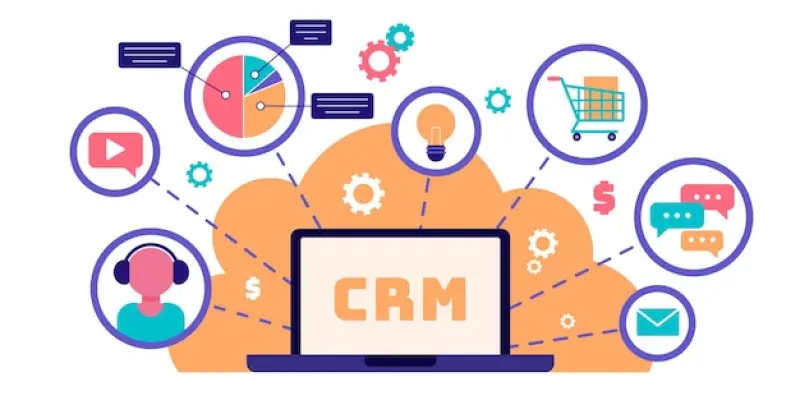
In an ever-evolving business environment where streamlined operations and customer focus are pivotal, Zoho stands out with its new AI-driven Customer Relationship Management (CRM) solution. Recently unveiled, this innovative system promises to redefine how companies manage customer interactions and collaborations between departments. By bridging various facets of operations through a singular platform, it advocates for enhanced collaboration and efficiency. Zoho’s approach significantly diminishes reliance on traditional communication channels, moving instead towards a fully integrated, seamless customer interaction process.
Centralized Customer Operations
Enhanced Collaboration Features
Zoho’s AI-driven CRM introduces various tools that promote seamless cooperation across departments, central to which are Team Modules and Requestor Profiles. These components allow departments to not only tailor their CRM data views but also automate tasks that align with specific needs. Requestor Profiles facilitate inter-departmental communication by enabling one division to request assistance and track progress with another, thus optimizing coordination on shared projects. This comprehensive structure offers significant advantages for areas within a business like human resources, legal, and product development. By maintaining focus on customer-centric goals, it ensures collaborative efforts are not fragmented or isolated but are, instead, part of a cohesive strategy across the business landscape.
Managing Potential Resistance
A principal challenge associated with expanding CRM to include non-customer-facing departments lies in potential resistance to embracing a new system. Recognizing this, Zoho preemptively postponed the original rollout to incorporate enhanced AI and orchestration capabilities. These enhancements, powered by Zia, the AI engine, aim to simplify CRM implementation. By employing natural language processing, the system allows users to expand CRM functionalities without specialized expertise. This democratization of CRM capability, as envisioned by the company’s leadership, transforms the customer operation sector by making it more inclusive and approachable for various teams, regardless of their technical background.
AI Integration in CRM
ZiThe Virtual Assistant’s Role
Central to Zoho’s innovative CRM is Zia, an advanced virtual assistant designed to facilitate user interaction with the system’s myriad features. This AI assistant helps departments engage with CRM tools without requiring in-depth technical knowledge. Through the use of intuitive prompts, Zia assists departments in customizing workflow automations, setting specific alerts, and modifying CRM fields. This function is particularly crucial in integrating various departments, providing them the capability to align with organizational goals seamlessly. The influence of Zia is evident in its ability to alleviate long-standing departmental silos, effectively streamlining customer experience efforts by ensuring inter-departmental synchronization.
Breaking Down Barriers with Generative AI
The introduction of generative AI within Zoho’s CRM strategy targets the longstanding obstacles of departmental disconnection, allowing for greater accessibility and interoperability. This advance facilitates inter-departmental cohesion that would have been challenging to achieve with traditional CRM systems. Zia’s inclusion supports the establishment of creative CRM data representation and adaptation of team modules, aligning departmental processes with broader corporate objectives. Industry experts have observed that Zoho’s AI-driven methodology is poised to resolve historical challenges in synchronizing customer experience strategies across disparate divisions, underpinning its strategic importance for future CRM development.
Unified Solution and Future Trajectories
Promoting Adoption Through User Empowerment
Zoho’s CRM prioritizes the empowerment of individual teams by allowing them to configure and tailor their CRM views and workflows independently. This strategy contrasts with traditional systems that often enforce a uniform structure, offering a transformative yet straightforward model that facilitates user adoption. Zia plays a crucial role in this approach, providing a flexible interface and promoting non-coding configuration options. It is anticipated that these efforts will markedly increase user engagement, especially when combined with the diligence of customer-facing teams to demonstrate the system’s broader benefits. Improved task turnaround times, heightened accountability, and comprehensive visibility of customer relationships are among the anticipated results of this new methodology.
Integration Across Applications
Zoho presents an integrated approach through the meticulous amalgamation of its CRM, collaborative, and project management applications. This synthesis provides a unified solution that excels in enhancing operational efficiency within diverse organizational contexts. By prioritizing customer-centric collaboration, Zoho distinguishes itself as an eminent entity in the CRM sector. The company is setting a benchmark with this cohesive system, signifying a new chapter in the evolution of CRM solutions. This strategy is likely to pave the way for future innovations in integrated customer relationship management, ensuring businesses can effectively navigate the complexities of the modern commercial environment.
A New Era in CRM
In today’s rapidly transforming business landscape, where streamlined operations and a strong customer focus are crucial for success, Zoho has introduced a groundbreaking AI-powered Customer Relationship Management (CRM) solution. This newly launched system promises to revolutionize the way businesses handle customer interactions and foster collaboration across various departments. By integrating diverse aspects of operations into a single platform, Zoho champions enhanced teamwork and operational efficiency. The company’s approach markedly reduces dependence on traditional communication channels, shifting towards a fully integrated and seamless customer interaction process. Zoho’s solution allows businesses to view customer relationships through a comprehensive lens, ensuring that all departments can access and contribute to a unified strategy for improving customer experience. This method transforms the dynamics of customer engagement, paving the way for more personalized and responsive service, ultimately setting new standards in the CRM sphere.