

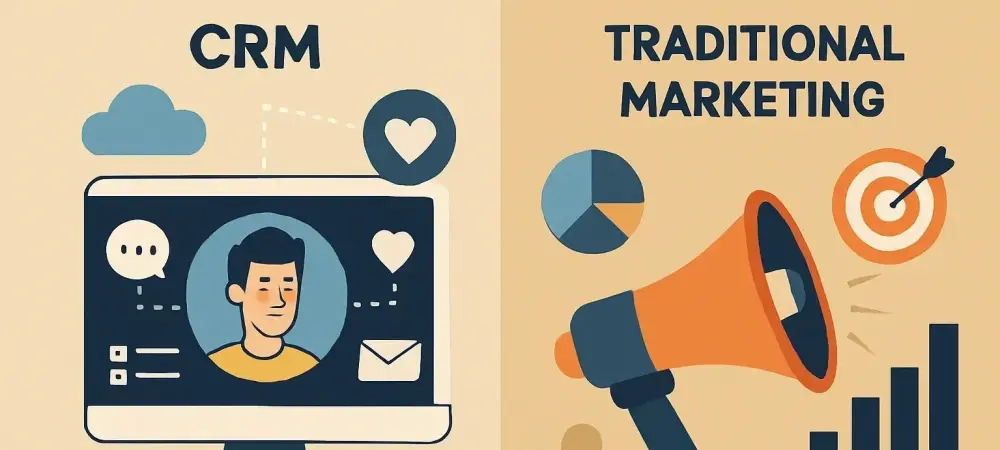
Imagine a small business owner struggling to stand out in a crowded market, with customer expectations soaring higher than ever in 2025. On one hand, there are personalized emails and automated campaigns promising deeper connections; on the other, billboards and TV ads still command attention for brand visibility. This dilemma underscores a critical choice in today’s marketing landscape: Should a business invest in the data-driven precision of CRM Marketing or rely on the broad reach of Traditional Marketing? This comparison dives into both approaches, exploring their strengths, limitations, and strategic fit for modern enterprises.
Understanding CRM Marketing and Traditional Marketing
CRM Marketing, or Customer Relationship Management Marketing, represents a technology-driven strategy that focuses on building personalized relationships with customers through data analysis. It leverages software to track behaviors, preferences, and interactions, enabling tailored communications like targeted emails or automated upsell offers. This approach thrives on creating meaningful, one-on-one engagements, ensuring that each customer feels uniquely valued in a competitive digital environment.
In contrast, Traditional Marketing encompasses mass communication methods such as print advertisements, television commercials, and radio broadcasts. It prioritizes wide-reaching messages designed to capture broad audiences, often without the granularity of individual targeting. While less personal, it remains a powerful tool for establishing brand recognition across diverse demographics and geographic regions.
Both strategies hold significant relevance in current business contexts. CRM Marketing excels in customer retention and personalization, making it indispensable for digital-first companies aiming to nurture loyalty. Meanwhile, Traditional Marketing’s strength lies in its ability to build brand awareness and attract new audiences through expansive outreach. Across industries—from retail to B2B services—these approaches cater to distinct needs, providing a foundation for a deeper analysis of their applications and outcomes.
Key Differences in Approach and Execution
Personalization and Targeting
One of the starkest contrasts between CRM Marketing and Traditional Marketing lies in their capacity for personalization. CRM Marketing harnesses detailed customer data to deliver highly customized content, such as emails tailored to past purchases or browsing history. With tools like AI and automation, it ensures precision in targeting, reaching individuals with messages that resonate on a personal level.
Traditional Marketing, however, often adopts a blanket approach, crafting messages for a general audience through mediums like TV ads or newspaper spreads. Its segmentation is typically limited to broad categories like age or location, lacking the depth of individual customization. This can result in content that feels irrelevant to many viewers, diluting its impact compared to more focused strategies.
To illustrate, consider a CRM-driven email reminding a customer about an abandoned cart with a specific discount, versus a generic billboard promoting a seasonal sale. The former directly addresses an individual’s behavior, while the latter hopes to catch the eye of passersby. This difference highlights how CRM Marketing can drive immediate action, whereas Traditional Marketing often plays a longer game of brand exposure.
Cost Efficiency and ROI
When evaluating cost structures, CRM Marketing often demands an initial investment in software and technology infrastructure, yet it promises substantial returns over time. Studies suggest an impressive average return of $8.71 for every dollar spent, thanks to its ability to optimize campaigns in real time using data analytics. This scalability makes it an attractive option for businesses of varying sizes looking to maximize budget efficiency.
Traditional Marketing, by contrast, frequently involves significant expenses for media placements, such as prime-time TV slots or full-page magazine ads, with returns that are harder to measure. Feedback loops are delayed, often relying on indirect indicators like sales spikes or surveys, making it challenging to adjust strategies swiftly. Smaller businesses, in particular, may find these costs prohibitive without guaranteed outcomes.
The trade-off becomes evident when considering long-term value. CRM Marketing’s data tracking allows for continuous refinement, reducing waste on ineffective tactics, while Traditional Marketing’s high upfront costs can strain resources without clear metrics. Each approach presents unique financial considerations, shaping decisions based on a company’s capacity and goals.
Customer Engagement and Retention
Engagement strategies further distinguish these marketing paradigms, with CRM Marketing emphasizing sustained relationships through lifecycle campaigns and behavioral triggers. By automating responses to customer actions—like sending re-engagement emails to inactive users—it fosters loyalty and encourages repeat interactions. This focus on retention ensures that existing customers remain a priority, enhancing lifetime value.
Traditional Marketing, on the other hand, often concentrates on initial attraction, using memorable slogans or striking visuals to draw in new prospects. While effective for creating first impressions, it typically lacks mechanisms for ongoing dialogue post-campaign, missing opportunities to deepen connections. Its strength lies in casting a wide net, but it often falls short in nurturing those caught within it.
Balancing these dynamics reveals complementary strengths and gaps. CRM Marketing’s depth in maintaining customer bonds contrasts with Traditional Marketing’s prowess in acquisition, suggesting that a singular focus might limit overall impact. Businesses must weigh whether their priority is cultivating existing ties or expanding their reach to uncharted markets.
Challenges and Limitations of Each Approach
Implementing CRM Marketing comes with notable hurdles, including the need for technical expertise to manage sophisticated software systems. Data privacy concerns also loom large, as customers grow wary of how their information is used, requiring strict compliance with regulations. Additionally, the upfront costs of adopting CRM tools can deter smaller enterprises, despite the potential for long-term gains.
Traditional Marketing faces its own set of obstacles in a digital-first world, where audience attention increasingly shifts away from conventional media. Securing prime slots for ads often demands hefty budgets, and tracking effectiveness remains elusive without direct metrics. This can lead to resources being spent on campaigns that fail to resonate in an era dominated by online interactions.
Ethical considerations add another layer of complexity. CRM Marketing risks overstepping personal boundaries if data usage lacks transparency, potentially alienating customers. Conversely, Traditional Marketing can appear intrusive or irrelevant with mass messaging that disregards individual preferences. Navigating these challenges requires careful planning and a commitment to balancing effectiveness with respect for audience needs.
Choosing the Right Strategy for Your Goals
Reflecting on the insights shared, it’s clear that CRM Marketing holds an advantage in personalization, cost efficiency, and customer retention, making it ideal for businesses focused on deepening existing relationships or operating in digital spaces. Traditional Marketing, however, shines in its ability to build mass brand awareness and reach offline audiences, serving as a cornerstone for establishing market presence. Each method brings distinct benefits to the table, shaped by their unique approaches to engagement and execution.
Looking back, the exploration of these strategies revealed critical decision points for businesses. As a next step, consider aligning marketing efforts with specific objectives: opt for CRM Marketing to enhance customer-centric initiatives or leverage Traditional Marketing for broad visibility campaigns. A hybrid model often emerged as a practical solution in past discussions, blending CRM’s precision with Traditional Marketing’s expansive reach to create a balanced, impactful strategy.
Beyond selection, future considerations should include investing in training for CRM tools to overcome technical barriers or exploring innovative Traditional Marketing formats to capture shifting audience attention. Testing integrated campaigns over the coming years, from 2025 to 2027, could provide valuable data on combining these approaches effectively. By adapting to evolving customer expectations and technological advancements, businesses can position themselves to thrive in a dynamic marketing landscape.