

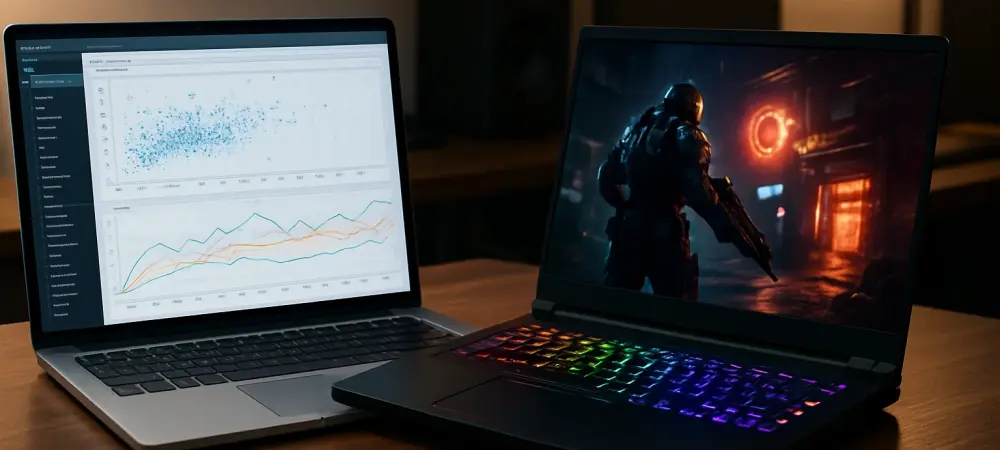
Imagine a professional video editor racing against a tight deadline, needing a machine that can render complex projects in hours, not days, while a passionate gamer seeks the ultimate immersive experience with jaw-dropping graphics and seamless gameplay. Both turn to high-performance laptops, but their needs diverge into two distinct categories: workstation laptops and gaming laptops. This comparison delves into the nuances of these devices, exploring how they cater to vastly different audiences despite sharing similar cutting-edge technology.
In today’s tech landscape, the boundary between workstation and gaming laptops blurs as hardware capabilities overlap, creating confusion for potential buyers. Workstation laptops are engineered for professionals in demanding fields like 3D modeling, AI development, and video production, prioritizing raw processing power and precision. Gaming laptops, on the other hand, focus on delivering entertainment through superior graphics and high-speed performance for modern titles. Understanding these distinctions is crucial as consumers navigate a market filled with hybrid devices that challenge traditional categorizations.
Key Differences in Design and Performance
Hardware Specifications and Processing Power
Workstation laptops are built to handle intensive tasks, often featuring top-tier CPUs like AMD Ryzen AI MAX 395, also known as Strix Halo, paired with massive RAM capacities up to 128GB, as seen in models like the Emdoor EM-959-NM16ASH-1 with its soldered LPDDR5X-8000 memory. These machines also incorporate professional-grade GPUs to support specialized software for rendering and simulations. The emphasis lies in sustained performance over long workloads, ensuring stability for complex projects.
Gaming laptops, by contrast, prioritize powerful GPUs to render high-fidelity graphics and support fast-paced gameplay, often at the expense of CPU-heavy multitasking. While they may share similar processors with workstations, their configurations are optimized for visual output rather than computational depth. For instance, a gaming laptop might focus on delivering real-time performance for titles requiring intense graphical processing, sometimes sacrificing memory or storage flexibility.
This divergence in hardware focus creates a clear split: workstations excel in professional environments requiring robust processing, while gaming laptops shine in entertainment scenarios. However, overlap exists, as devices like the Emdoor model boast specs that could appeal to gamers, highlighting how manufacturers are increasingly blending these categories to capture broader markets.
Display and Visual Features
When it comes to displays, workstation laptops prioritize color accuracy and high resolution to meet the needs of professionals working on detailed visual content. A model like the Emdoor EM-959-NM16ASH-1 offers a 16-inch screen with a 2560×1600 resolution, ensuring precision for tasks like photo editing or architectural design. Such specifications cater to users who demand exacting standards in their output.
Gaming laptops, however, focus on high refresh rates to provide smooth visuals during fast-paced action. Many models boast screens with 165Hz or even 180Hz refresh rates, a feature also present in the Emdoor laptop, which adds to the confusion about its primary purpose. This emphasis on fluidity often comes at the cost of color fidelity, as gamers prioritize responsiveness over perfection in tone.
Interestingly, the overlap in display technology creates ambiguity, with some devices serving dual purposes. Professionals might appreciate a high refresh rate for smoother workflows, while gamers could benefit from better resolution in certain scenarios. This convergence challenges buyers to assess which visual features align best with their primary use case.
Portability and Build Design
Portability represents another critical distinction, as workstation laptops often sacrifice mobility for power. With a weight of 2.45 kilograms, the Emdoor EM-959-NM16ASH-1 positions itself as more of a desktop replacement than a travel-friendly device. Such heft caters to stationary professionals who value performance over ease of transport, often working in fixed environments.
Gaming laptops, while still heavier than ultrabooks, tend to strike a better balance between power and portability. Competitive models like the Asus ROG Flow Z13 often weigh under 2 kilograms, appealing to gamers who attend events or play on the go. This design consideration reflects the dynamic lifestyle of their target audience, prioritizing convenience alongside performance.
The impact on target users is significant, as professionals needing mobility might hesitate to invest in bulkier workstations despite their superior specs. Conversely, gamers may accept slightly heavier builds for enhanced cooling and power, but still demand a degree of transportability. This aspect underscores how design choices directly influence purchasing decisions based on lifestyle needs.
Challenges and Limitations of Each Category
Workstation laptops face several hurdles that can deter potential buyers. Their high cost, often exceeding $2,000 for advanced models like the Emdoor EM-959-NM16ASH-1, limits accessibility to well-funded professionals or niche enthusiasts. Additionally, their lack of portability, due to substantial weight and size, restricts their appeal for those who frequently travel for work.
Another challenge for workstations lies in their niche positioning, as the price may not always align with proven real-world performance. Without extensive testing or user feedback, buyers might question whether the investment justifies the specs. This uncertainty is compounded by market ambiguity, as some devices incorporate features typically associated with other categories, blurring their intended purpose.
Gaming laptops, meanwhile, grapple with limitations like shorter battery life during intensive use, often struggling to last through extended sessions without a power source. Overheating risks also loom large, as prolonged gaming can strain cooling systems despite advancements in design. Furthermore, their hardware, while powerful for entertainment, may fall short of meeting the demands of professional software, restricting versatility for users with mixed needs.
Conclusion: Which Laptop Suits Your Needs?
Reflecting on the detailed comparison, it becomes clear that workstation laptops stand out for their unparalleled processing power tailored to professional tasks, while gaming laptops excel in delivering graphically rich experiences at a more accessible price point. The design focus, from hardware to display priorities, highlights how each category carves out a specific niche despite overlapping features in hybrid models. For those navigating this decision, the path forward involves a careful assessment of primary needs: professionals in fields requiring robust computational capabilities find workstations indispensable, whereas gaming enthusiasts benefit more from the graphics-focused performance and relative affordability of gaming laptops. A balanced evaluation of budget, mobility requirements, and software demands proves essential in making an informed choice.
Looking ahead, hybrid devices like the Emdoor EM-959-NM16ASH-1 hint at a future where distinctions might further erode, but their success depends on clearer market positioning and real-world validation. Buyers are encouraged to seek hands-on reviews and prioritize devices that align with their long-term goals, ensuring that advancements in technology translate into practical value for their unique scenarios.