

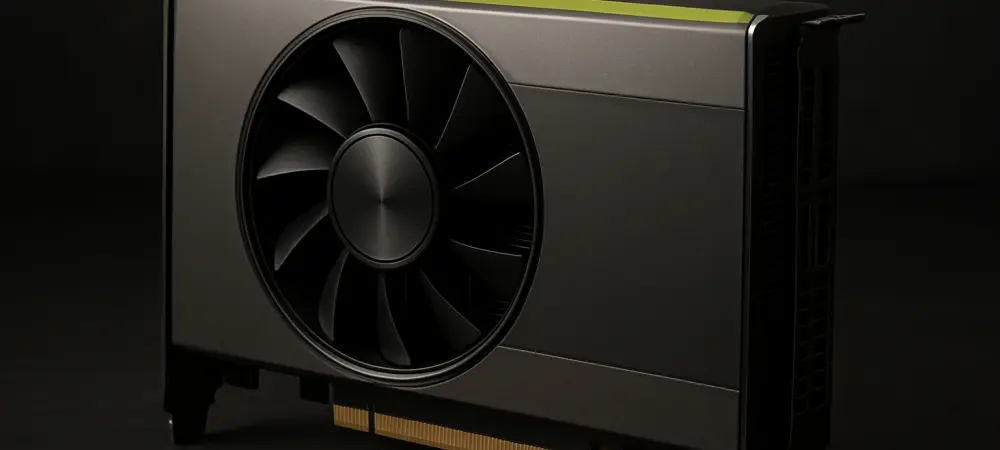
Imagine a world where AI systems can generate complex software code with millions of tokens or create high-quality video content in mere seconds, all while slashing energy costs for massive data centers. This is no longer a distant vision but a tangible reality with Nvidia’s latest innovation in the AI inference space. The Rubin CPX GPU, integrated into the Vera Rubin NVL 144 CPX platform, emerges as a specialized powerhouse designed to tackle the most demanding AI workloads. As the industry pivots from training to real-world deployment of AI models, this technology stands at the forefront, promising to redefine performance benchmarks for hyperscalers and large enterprises. This review delves into the core capabilities, market relevance, and potential impact of this cutting-edge GPU on the rapidly evolving AI landscape.
Key Features and Technical Breakthroughs
Unmatched Massive-Context Processing
The Rubin CPX GPU is engineered for massive-context processing, a feature that sets it apart in handling sophisticated AI tasks. Capable of managing workloads such as million-token software coding and generative video creation, this GPU addresses the needs of applications requiring extensive data handling. Its architecture supports intricate computations that are essential for next-generation AI systems, ensuring seamless execution of complex processes.
Beyond raw processing power, this capability translates into significant advantages for AI factories, where high-demand tasks are the norm. The ability to process vast contexts efficiently means faster turnaround times for projects that once took hours or even days. This positions the GPU as a critical tool for industries reliant on rapid AI-driven innovation, from software development to digital content creation.
Energy Efficiency and Economic Value
Energy efficiency stands as a cornerstone of the Rubin CPX’s design, addressing one of the most pressing concerns in data center operations. Nvidia claims an impressive return of $5 billion in token revenue for every $100 million invested, a metric that underscores the GPU’s cost-effectiveness. This efficiency not only reduces operational expenses but also aligns with sustainability goals increasingly prioritized by tech giants.
For hyperscalers and large enterprises, the reduced cost of ownership is a compelling incentive. Lower energy consumption directly impacts bottom lines, making the Rubin CPX an attractive investment for organizations scaling their AI infrastructure. This balance of performance and economy could redefine standards for data center hardware, pushing competitors to match similar benchmarks.
Market Dynamics and the Inference Boom
The shift toward AI inference workloads marks a pivotal trend in the tech industry, as trained models are increasingly deployed for real-world applications. Market projections estimate the global AI inference sector to expand from $106 billion currently to $255 billion by 2030, reflecting the growing need for specialized hardware. This surge underscores the urgency for solutions tailored to diverse and complex use cases.
Nvidia positions the Rubin CPX at the heart of this transformation, focusing on high-end inference tasks such as the Mixture of Experts (MoE) LLM architecture. By offering specialized silicon solutions, the company aims to cater to the nuanced demands of modern AI factories. This strategic focus ensures that the GPU meets the specific requirements of cutting-edge applications, reinforcing Nvidia’s leadership in the space.
The emphasis on inference also highlights a broader industry consensus that real-world AI deployment will drive future growth. As models become more intricate, the need for hardware like the Rubin CPX grows, providing optimized performance for tasks that training-focused GPUs may not handle as efficiently. This alignment with market needs could cement Nvidia’s dominance in the evolving data center ecosystem.
Real-World Impact and Target Demographics
The Rubin CPX shines in premium applications, particularly in intelligent coding systems and video generation, where it delivers substantial productivity gains. For industries dependent on rapid development cycles, such as tech startups and media houses, the GPU’s ability to handle resource-intensive tasks offers a competitive edge. AI factories leveraging this technology can expect enhanced output without proportional increases in resource allocation. Targeting hyperscalers and large enterprises, Nvidia tailors the Rubin CPX to meet the needs of organizations with vast computational demands. Unlike solutions aimed at average enterprise users, this GPU focuses on high-end, specialized workloads that require top-tier performance. This niche approach ensures that the technology addresses the unique challenges faced by major players in the AI domain.
The strategic focus on premium clientele also reflects an understanding of where the highest returns lie. By catering to those with the most significant investment capacity, Nvidia maximizes the impact of its innovation, driving advancements that trickle down to broader markets over time. This deliberate segmentation underscores the GPU’s role as a flagship solution for elite AI applications.
Competitive Challenges and Industry Rivals
Despite its strengths, the Rubin CPX enters a market with intensifying competition, as rivals develop alternative solutions for varied inference workloads. Companies offering diverse hardware options challenge Nvidia’s dominance, particularly in segments where cost or flexibility may outweigh raw performance. This competitive pressure necessitates continuous innovation to maintain market share.
Technical barriers, such as integration complexities or software optimization needs, could also hinder widespread adoption. While the GPU excels in benchmarks, real-world deployment may reveal unforeseen hurdles that require addressing. Nvidia’s ability to swiftly adapt its software stack and hardware design will be crucial in overcoming these potential obstacles.
Moreover, market dynamics suggest that differentiation will be key to sustaining an edge. As inference needs diversify, Nvidia must balance specialization with versatility, ensuring the Rubin CPX remains relevant across evolving use cases. Ongoing efforts to refine performance and compatibility will likely determine how well the GPU fares against emerging contenders.
Future Horizons for AI Inference Technology
Looking ahead, the Rubin CPX is poised for further enhancements, particularly in software stack optimizations that could unlock additional performance gains. As Nvidia refines its ecosystem, updates and integrations are expected to bolster the GPU’s capabilities, making it even more adept at handling future AI challenges. This iterative improvement will be vital for staying ahead in a fast-paced industry.
The long-term impact of inference-focused GPUs like the Rubin CPX on the AI sector cannot be overstated. By shaping how models are deployed in real-world scenarios, such technologies will influence everything from enterprise productivity to consumer-facing applications. Nvidia’s commitment to this space signals a broader push toward technological leadership in defining AI’s practical future.
Additionally, the ripple effects of this focus may redefine industry standards, compelling other players to prioritize inference in their roadmaps. As market demands evolve, the Rubin CPX could serve as a benchmark for what high-end AI hardware should achieve, driving a cycle of innovation that benefits the entire ecosystem. This forward-looking approach positions Nvidia as a catalyst for change.
Final Thoughts and Next Steps
Reflecting on the evaluation, the Rubin CPX GPU proved to be a formidable asset in the AI inference arena, with its massive-context processing and energy efficiency setting new standards for high-end applications. The technology demonstrated exceptional promise for hyperscalers and large enterprises, aligning perfectly with the industry’s shift toward real-world AI deployment. Its targeted approach carved a niche that few competitors matched during the review period. Moving forward, stakeholders should consider strategic partnerships with Nvidia to leverage the Rubin CPX’s capabilities for scaling AI operations, particularly in AI factories hungry for performance boosts. Exploring pilot programs to test integration within existing infrastructures could mitigate adoption risks while maximizing returns. Additionally, keeping an eye on Nvidia’s software updates will ensure that users stay ahead of the curve, capitalizing on optimizations as they roll out.