

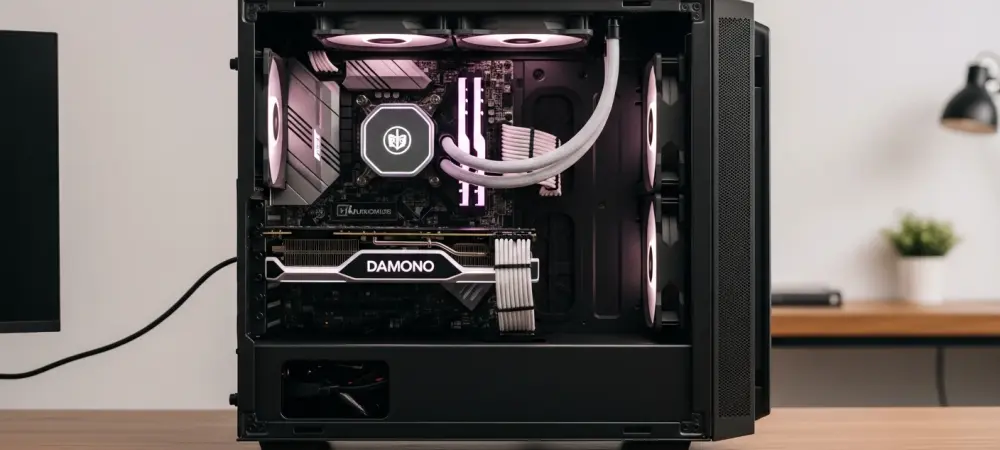
The pursuit of graphical fidelity has often come at the expense of power consumption, yet the upcoming release of the Radeon RX 9050 suggests a calculated shift toward energy efficiency in the mainstream market. Leaked specifications from an anonymous board partner indicate that this new entry-level or mid-range card utilizes the Navi 44 GPU architecture, a cornerstone of the RDNA 4 generation. Interestingly, the card is reported to feature 2,048 Stream Processors, a count that matches the full core configuration of the more powerful RX 9060 XT rather than a salvaged or cut-down variant. This decision implies that AMD is not merely recycling defective silicon but is instead repurposing a high-performance blueprint for a different thermal envelope. By maintaining a high core count while adjusting other variables, the hardware provides a robust foundation for modern gaming tasks that rely heavily on parallel processing. This development marks a significant departure from traditional product segmentation strategies where lower-tier cards typically suffer from substantial hardware reductions.
Technical Trade-offs and the Shift Toward Performance Per Watt
While the core count remains impressive, the primary differentiator for this specific model lies in its conservative clock speed configuration. It operates with a 1,920 MHz game clock and a 2,600 MHz boost clock, representing a significant reduction of approximately 24% and 17%, respectively, when compared to the flagship RX 9060 XT. This intentional downclocking of the Navi 44 XT core indicates a strategic focus on a more power-efficient segment of the consumer base. This priority is further supported by the card’s 450W recommended power supply rating, which is noticeably lower than its faster counterparts in the product stack. In terms of memory, the card is equipped with 8GB of GDDR6 on a 128-bit bus, delivering a bandwidth of 288 GB/s. While these memory specifications are standard for the mid-range category, the inclusion of PCIe 5.0 x16 support ensures that the card remains compatible with the latest motherboard standards, preventing potential bottlenecks in data transfer.
Strategic Market Positioning and Future Hardware Considerations
The introduction of the RX 9050 reflected a sophisticated approach to maximizing chip yields by offering a high core-count product at lower frequencies for users who prioritized efficiency over raw speed. System builders who sought a balance between thermal output and modern architectural benefits found this card to be a compelling alternative to more power-hungry models. For those planning upcoming upgrades from 2026 to 2028, prioritizing power-to-performance ratios became as critical as evaluating frame rates. Consumers were encouraged to evaluate their specific power delivery systems and thermal constraints before committing to the faster but less efficient RX 9060 series. This move suggested that future GPU developments might continue to bifurcate, offering distinct paths for pure performance enthusiasts and those operating in space-constrained or energy-conscious environments. By choosing hardware that aligned with specific workload requirements rather than chasing peak numbers, users optimized both their hardware longevity and overall system stability.