

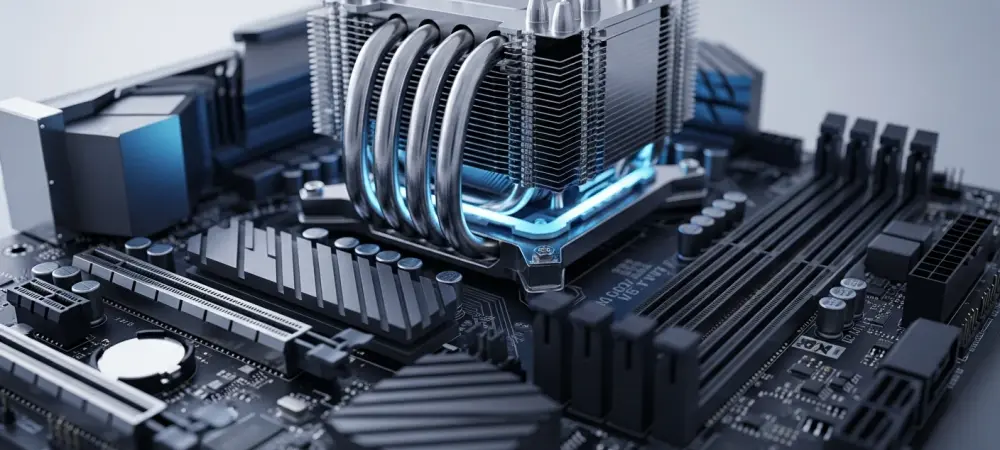
Modern high-performance computing has reached a definitive turning point where raw clock speeds alone no longer satisfy the insatiable hunger of local machine learning models. This roundup explores how the Zen 5 architecture addresses the shift from general productivity to AI-centric workstation requirements. By repositioning the Ryzen PRO brand, the industry is witnessing a focused effort to eliminate the data throughput bottlenecks that previously hindered enterprise environments.
The Evolution of Professional Computing: Why Zen 5 Matters Today
The transition toward specialized silicon reflects a broader industry consensus that professional hardware must now prioritize data-heavy processing over simple task execution. Experts suggest that the demand for local AI capabilities has forced a rethink of how enterprise chips are designed, moving toward a balance of compute density and memory efficiency.
Furthermore, this launch signals that standard office setups are being replaced by units capable of complex simulations. By integrating advanced instruction sets into the Ryzen PRO 9000 series, the hardware allows for faster training cycles and more responsive data analysis in secure environments.
Redefining Performance Standards for the Modern Enterprise
Harnessing 3D V-Cache Technology: High-Throughput Workloads
The debut of the Ryzen 9 PRO 9965X3D introduces a massive 128MB L3 cache, which serves as a game-changer for low-latency professional applications. Large cache sizes allow the processor to keep more data close to the cores, drastically reducing the time spent waiting for memory access during complex AI model training.
The Power Paradigm Shift: Moving Beyond the 65W TDP Constraint
Moving to 120W and 170W power envelopes rationalizes the need for sustained peak performance. While traditional chips prioritized low power draw, modern workstations require high energy throughput to maintain consistency during long rendering sessions or deep learning tasks. Efficiency is now defined by the amount of work completed per watt rather than a low thermal ceiling.
Scalable Architecture: Balancing Core Counts Across the Series
The tiered lineup ranges from the 16-core flagship 9965X3D to the 6-core 9655 entry-level powerhouse. This diversity allows organizations to match hardware to specific niches, such as architectural visualization or software engineering. Zen 5 architecture optimizes multi-threaded performance, ensuring that even mid-range tiers offer substantial improvements over previous generations.
Strategic Integration: Bridging Consumer Innovation and Enterprise Security
Porting 3D V-Cache into the professional ecosystem combines high-speed gaming technology with PRO-grade security features. This move provides hardware-level management tools essential for maintaining fleet integrity. Consequently, this strategy likely forces competitors to adopt similar specialized cache architectures to remain relevant in the workstation market.
Strategic Deployment: Best Practices for Integrating Zen 5 Workstations
Infrastructure compatibility is a primary concern when transitioning to these high-wattage platforms. Organizations must evaluate their power delivery and thermal solutions to accommodate the 170W requirements of the flagship models. Matching specific Ryzen PRO 9000 tiers to departmental needs ensured that investment returns were maximized without over-provisioning hardware.
Future-Proofing the Workspace with AI-Ready Silicon
Investing in high-cache architectures provided a long-term advantage for decentralized AI development. It was clear that the “standard office PC” era had ended. Organizations that adopted these specialized powerhouses successfully minimized their reliance on cloud-based processing. Moving forward, maintaining a focus on hardware thermal overhead and power scalability became the standard for technical fleet management.