

Two Decades of Innovation: Setting the Stage for Apple’s Most Ambitious Milestone
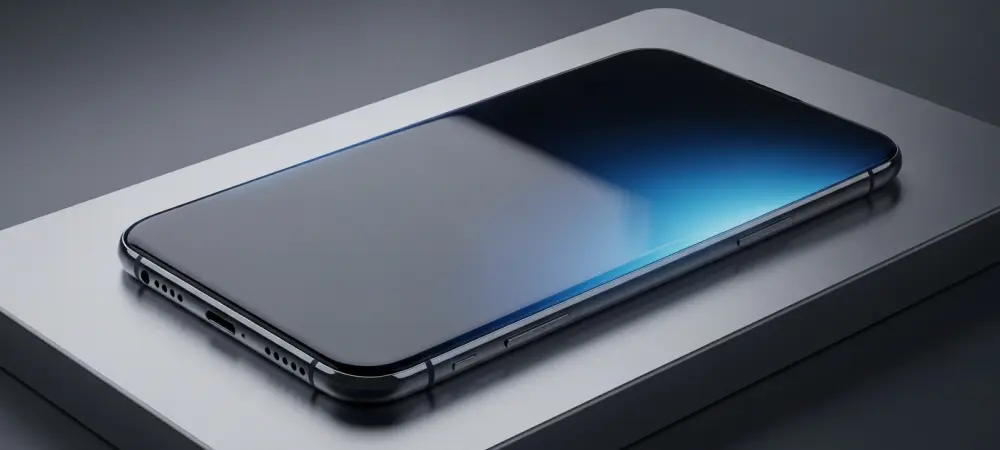
The sheer magnitude of the twentieth-anniversary milestone has prompted a relentless wave of industry speculation regarding how Apple might fundamentally reshape the handheld experience. Rather than settling for incremental updates, leading tech analysts suggest that the company is treating the iPhone 20 as a definitive turning point. This shift moves away from the utilitarian designs of the previous decade toward a futuristic, monolithic aesthetic that prioritizes visual continuity across the entire device.
Understanding this transition requires looking at how historical releases have reset industry standards. Observers note that a potential move to a borderless interface is more than a design choice; it serves as a strategic statement of market dominance for the coming decade. Experts believe that the 2027 launch will redefine the smartphone as a piece of seamless glass rather than a collection of assembled parts.
Engineering the “All-Glass” Dream: A Convergence of Aesthetic and Hardware Evolution
Beyond the Dynamic Island: The Engineering Feat of Under-Display Biometrics
The most anticipated shift involves the transition from the Dynamic Island cutout to a completely uninterrupted visual field. By moving Face ID sensors beneath the active pixels of the display, engineers aim to resolve the long-standing tension between biometric security and screen real estate. This advancement would allow for a clean interface without compromising the safety features users have come to expect.
This move presents significant technical hurdles, particularly regarding light transmission through the OLED matrix. Successful implementation would finally fulfill the industry pursuit of a “single slab of glass” philosophy, according to recent hardware reports. Some researchers indicate that the primary challenge lies in ensuring sensor accuracy remains high even when obscured by the display layer.
Quad-Curved Glass and the Structural Challenges of a Seamless 7-Inch Canvas
While the iPhone 20 Pro Max is rumored to push screen sizes to a massive 7 inches, the true innovation lies in the transition to quad-curved glass. This design would see the display melt into the edges on all four sides, potentially eliminating traditional metal borders entirely. The result is a device that feels almost entirely composed of light and information.
Such a change forces a total rethink of structural integrity and drop resistance. The conversation is shifting from simple aesthetic beauty toward the development of advanced, high-durability transparent materials that can withstand daily use without the protection of a traditional frame. Materials scientists suggest that the integration of sapphire-infused glass may be necessary to maintain rigidity.
The 2nm A21 Powerhouse: How Sub-Microscopic Silicon Dictates Industrial Design
Internal hardware, specifically the anticipated 2nm A21 chipset, acts as the silent enabler of this radical redesign. The shift to a 2-nanometer process allows for unprecedented power efficiency and a smaller thermal footprint, which is essential for a thinner, borderless chassis. This efficiency allows the device to operate at peak performance without needing bulky cooling mechanisms.
This leap in processing density ensures that the device can handle intensive AI and augmented reality tasks without hesitation. Maintaining high performance while reducing physical volume allows the form factor to remain sleek despite the increase in display dimensions. Industry leaders recognize that this silicon evolution is what ultimately permits the exterior to become so minimalist.
From V73 to V74: Examining the Strategic Ripple Effects of Apple’s Anniversary Prototypes
Codenamed V73 and V74, current prototypes represent a shift in how Apple scales its professional lineup for the future. By testing 6.4-inch and 7-inch variants, the manufacturer is exploring the limits of handheld ergonomics. These experiments help determine if users can comfortably handle such large screens when the bezels are removed.
This phase of development challenges the assumption that larger is always better. Instead, it focuses on how a borderless design offers more immersive content consumption without making the device unwieldy for the average user. Testing suggests that the lack of edges might actually make the larger 7-inch model feel more manageable than current 6.7-inch versions.
Preparing for the Post-Bezel ErKey Takeaways for Tech Enthusiasts and Industry Observers
As the market moves toward an all-screen reality, users should prepare for a significant change in how they interact with their devices. The removal of physical landmarks on the front of the phone means software gestures and haptic feedback will become more critical than ever. Without a frame to grip, the operating system must become smarter at rejecting accidental touches.
To stay ahead of the curve, it is essential to monitor developments in under-display sensor accuracy and the evolution of “unbreakable” glass technologies. The iPhone 20 will likely be a tool that requires a new set of digital habits to master. Investors and enthusiasts should look for shifts in accessory markets, as traditional cases may need to be redesigned to accommodate curved glass.
The iPhone 20 as a Glimpse Into the Future of Human-Computer Interaction
The rumored redesign signified more than a mere anniversary celebration; it represented the culmination of a vision for a device that disappeared into the background of daily life. By stripping away the borders, notches, and physical interruptions, the hardware became secondary to the digital experience itself. This milestone served as a benchmark for mobile technology, challenging the world to imagine a device that was as much a piece of art as it was a functional tool.
Looking forward, developers must now prioritize interfaces where the physical frame no longer dictates the boundaries of the digital interaction. The move toward invisible hardware suggests that the next phase of innovation will focus on ambient computing and augmented reality integration. Users who embrace these seamless designs early will find themselves better prepared for a world where the line between the physical and digital continues to blur.