

The Persistent Fold That Defies Digital Perfection
The journey toward the perfect smartphone has often been halted by the stubborn physical reality of folding glass and the inevitable structural dip that accompanies it. For years, Samsung’s foldable journey has been a tug-of-war between futuristic wonder and the tactile reality of plastic-polymer physics. While competitors have aggressively chased a flat, seamless internal display, Galaxy Z Flip users have largely accepted a minor valley in the center of their screens as the price of portability.
As the July 22 Galaxy Unpacked event in London approaches, leaked specifications suggest that the crease-free milestone is finally within reach. This shift marks a pivot from experimental technology to a refined, mature hardware experience. Samsung appears ready to move beyond the beta-test feel of early foldables, aiming for a product that feels as solid and consistent as a traditional flagship device.
Why the Crease Remains the Final Frontier for Foldables
The screen crease is more than a visual imperfection; it is a psychological barrier for many potential buyers who remain skeptical of foldable longevity. In the current market, display maturity is the new benchmark for success, shifting the focus away from how a phone folds and toward how it looks when it is open. A visible fold suggests a compromise in engineering that many high-end consumers are no longer willing to tolerate.
As the clamshell form factor moves into its eighth iteration, addressing the structural dip is essential for Samsung to maintain its dominance against increasingly sleek international rivals. These competitors are prioritizing flatter hinge mechanisms that offer a more traditional viewing experience. To remain the market leader, Samsung must prove that its folding technology has reached a point where the display feels indistinguishable from a standard screen.
Engineering the Crease-Free Experience Through Ergonomic Refinement
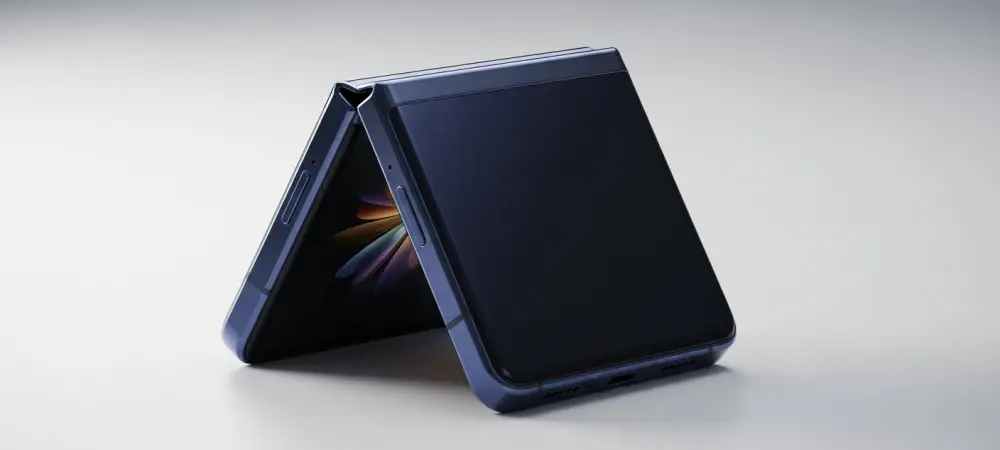
Leaked design data indicates that the Galaxy Z Flip 8 will introduce a revamped hinge mechanism specifically engineered to eliminate the visible fold line. This architectural shift is expected to make the device approximately 0.5mm thinner when folded, addressing one of the primary complaints regarding the bulk of previous models. A thinner profile combined with a smoother screen creates a device that feels significantly more modern in the hand. The chassis is tipped to undergo a weight reduction, dropping from 188g to 180g. This pursuit of a crease-free structure represents a move toward a more premium, seamless user interface that prioritizes structural durability without sacrificing signature portability. By focusing on these ergonomic details, the company is refining the tactile interaction that defines the foldable category.
Strategic Hardware Consistency and the Shift to Proprietary Silicon
While the exterior undergoes a facelift, industry consensus suggests that Samsung is playing a conservative game with internal components to ensure reliability. The device is expected to retain the 4,300mAh battery and 25W charging speeds, alongside the familiar 50-megapixel main sensor and 12-megapixel ultra-wide lens. This consistency ensures that the focus remains entirely on the improved physical form factor rather than unproven internal changes. The most significant internal update is the rumored inclusion of the Exynos 2600 chipset. Experts viewed this as a calculated move to optimize proprietary silicon for the smaller foldable’s unique thermal and power requirements. Rather than chasing radical, power-hungry hardware overhauls, the strategy centered on creating a balanced ecosystem where the processor and the battery worked in harmony to support the new display tech.
A Framework for Evaluating the Flip 8’s Value Proposition
Prospective buyers analyzed the physical footprint by comparing the new 0.5mm thickness reduction to their previous daily drivers. They found that even minor thinning significantly improved pocket comfort, making the device more practical for everyday use. Users scrutinized the crease-free claim by observing the display under direct light sources, where the fold was traditionally most visible.
Experts weighed the ergonomic improvements—specifically the 8-gram weight loss—against the lack of major camera and battery upgrades. They concluded that a more polished physical design provided a more meaningful upgrade than raw hardware specs. Moving forward, the focus shifted toward structural integrity as the primary driver for foldable adoption. This transition suggested that the industry moved toward a future where the fold was no longer a distraction but a perfected feature.