

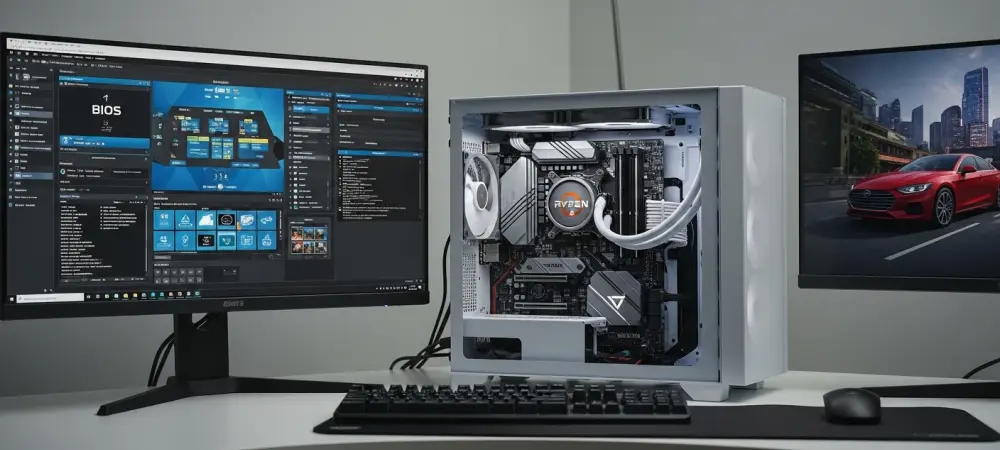
Building a high-end personal computer often feels like navigating an obstacle course of inflated component prices and rapidly shifting technological standards that leave yesterday’s hardware obsolete. For a significant period, the transition to AMD’s AM5 platform was hampered by the steep entry costs associated with DDR5 memory and the necessity of purchasing new, premium-priced motherboards alongside current-generation processors. However, the introduction of a specialized bundle featuring the Ryzen 5 9600X and the Gigabyte B850 Gaming WiFi motherboard has fundamentally changed the landscape for mid-range enthusiasts. Priced aggressively at $339.99 during recent promotional windows, this hardware combination offers a rare intersection of affordability and performance that many builders have been waiting for. By lowering the financial barrier, this bundle enables more users to access the benefits of the latest socket architecture while maintaining their budget.
High-Performance Processing With Zen 5
Architectural Efficiency: The Power of Zen 5
The Ryzen 5 9600X serves as a pivotal cornerstone for the Ryzen 9000 series, specifically engineered to leverage the sophisticated Zen 5 architecture for maximum operational efficiency. One of the most significant advantages of this six-core, twelve-thread processor is its flexible power profile, which defaults to a conservative 65W but can be manually adjusted via the BIOS to a more robust 105W limit. This flexibility ensures that the chip can remain cool and energy-efficient during routine tasks while still possessing the necessary headroom to handle more demanding computational spikes when required by the user. By optimizing the power-to-performance ratio, AMD has created a processor that appeals to environmentally conscious users and performance seekers alike, providing a consistent experience without the excessive heat generation often found in higher-tier alternatives. This architectural balance is particularly beneficial for small form factor builds where space is limited.
When evaluating real-world gaming performance, the results consistently showcase why the 9600X is considered a premier choice for dedicated gaming rigs. In hardware-intensive titles such as Cyberpunk 2077, the processor maintains remarkably high frame rates that often exceed 300 FPS in optimized scenarios. This stability is crucial for gamers who utilize high-refresh-rate monitors, as it minimizes micro-stuttering and provides a fluid visual experience that can directly impact competitive performance. The single-core speed of the Zen 5 architecture proves to be a decisive factor here, as many modern games still rely heavily on the performance of a primary thread to manage logic and physics calculations. Even in environments with high NPC density, the 9600X remains composed, effectively preventing bottlenecking of modern graphics cards. This makes it an ideal companion for high-end GPUs, ensuring that every frame produced by the video card is processed with surgical precision.
Real-World Benchmarks: Gaming and Productivity
Beyond its basic power settings, the Zen 5 architecture introduces significant IPC improvements that translate directly into faster execution of complex instruction sets. This means that even though the 9600X maintains a core count that might seem modest compared to workstation chips, each individual core is substantially more capable than those found in previous generations. The integration of advanced branch prediction and larger cache sizes allows the processor to anticipate data needs more accurately, reducing latency and ensuring that the system feels exceptionally snappy during daily navigation. For users transitioning from older AM4 systems, the difference in responsiveness is immediately apparent, especially when multitasking with several demanding applications simultaneously. This level of refinement underscores AMD’s commitment to pushing the boundaries of what a mid-range processor can achieve, ensuring that the 9600X remains a competitive force in the market for several hardware generations. While gaming is a primary focus for many users, the 9600X also demonstrates surprising competency in moderate productivity and creative workloads that populate the average professional’s schedule. Tasks such as high-resolution photo editing in Adobe Photoshop or basic video clipping for social media are handled with impressive speed, benefiting from the architectural refinements of the Ryzen 9000 series. While it may not compete with the Ryzen 9 variants in heavy 3D rendering or massive data compilation, it offers a level of versatility that is more than sufficient for the vast majority of home users and freelance creators. The inclusion of twelve threads ensures that background processes, such as streaming software or web browsers with dozens of open tabs, do not significantly degrade the performance of the primary application. This holistic approach to performance makes the 9600X a well-rounded tool that provides a robust platform for both leisure and labor.
A Reliable Foundation for the Modern Builder
Motherboard Connectivity: Exploring the B850 Chipset
The Gigabyte B850 Gaming WiFi motherboard acts as the essential backbone of this bundle, providing a comprehensive suite of features that accommodate both current and upcoming hardware. One of the most notable inclusions is the support for PCIe 5.0, which guarantees that users will be able to utilize the next generation of ultra-fast NVMe storage drives and high-bandwidth graphics cards as they become more prevalent. This inclusion is a significant step up from previous mid-range chipsets, which often limited users to PCIe 4.0 speeds, potentially creating bottlenecks for future upgrades. Furthermore, the board features a sophisticated digital voltage regulator design that ensures stable and clean power delivery to the processor, which is vital for maintaining peak performance during long gaming sessions. With three M.2 slots available for storage expansion, builders have plenty of room to grow their digital libraries without needing to rely on slower external drives.
In addition to its core performance features, the Gigabyte B850 provides modern networking and peripheral support that is often missing from budget-oriented motherboards. The integration of high-speed WiFi 6 and advanced Bluetooth capabilities allows for a wireless desktop environment that does not sacrifice connection stability or speed, which is a major convenience for those who cannot easily run Ethernet cables to their workspace. The I/O panel is equally well-equipped, offering a variety of USB ports for connecting peripherals, external storage, and audio devices with minimal interference. Gigabyte has also focused on user-friendly software and BIOS interfaces, making it easier for novice builders to set up their memory profiles or adjust fan curves for a quieter computing experience. This focus on accessibility, combined with the physical durability of the board’s components, creates a reliable foundation that reduces the likelihood of hardware failure or compatibility issues.
Platform Longevity: Future-Proofing the Entry Level
The transition to the AM5 socket represents a long-term commitment from AMD to provide a stable platform that will support multiple generations of processors through 2028 and potentially beyond. This forward-thinking strategy allows users to invest in a motherboard with the confidence that they will not need to replace their entire system when they want to upgrade their CPU in a few years. Unlike other platforms that frequently change socket designs, requiring expensive motherboard swaps for every new chip release, AM5 provides a clear path for incremental upgrades. This is especially important as DDR5 memory becomes the industry standard, offering higher bandwidth and better power efficiency compared to the aging DDR4 standard. By adopting this bundle now, builders are positioning themselves at the leading edge of technology, ensuring that their systems remain relevant as software and games continue to demand more from underlying hardware while supporting future components. By choosing this combination, enthusiasts avoided the common pitfall of investing in a dead-end platform, instead gaining access to modern features like PCIe 5.0 and high-speed DDR5 memory at a fraction of the cost of flagship components. The stability and efficiency demonstrated by this hardware made it clear that a high-end gaming experience did not require the most expensive parts on the market. Moving forward, potential builders should monitor seasonal sales as the primary method for securing high-performance components while maintaining a sensible budget. This approach allowed for a more intelligent allocation of funds, enabling the purchase of more powerful graphics cards. Those who utilized this specific deal built a foundation that remained relevant for hardware advancements arriving between 2026 and 2028.