

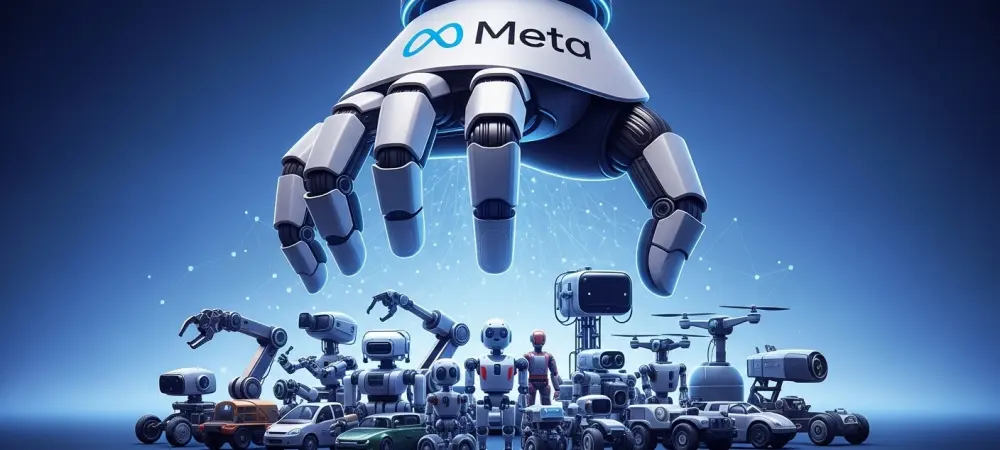
The global technology landscape is currently witnessing one of the most aggressive reallocations of capital in modern history as Meta moves beyond the digital constraints of social media into the physical realm. The recent integration of Assured Robot Intelligence (ARI) marks a definitive end to the company’s experimental phase in robotics and the beginning of a dedicated push toward “embodied AI.” This shift suggests that the next generation of superintelligence will not be confined to a browser or a headset but will instead learn through direct interaction with the unpredictable physical environment. By leveraging ARI’s foundational models, Meta is attempting to build an ecosystem that could define how machines move, think, and interact with humans for decades to come.
The Strategic Shift Toward Embodied Intelligence
Meta is currently navigating a transformation that redefines its corporate identity. While the world previously viewed the company through the lens of social networking, the establishment of the Meta Robotics Studio represents a bold entry into humanoid mechanics. By merging ARI’s advanced models with its existing research infrastructure, the company is moving toward systems where software learns through physical experience. This evolution targets the complex mechanics of robotics, aiming to solve long-standing hurdles in machine dexterity and environmental awareness.
The move signals a departure from purely digital engagement. Instead of focusing on how users interact with screens, the strategic priority has shifted toward how machines perceive and manipulate physical objects. This “embodied” approach is based on the premise that intelligence cannot reach its full potential without a physical presence. By prioritizing this new frontier, Meta is betting that the most valuable data of the coming decade will not come from clicks or likes, but from the kinetic data of machines navigating the real world.
From the Metaverse to the Physical World: A Historical Pivot
Looking at the evolution of Meta’s roadmap, the company has transitioned from purely virtual aspirations to a more grounded reality. For a significant period, the focus remained on the Metaverse, assuming human connection would migrate entirely to digital spaces. However, the maturation of foundation models redirected industry momentum. Robotics once relied on rigid programming, but the current era demands general-purpose intelligence that adapts on the fly. Meta’s trajectory indicates a realization that true artificial intelligence requires a body to fully understand the nuances of human existence.
This historical pivot is driven by the realization that hardware and software must be developed in tandem to achieve true autonomy. The transition from 2024 to 2026 saw a massive decline in interest for purely virtual simulations in favor of systems that can perform labor or provide assistance in physical environments. This shift reflects a broader market trend where investors and consumers alike are seeking tangible utility from artificial intelligence. Consequently, Meta has reorganized its priorities to ensure it remains relevant as the digital and physical worlds converge.
The Foundation of Meta’s Robotic Ambitions
Integrating ARI and the Rise of Self-Supervised Learning
The acquisition of ARI provides Meta with a specific technological edge in self-supervised learning. This approach allows machines to predict human behavior and manage “whole-body control” without constant manual oversight. By incorporating these capabilities into the Superintelligence Labs, Meta is prioritizing software that masters balance and hand-eye coordination simultaneously. Unlike older systems, these robots learn through observation and trial, effectively mirroring the developmental stages of biological life. This capability is essential for navigating the messy, unstructured environments of daily life.
The “Android” Strategy: Licensing the Brains of the Machine
A core component of this market analysis is Meta’s potential to function as the “Android of robotics.” Leadership has signaled that the company might avoid the pitfalls of high-volume hardware manufacturing to focus on a universal software layer. This strategy would allow third-party manufacturers to license Meta’s AI “brain” for their own mechanical frames. By standardizing the control systems that govern robotic movement and reasoning, Meta could become the underlying infrastructure for an entire industry, bypassing the capital-intensive risks associated with factory assembly lines.
Navigating a Crowded and Competitive Global Landscape
The competitive environment is becoming increasingly dense as other titans solidify their positions. Tesla continues to iterate on its humanoid designs, while Amazon leverages its logistics dominance through specialized acquisitions. Google remains a formidable opponent, using its advanced reasoning models to give machines superior cognitive abilities. Meta must differentiate its platform by offering a more flexible architecture that accommodates various hardware configurations. Success in this crowded field depends on the company’s ability to provide an adaptable software ecosystem that remains hardware-agnostic.
Future Trends in the Robotics Ecosystem
Over the next few years, the robotics ecosystem will likely be defined by the convergence of multimodal AI and the proliferation of “Robotics-as-a-Service” models. As sensors become smaller and more efficient, robots will safely integrate into human-centric spaces like hospitals and homes. We can expect a significant shift in economic structures where businesses lease intelligent machines rather than purchasing them outright. This model lowers the barrier to entry for small enterprises, allowing them to benefit from advanced automation without massive upfront capital expenditures.
Moreover, the evolution of regulatory frameworks will play a critical role in shaping the market. Governments are currently drafting safety standards for autonomous machines in public spaces, focusing on data privacy and physical safety. Meta’s success will depend on its ability to navigate these complex legal landscapes while maintaining a competitive edge. As the technology matures, the integration of 6G connectivity and edge computing will further enhance the capabilities of these machines, making real-time, low-latency control a standard feature of the industry.
Strategic Takeaways for the Next Era of Innovation
For industry professionals, the primary lesson is that value is migrating from mechanical hardware to the intelligence powering it. Organizations should prioritize software integration and data collection strategies over simply acquiring mechanical solutions. As standardization approaches, staying informed about dominant software platforms will be crucial for maintaining a competitive edge. The ability to process real-world interaction data will become the ultimate differentiator, making expertise in machine learning and sensory processing indispensable for those entering the robotics market.
Furthermore, businesses should consider how “embodied AI” can optimize their specific workflows. Whether in manufacturing, healthcare, or retail, the arrival of general-purpose robots will disrupt traditional labor models. Early adopters who focus on building a robust data infrastructure today will be better positioned to integrate these autonomous systems as they become commercially viable. Investing in employee retraining and digital literacy will also be essential to ensure a smooth transition into this highly automated future.
Conclusion: The New Frontier of Embodied AI
The emergence of Meta as a foundational player in the robotics sector provided a clear blueprint for the next phase of innovation. The focus shifted away from static simulations toward machines that engaged with the physical world in meaningful ways. By prioritizing a universal software layer, the company addressed the technical bottlenecks that previously hindered widespread robotic adoption. This transition underscored the importance of embodied AI as the definitive platform for growth, leaving a lasting impact on how intelligence was integrated into human life. Professionals who embraced this change found themselves at the forefront of a new era, while the boundaries between digital and physical intelligence effectively vanished. Actionable steps for the future involved a dedicated commitment to standardized software environments and the ethical deployment of autonomous systems.