

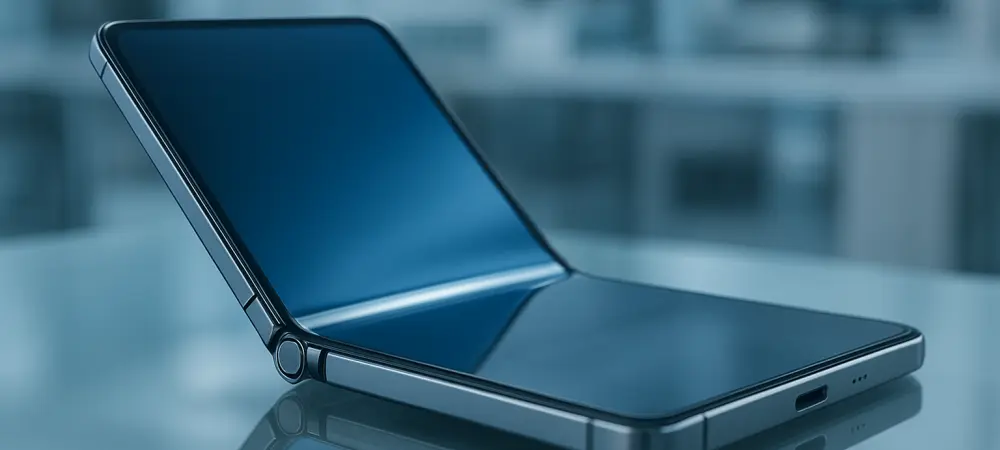
The inclusion of improved health-tracking sensors in the Apple Watch Series 12 highlights the company’s continued focus on biometric data and wellness. This technological trajectory has set the stage for the most anticipated hardware release in recent years: the first foldable iPhone. As 2026 progresses, the smartphone market is no longer defined by incremental camera updates or minor battery improvements. Instead, the industry is witnessing a fundamental shift in form factor that challenges the traditional slate design. Apple’s entry into this segment represents more than just a new product; it is a validation of the foldable category that competitors have navigated for several cycles. The primary challenge remains balancing the structural integrity of a flexible display with the premium aesthetic expected by the user base. By integrating advanced haptic feedback and a reinforced hinge system, the device aims to bridge the gap between a portable phone and a productivity-focused tablet, signaling a new era for mobile computing.
Engineering: The Flexible Future
Durability: The Hinge and Display
Achieving a display that maintains clarity while enduring thousands of folds required a significant departure from standard organic light-emitting diode manufacturing processes. The implementation of a self-healing polymer layer addresses the persistent issue of screen creasing, a flaw that previously hindered mass adoption in the foldable market. This material science breakthrough allows the screen to maintain its smoothness even after extended use in varying environmental conditions. Furthermore, the integration of a dual-axis hinge mechanism ensures that the device remains slim when folded, avoiding the bulky profile often associated with early prototypes. This engineering feat is coupled with a new ultra-thin glass substrate that provides the tactile feel of traditional glass while offering the flexibility of plastic. The result is a seamless visual experience where the transition between folded and unfolded states is nearly imperceptible to the naked eye, ensuring that high-resolution content remains undistorted.
Versatility: The Software Ecosystem
Building on this mechanical foundation, the internal layout of components has been reorganized to accommodate the folding axis without sacrificing battery capacity or thermal efficiency. Engineers utilized a split-battery configuration that distributes weight evenly, providing a balanced feel in the hand whether the device is open or closed. Heat dissipation is managed through a localized vapor chamber system that adapts to the current configuration of the phone, preventing performance throttling during intensive tasks. This focus on internal architecture ensures that the device supports the high-frequency demands of modern applications, including real-time spatial computing and advanced graphics rendering. The transition to this new form factor also necessitated a reimagining of the internal sensors, which must now function accurately across different orientations. This rigorous approach to hardware durability serves to reassure consumers that the foldable iPhone is not merely a novelty, but a robust tool designed for professional life.
Evolution: The Market Paradigm
This approach naturally leads to a total reevaluation of how digital content was consumed and created on the move throughout the current year. Enterprises should have prepared for this transition by optimizing their mobile applications for variable aspect ratios, ensuring that productivity tools remained effective across multiple viewing modes. The integration of advanced biometric sensors within the foldable chassis also suggested that future iterations would focus even more heavily on integrated health and professional monitoring. It was essential for early adopters to recognize that the initial investment in this technology was a step toward a more modular hardware ecosystem. As the industry moved past the limitations of static screens, the focus shifted to software adaptability and long-term hardware resilience. Strategists noted that the evolution of the smartphone had finally reached a point where the physical shape of the device was as intelligent as the silicon powering it.