

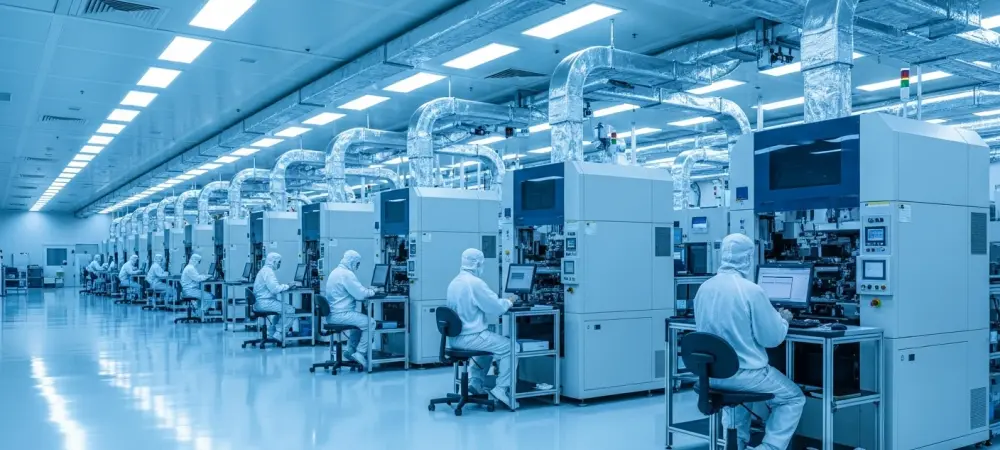
The global technology landscape stands on the precipice of a radical reorganization as rumors of a massive $10 billion manufacturing partnership between Intel and Apple begin to solidify into market reality. This potential agreement represents much more than a simple contract; it signals a fundamental break from the era where a single titan, Taiwan Semiconductor Manufacturing Company (TSMC), held almost exclusive dominion over the world’s most advanced processors. By shifting a portion of its high-end production toward Intel’s domestic and European foundries, Apple is effectively redesigning the geography of silicon. This move triggers a massive capital expenditure cycle that will ripple through the entire tech ecosystem, forcing a re-evaluation of how hardware is built and who supplies the tools for its creation.
The Semiconductor Shift: Why the Rumored Intel-Apple Partnership Matters
To grasp the magnitude of this shift, one must recognize that for nearly a decade, the relationship between Apple and TSMC was the bedrock of the mobile revolution. However, as the demand for artificial intelligence capabilities and high-performance computing reaches a fever pitch, the limitations of a centralized supply chain have become glaringly apparent. Geopolitical tensions and the sheer physical constraints of existing facilities have created a bottleneck that threatens to stifle innovation. Consequently, Apple’s interest in Intel’s “foundry-first” initiative is a strategic hedge intended to ensure that the next generation of iPhones and Macs is never held hostage by regional instability or capacity shortages.
From TSMC Hegemony to Diversified Foundations: The Context of the Deal
The historical context of this pivot lies in the exhaustion of the old model, where concentrated manufacturing was seen as a way to maximize efficiency. In the current climate, resilience has overtaken raw efficiency as the primary driver of corporate strategy. Intel’s aggressive pursuit of the 1.8A process node has provided Apple with a viable alternative, allowing the tech giant to diversify its manufacturing base without sacrificing technical sophistication. This transition is not merely about finding a new vendor; it is about building a more robust, distributed foundation for global electronics that can survive the unpredictable shifts of the coming decade.
The Lithography Surge: How ASML Stands to Benefit from High-End Production
The Critical Role of Extreme Ultraviolet Technology in Modern Chipmaking
The immediate winner in this industrial realignment is ASML, the Dutch powerhouse that provides the essential extreme ultraviolet (EUV) lithography machines required for sub-2nm production. If the partnership between Intel and Apple extends to flagship mobile processors, the equipment requirements will expand exponentially. Industry data suggests that a deal of this scale would force Intel to acquire roughly 15 additional EUV units, representing a capital injection of approximately €4.6 billion. This demonstrates that while the chips are designed in California, the ability to manufacture them remains locked behind the sophisticated machinery produced in Europe.
Advanced Packaging and the Rise of Hybrid Bonding Solutions
Beyond the initial etching of the silicon, the way chips are connected has become a new frontier for profit and performance. As traditional scaling hits physical limits, advanced packaging and hybrid bonding have emerged as the solutions to maintaining the pace of Moore’s Law. This creates a lucrative opening for BE Semiconductor (Besi), which specializes in the bonding technologies necessary to stack chiplets with microscopic precision. If Intel successfully captures Apple’s packaging business, the demand for these specialized machines could more than double, jumping from an estimated 80 units to nearly 182 units by the end of the decade.
Overcoming Geographic Concentration and Execution Risks
While the financial projections are staggering, the physical execution of this transition remains the most significant hurdle for Intel. Moving production away from the established ecosystem of East Asia requires a complete reconstruction of the logistics and quality control frameworks that Apple demands. Success in this “equipment frenzy” is not guaranteed by the purchase of tools alone; Intel must demonstrate it can achieve the high yields and reliability that TSMC perfected over thirty years. This involves managing a globally distributed workforce and ensuring that facilities in the United States and Europe can operate with the same clockwork precision as their Asian counterparts.
Future Horizons: The Evolution of Global Fabrication and Regulation
The trajectory of this deal suggests a future where semiconductor fabrication is no longer a regional specialty but a localized necessity. Driven by legislative frameworks like the U.S. CHIPS Act and the European Chips Act, the industry is moving toward a model where high-tech manufacturing is repatriated to the West. This environment will likely foster the adoption of even more advanced technologies, such as High-NA EUV, as companies race to secure their technological sovereignty. If Intel successfully integrates Apple as a primary client, it will likely serve as a proof of concept, encouraging other fabless giants like Nvidia to follow suit, thereby cementing a new economic order for the industry.
Strategic Takeaways for Industry Stakeholders and Investors
For those navigating this changing landscape, the focus must shift from the end-product to the underlying infrastructure. The most resilient investment opportunities currently lie with the “toolmakers” like ASML and Besi, who provide the foundational technology that both Intel and TSMC require to compete. Furthermore, businesses must recognize that supply chain diversification is now a mandatory cost of doing business rather than a optional luxury. Monitoring the deployment of advanced packaging and lithography equipment serves as a more accurate barometer for future market share than simply tracking consumer sales figures, as these tools represent the actual capacity for future innovation.
A New Era of Semiconductor Manufacturing
The Intel-Apple agreement functioned as a pivotal moment that forced the entire technology sector to rethink its reliance on concentrated manufacturing hubs. It moved the conversation beyond simple cost-benefit analyses and toward a long-term vision of global stability and technical redundancy. By fueling a massive surge in orders for European machinery, the partnership solidified the importance of lithography and bonding as the true bottlenecks of the digital age. Ultimately, the strategic shift toward a more distributed fabrication model provided a blueprint for how other industries could mitigate risk while continuing to push the boundaries of what is technically possible in a fragmented world.