

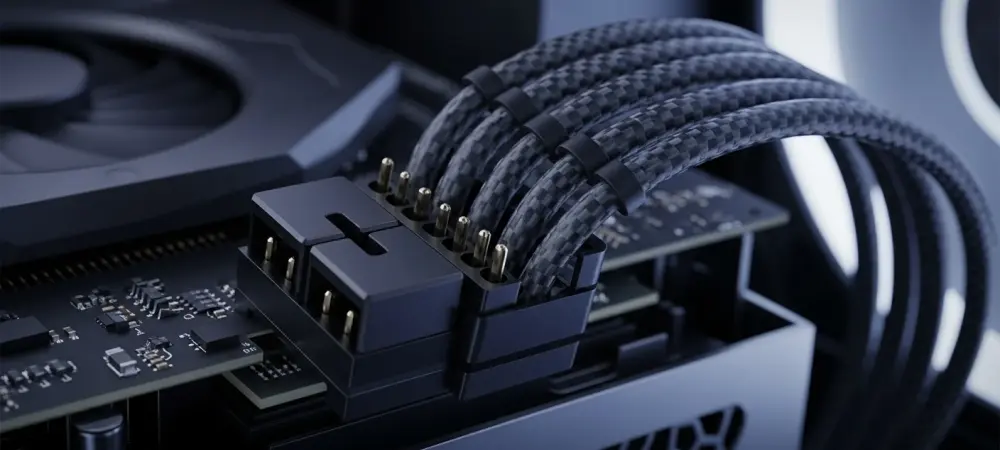
The persistent risk of thermal runaway in high-performance graphics connectors has finally met its match through a hardware-level intervention that prioritizes active circuit intelligence over traditional plastic housing. The introduction of the Cooler Master GPU Shield within the MWE Gold V4 PSU series marks a significant shift from passive insulation toward active electrical oversight. This technology provides a proactive layer of defense, ensuring that the critical 16-pin interface operates within safe thermal and electrical parameters even under extreme loads.
Evolution of GPU Power Safety
Power supplies traditionally relied on thick gauges and high-temperature plastics to prevent failures, but the sheer density of the 12V-2×6 standard rendered these measures insufficient. Modern PC building requires systems that can detect micro-fluctuations in current before heat begins to accumulate. By moving toward active monitoring, the industry acknowledges that human error in cable seating and manufacturing variance are variables that only real-time silicon can manage effectively.
The transition from the passive 12VHPWR design to the more robust 12V-2×6 interface was a necessary step, yet Cooler Master recognized that physical changes alone were not enough. The integration of the GPU Shield represents the first major effort to turn the power cable into a smart component. This approach mitigates the historical context of connector melting, providing a much-needed safety net for the current generation of high-draw hardware.
Technical Innovations in the GPU Shield System
Active Current Monitoring and Load Balancing
The core mechanism of the GPU Shield utilizes high-precision sensors to track electrical current across individual wires, preventing the “hot spots” that occur when one pin carries more load than its neighbors. By maintaining a balance below the 9.3-amp safety benchmark, the system ensures that no single point of contact becomes a bottleneck for heat. This granular level of control represents a departure from traditional over-current protection, which often reacts too late to prevent physical melting of the plastic housing.
This system is particularly effective at managing the 12V-2×6 interface, where even a slight misalignment can lead to dangerous resistance. By ensuring uniform distribution, the GPU Shield optimizes the electrical path, reducing the overall thermal profile of the connector. This active balancing acts as a continuous diagnostic tool, adjusting to the specific power demands of the GPU in real time.
Visual Diagnostic Interface and LED Feedback
Interaction with the monitoring system occurs through a specialized LED indicator located directly near the 16-pin port. This visual interface serves as a real-time communication bridge between the hardware and the user. A steady green light confirms that the connection is secure and the load is balanced, while a blinking red signal provides an immediate warning if current distribution becomes uneven or if the cable is not fully seated.
If the situation becomes critical—with the current draw surpassing the 15-amp threshold—the LED remains a solid red. At this point, the PSU triggers an automatic protection mode that shuts down the GPU. This failsafe prevents permanent damage to both the power supply and the graphics card, offering a level of hardware security that was previously unavailable in the consumer market.
Current Trends in Power Supply Unit Intelligence
Modern power supply units are no longer simple converters that deliver raw wattage; they are evolving into intelligent nodes within the PC ecosystem. This shift toward “smart” protection systems reflects the reality of modern graphics cards, which can experience massive power spikes that overwhelm traditional analog safety measures. Manufacturers are now prioritizing the quality and stability of power delivery as much as the total output capacity. This trend is also driving a move toward standalone safety adapters. By offering the GPU Shield as a separate component for cross-brand compatibility, Cooler Master is signaling a shift away from proprietary lock-in. This strategy suggests that active monitoring could soon become a universal standard, allowing users to upgrade their safety protocols without necessarily replacing their entire power delivery infrastructure.
Practical Applications and Target Demographics
For the gaming enthusiast utilizing top-tier NVIDIA RTX series graphics cards, this technology provides essential peace of mind against publicized risks of connector failure. High-end builds often feature complex cable management that can put stress on connectors, making the active monitoring of the GPU Shield a vital safeguard. It ensures that even in aesthetically focused builds, electrical integrity is never compromised for the sake of appearances. Professional workstation users find perhaps the most value in this technology due to the critical nature of hardware uptime. In environments where a single hardware failure can lead to days of lost productivity, the ability of the PSU to preemptively shut down before damage occurs is invaluable. DIY builders also benefit significantly, as the LED feedback simplifies the troubleshooting process during the initial assembly phase.
Technical Obstacles and Market Adoption Barriers
Despite its clear advantages, the technology faces a steep learning curve regarding user education and the correct interpretation of LED signals. If a user perceives a blinking red light as a general system error rather than a specific seating issue, the active protection might lead to unnecessary frustration. Clearer documentation and intuitive signaling will be required to ensure that the average builder can utilize the system effectively.
Furthermore, Cooler Master faces competition from other PSU manufacturers who are developing their own proprietary safety solutions. The lack of a unified industry standard for active monitoring means that users must often choose between competing ecosystems. Regulatory and standardization hurdles also remain, as universal compatibility requires a level of cooperation across hardware manufacturers that is often difficult to achieve in a competitive market.
Future Trajectory of Intelligent Power Management
The next step in this evolution involves the integration of hardware alerts into digital dashboards and software-based monitoring suites. Instead of relying on a simple LED, future systems will likely provide real-time wattage and temperature telemetry directly to the user’s desktop. This transition toward software-defined power management will allow for more nuanced control over how a system reacts to electrical anomalies.
As connector designs move beyond the current 16-pin limitations, active monitoring will likely play a role in defining the next generation of standards. The long-term impact on the lifespan and resale value of high-end components cannot be understated. A GPU that has been protected by active monitoring for its entire lifecycle will naturally be more desirable on the secondary market, creating a new metric for hardware health.
Final Assessment and Industry Impact
The GPU Shield demonstrated a clear path forward for an industry that had been struggling with the physical limitations of miniaturized power connectors. It effectively addressed the root causes of connector melting by prioritizing active surveillance over passive endurance. This technology proved that the era of the “dumb” power supply was ending, replaced by a new generation of intelligent components capable of protecting themselves.
Cooler Master successfully positioned itself at the forefront of this safety revolution by offering both integrated and standalone solutions. The impact of the GPU Shield was felt across the enthusiast community, as it provided a concrete solution to a problem that had previously relied on hope and high-quality plastics. Ultimately, the adoption of active protection systems became a necessity for the high-performance computing landscape, ensuring that power delivery remained the most reliable part of the system.