

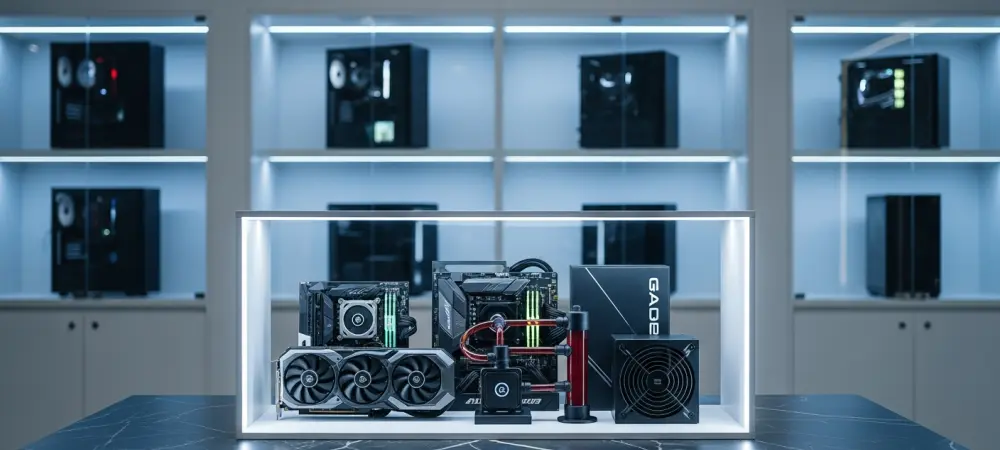
Enthusiasts and professional creators seeking the unparalleled power of the RTX 5090 have recently encountered a retail environment that fundamentally challenges the traditional DIY building ethos by gating high-end silicon behind thousand-dollar paywalls. This shift represents more than a temporary supply hiccup; it is a calculated transformation in how the most powerful hardware reaches the end user. In the current landscape, the prospect of purchasing a flagship graphics card as a standalone component has become a rarity, as retailers and distributors prioritize high-margin bundles that include motherboards, power supplies, and liquid-cooling loops. This phenomenon forces a difficult choice: wait indefinitely for a stock alert that may never arrive or invest in an expensive collection of hardware that they might not need. The trend suggests the era of the $2,000 graphics card is being replaced by a model that requires a comprehensive and expensive ecosystem purchase.
Strategic Allocation: Distribution Control in the Modern Era
Prioritizing Integrated Solutions: The Move Away From Individual Sales
Manufacturers have recognized that the demand for high-end processing power remains inelastic among the upper echelon of users, leading to a tighter grip on how these chips are distributed to the open market. By prioritizing large-scale system integrators and pre-built manufacturers, chipmakers ensure that their flagship silicon is showcased in optimal conditions, paired with components that can handle the immense power draw and thermal output of the architecture. This preference leaves traditional retail outlets with a significantly smaller share of inventory, which they then feel compelled to protect. When a store receives only a handful of units per month, selling them as individual parts often feels like a missed opportunity to move other inventory. Consequently, the limited supply is funneled into exclusive bundles that guarantee the retailer a larger transaction value while satisfying the manufacturer’s desire for the card to be part of a premium and functioning machine.
Defensive Retail Tactics: Mitigating Industrial Demand Through Bundling
The expansion of AI-driven workflows has further complicated the availability of high-end graphics cards for the general consumer base, as industrial demand often outweighs the needs of the gaming community. Since the release of the 5090 earlier this year, professional firms have been vacuuming up individual cards for localized server clusters, prompting retailers to implement bundling as a defensive measure. By requiring the purchase of a full gaming chassis or a specific high-wattage power supply, retailers can effectively deter industrial buyers who have no use for consumer-grade peripherals. This mechanism serves as a form of gatekeeping that theoretically keeps the hardware in the hands of the target demographic: the gaming and creative enthusiast. However, this strategy also alienates the veteran builder who prides themselves on selecting each specific part. The tension between preventing bulk acquisitions and maintaining a healthy market has resulted in this new landscape.
Economic Realities: The Struggle of Modern PC Retailing
Profit Margin Defense: The Pursuit of Ecosystem Bundling
For many regional hardware vendors, the profit margins on a flagship graphics card are surprisingly slim when compared to the overhead costs of stocking and securing such expensive inventory. To offset these narrow margins, retailers have turned to margin padding by attaching high-margin accessories to every flagship sale. Items like custom-sleeved cables, specialized vertical mounting brackets, and high-end thermal pastes often carry much higher percentage returns than the graphics card itself. By creating a mandatory bundle, the retailer can turn a low-profit transaction into a highly lucrative one, ensuring the long-term viability of their physical storefronts and online platforms. This economic necessity has become standard practice across the industry, moving away from the loss-leader model. Consumers now find themselves paying for availability through these curated packages, which include components that have been sitting in warehouses. This approach is a primary survival tactic.
Market Evolution: Adapting to a Solution-Based Purchase Philosophy
The hardware market successfully transitioned into a model where high-end components functioned as the anchor for comprehensive system upgrades rather than isolated purchases. This shift effectively ended the traditional era of incremental GPU swapping for the highest performance tiers, establishing a new standard for the 2026 to 2028 product cycles. Consumers who adapted by planning full-scale builds well in advance or looking toward specialized boutique builders found better customization within their bundles. It was advisable to focus on modularity, seeking out retailers that allow some flexibility in component selection rather than rigid, pre-defined kits. For those determined to secure a standalone card, monitoring the secondary market and manufacturer drops remained the only viable paths. Ultimately, the industry moved toward a solution-based philosophy that prioritized stability over freedom. Adapting to this reality required a strategic shift in budgeting for total commitment.