

The global aviation landscape is witnessing a profound shift in passenger expectations as the boundary between ground-based digital life and in-flight connectivity continues to dissolve at a rapid pace. United Airlines has recognized that the traditional model of intermittent, high-latency satellite internet is no longer compatible with the demands of modern travelers who expect the same level of performance at thirty-five thousand feet as they do in their living rooms. By integrating SpaceX’s Starlink service into its long-haul fleet, the carrier is not merely offering an incremental improvement but is instead fundamentally re-engineering the digital experience for international and transcontinental routes. This initiative seeks to eliminate the notorious “dead zones” that have historically rendered productivity and entertainment impossible during long over-water crossings, replacing them with a seamless, high-speed connection that functions regardless of geographical location. As the airline moves forward with this massive technological overhaul, it is clear that the decision-making process behind the rollout is as much about engineering precision and fleet management as it is about customer satisfaction and brand loyalty.
The Logic Behind the Fleet Selection
Leveraging the Continental Heritage
The strategic decision to utilize the Boeing 777-200ER fleet for the Starlink debut is deeply rooted in the historical lineage of the aircraft inherited from the 2010 merger with Continental Airlines. These specific airframes, while sharing the same model designation as the original United fleet, possess a unique set of technical specifications that make them the ideal candidates for a hardware-intensive technological upgrade. Even though many years have passed since the merger was finalized, the fleet remains segmented based on its original delivery standards, with the ex-Continental jets frequently being cited for their robust build quality and modern cabin configurations. By focusing on this specific sub-fleet, United is able to standardize the initial installation process across a group of aircraft that already share a common maintenance history and technical DNA, which significantly reduces the variables that could complicate a fleet-wide deployment of new satellite hardware.
Beyond their shared heritage, these aircraft were delivered during a production window between 1998 and 2007, placing them in a “sweet spot” of aerospace engineering that balances structural maturity with modern digital readiness. Unlike the older 777s in the legacy United fleet, these ex-Continental jets were manufactured with more advanced materials and assembly techniques that accommodate the installation of heavy external antennas without requiring extensive structural reinforcement. This age gap provides a crucial advantage in terms of airframe longevity, as these planes have a substantial amount of operational life remaining to justify the high costs associated with a Starlink retrofit. The airline is essentially future-proofing its most reliable long-haul workhorses, ensuring that they remain competitive in an era where digital amenities are a primary differentiator for high-value business travelers and frequent flyers. The most critical technical advantage of the ex-Continental 777-200ER fleet lies in its sophisticated electrical architecture, which was designed to support the growing power demands of early-millennium avionics and cabin entertainment systems. Starlink’s Low Earth Orbit (LEO) satellite receivers and the associated onboard distribution hardware are notoriously power-hungry, requiring a consistent and high-output electrical supply that older airframes often struggle to provide without significant modifications. These specific 777s feature high-capacity generators and a power management system that can easily absorb the additional load of the high-speed Wi-Fi equipment while maintaining the integrity of critical flight systems. By selecting this sub-fleet, United avoids the necessity of upgrading the entire power backbone of the aircraft, thereby streamlining the installation process and ensuring that the Starlink system can operate at peak performance levels from the moment the aircraft returns to service.
Technical Synergy and System Performance
The integration of 21st-century satellite technology into a 20th-century airframe requires a level of technical synergy that is often difficult to achieve without substantial engineering trade-offs. However, the ex-Continental 777-200ERs provide an existing framework that minimizes these conflicts, allowing the Starlink hardware to function as a native component rather than a bolted-on afterthought. The internal wiring conduits and data bus architectures of these aircraft are more conducive to the installation of high-bandwidth fiber-optic cables, which are necessary to prevent bottlenecks between the satellite receiver and the individual passenger access points. This internal infrastructure ensures that the low-latency benefits of the Starlink LEO constellation are not lost due to outdated onboard networking, providing a truly high-definition experience for every passenger in the cabin simultaneously.
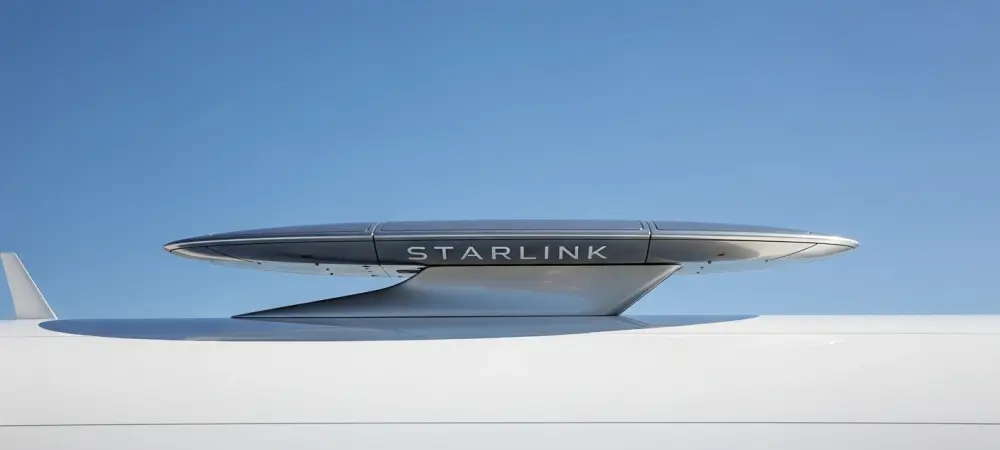
Furthermore, the physical dimensions and aerodynamic profile of the 777-200ER fuselage are well-suited for the mounting of the sleek Starlink electronically steered array antennas. The placement of these antennas is a delicate balance of minimizing drag while maximizing the line-of-sight to the satellite constellation as the aircraft moves across various orbital planes. Engineers have found that the surface area of the 777’s upper fuselage offers an ideal mounting location that does not interfere with other critical communication or navigation sensors. This ease of physical integration means that the external modifications are less invasive, reducing the risk of aerodynamic penalties that could impact fuel efficiency. Consequently, the airline can offer industry-leading connectivity without compromising the operational economics of its long-haul flights, creating a win-win scenario for both the maintenance departments and the corporate finance teams.
Mechanical Reliability and Engineering Synergies
The Influence of the GE90 Engine
A primary driver in the selection of the ex-Continental fleet for this technological debut is the unparalleled reliability of the General Electric GE90 engines that power these specific aircraft. In the world of long-haul aviation, the GE90 is regarded as a benchmark of engineering excellence, known for its massive thrust capabilities and its ability to operate for thousands of hours between major overhauls with minimal unscheduled maintenance. By choosing the GE90-powered fleet as the launch platform for Starlink, United is effectively placing its most advanced digital product on its most dependable mechanical platform. This ensures that the airline’s investment in high-speed internet is not sidelined by engine-related groundings, providing a stable environment for the initial rollout and allowing the marketing teams to confidently promote the new service across the global network.
The reliability of the GE90 stands in stark contrast to the challenges faced by other engine types within the broader 777 fleet, particularly the Pratt & Whitney 4000 series. In recent years, several carriers have had to navigate significant operational disruptions and mandatory inspections following high-profile engine failures in the Pratt & Whitney variants, leading to extended periods of downtime for those airframes. By prioritizing the GE90-powered jets, United is mitigating the risk of “tech-outages” where a plane might be equipped with the latest Starlink hardware but remain stuck in a hangar due to mechanical issues. This strategic alignment of high-tech connectivity with high-reliability propulsion is a clear signal that the airline is focused on consistency, aiming to provide a seamless experience where the internet is as reliable as the engines that keep the plane in the air.
The GE90 engines also provide a superior power-generation profile that directly benefits the high-energy requirements of the Starlink system during long-duration flights. These engines are equipped with massive integrated drive generators that produce a steady stream of clean electrical power, which is essential for the sensitive electronic components of the Starlink receivers. The stability of this power source prevents fluctuations that could lead to system resets or hardware degradation over time, further enhancing the longevity of the Wi-Fi installation. Because the GE90 is such a proven performer, United can rely on the fact that the primary power source for its new connectivity suite will remain functional even in the most demanding flight conditions, such as during trans-polar routes where satellite handoffs and electrical loads are most intense.
Reliability as a Competitive Foundation
In the hyper-competitive aviation industry, reliability is the foundation upon which all other passenger amenities are built, and the GE90-powered 777s provide the strongest possible base for United’s digital ambitions. If a passenger boards a flight expecting high-speed internet but the aircraft is swapped at the last minute for a non-equipped plane due to mechanical issues, the brand damage can be significant. By selecting the most mechanically sound portion of the fleet, United maximizes the “dispatch reliability” of its Starlink-equipped aircraft, ensuring that the planes are ready to fly when and where they are scheduled. This operational stability allows the airline to build trust with its customers, particularly the lucrative corporate segment that views reliable Wi-Fi as a non-negotiable requirement for choosing a carrier for international travel.
This focus on mechanical robustness also simplifies the logistical challenges associated with the initial service entry, as the maintenance teams can concentrate on mastering the nuances of the Starlink hardware rather than troubleshooting legacy engine issues. The GE90’s predictable maintenance schedule allows United to plan the Starlink installations with a high degree of precision, knowing that these aircraft are unlikely to encounter surprise mechanical failures that could disrupt the upgrade timeline. As the airline works toward its goal of fleet-wide standardization, the lessons learned on the GE90-powered 777s will serve as a blueprint for subsequent deployments. The goal is to create a virtuous cycle where high mechanical uptime supports high digital uptime, cementing United’s reputation as a carrier that delivers on its promises of both safety and modern convenience.
Maximizing Operational Efficiency
Integrating Installation with Heavy Maintenance
One of the most pragmatic aspects of the Starlink rollout is the decision to align hardware installations with the heavy maintenance cycles of the 777-200ER fleet. These aircraft are currently reaching milestones that require “C-checks” and “D-checks,” which are the most comprehensive and invasive inspections an airframe can undergo during its operational life. During these events, the aircraft is essentially stripped to its bare bones, with seats, galleys, and floor panels removed to allow for deep structural analysis and corrosion testing. This “open-heart surgery” environment provides technicians with unprecedented access to the aircraft’s internal systems, making it the most efficient time to run kilometers of new fiber-optic cabling and install the necessary routing hardware for a high-capacity Wi-Fi network. By bundling the Starlink installation with scheduled heavy maintenance, United effectively eliminates the need for additional “out-of-service” time that would otherwise be required for a standalone retrofit. If the airline were to pull a plane from the active schedule solely for a Wi-Fi upgrade, it would face significant lost revenue and logistical headaches; however, by using time the plane is already mandated to be in the hangar, the cost of labor and downtime is significantly amortized. This strategy allows the engineering teams to perform highly complex tasks, such as drilling into the fuselage for antenna mounts and reinforcing the internal brackets, with the precision and safety checks that only a heavy maintenance environment can provide. It is a masterclass in operational efficiency, ensuring that when the plane emerges from its inspection, it is not only safer and structurally sound but also a state-of-the-art digital platform.
The depth of a D-check also allows for the total replacement of legacy wiring that might have become brittle or outdated over decades of service, ensuring that the new Starlink system is built on a pristine foundation. Modern satellite internet requires high-speed data transmission that old copper wiring simply cannot support, so the ability to strip out old systems and replace them with high-bandwidth fiber during a heavy check is a massive technical advantage. This approach also permits the maintenance teams to conduct rigorous ground testing of the entire connectivity suite while the aircraft’s interior is still partially disassembled, allowing for easy access to components if adjustments are needed. Once the cabin is reassembled with new or refurbished seats and updated amenities, the Starlink system is fully integrated and ready for immediate passenger use, providing a “factory-fresh” feel to the upgraded aircraft.
Strategic Planning and Resource Allocation
The synchronization of maintenance and technology upgrades is a testament to United’s long-term strategic planning, which balances immediate passenger needs with the long-term health of the fleet. Managing a fleet of widebody aircraft involves a delicate dance of scheduling, parts procurement, and labor allocation, and by targeting the 777-200ERs during their peak maintenance window, the airline is optimizing every hour spent in the hangar. This approach also allows United to better manage its partnership with SpaceX, as the delivery of Starlink hardware can be timed to coincide with the start of each aircraft’s maintenance check, reducing inventory holding costs and ensuring that the latest versions of the technology are being installed. It is a highly disciplined method of fleet modernization that prioritizes the most efficient use of corporate resources.
Furthermore, this strategy provides a predictable roadmap for the rollout, allowing the airline to communicate clear timelines to its customers and stakeholders about when specific routes will see the new service. Because the maintenance schedule is fixed years in advance, United can forecast exactly how many Starlink-equipped planes will be in the air by the end of each quarter. This transparency is vital for corporate travel departments that need to know which flights will offer the connectivity required for their employees to remain productive. By turning a mandatory maintenance requirement into a platform for innovation, United is proving that even the most routine aspects of airline operations can be leveraged to create a competitive advantage. The result is a more resilient and modern fleet that is prepared to meet the demands of the digital age without sacrificing operational availability.
Reshaping the Future of In-Flight Connectivity
Competitive Advantages and Fleet Standardization
The decision to adopt Starlink technology represents a watershed moment for the aviation industry, signaling a decisive shift away from traditional geostationary satellite systems that have long been the bottleneck of in-flight internet. Traditional satellites, orbiting at high altitudes, suffer from significant signal delay or “latency,” which makes real-time activities like video conferencing or gaming nearly impossible. In contrast, Starlink’s LEO satellites orbit much closer to the Earth, providing a connection that feels almost identical to a high-speed home fiber network. This capability is no longer just a luxury; it is a critical competitive tool as rival airlines begin to offer free or low-cost high-speed Wi-Fi as a standard part of their service. United’s move ensures that it remains at the forefront of this trend, particularly for the long-haul international flights that are the primary profit drivers for global carriers. The ultimate goal for United is a complete standardization of the digital experience across its entire global network, moving toward a future where every passenger, regardless of the aircraft type or route, can enjoy a high-definition connection. While the 777-200ER fleet is the vanguard for the widebody deployment, the airline is simultaneously working to equip its narrowbody fleet, creating a unified ecosystem of connectivity. This standardization is crucial for brand consistency, as it allows passengers to have a predictable experience whether they are flying from Newark to London or from San Francisco to Los Angeles. By 2027, the airline expects to have the vast majority of its aircraft outfitted with Starlink, effectively turning its fleet into a massive, mobile network of flying data centers that are always connected to the global digital infrastructure.
This technological transformation is also about redefining the value proposition of the airline cabin itself, moving beyond simple seat-and-meal services toward a holistic lifestyle environment. With Starlink, the aircraft becomes a place where business travelers can conduct board meetings via Zoom and leisure travelers can stream 4K movies or play multiplayer games without interruption. This level of service creates a powerful incentive for customer loyalty, as travelers will increasingly choose airlines based on the quality of their digital offerings. By investing early and aggressively in LEO technology, United is positioning itself to capture a larger share of the premium travel market, ensuring that it remains the preferred choice for a generation of flyers who view connectivity as an essential utility rather than an optional add-on.
Actionable Insights for the Digital Transition
As the rollout continues, the primary focus for the industry will be the successful integration of these high-speed systems into existing operational workflows and the management of escalating data demands. Airlines must recognize that simply installing the hardware is only the first step; the true challenge lies in maintaining a consistent quality of service as thousands of passengers simultaneously access the network. United’s approach suggests that leveraging reliable airframes and timing installations with maintenance cycles is the most viable path for a large-scale deployment. Other carriers looking to follow suit should prioritize the stability of their fleet and the robustness of their electrical systems to ensure that the transition to LEO connectivity is as smooth as possible. The next phase of this evolution will likely involve the development of customized onboard apps and services that take full advantage of the low-latency connection, further enhancing the passenger journey.
In conclusion, the strategic selection of the ex-Continental Boeing 777-200ER for the Starlink debut was a multifaceted decision that successfully balanced mechanical reliability, electrical capacity, and maintenance efficiency. By choosing the GE90-powered fleet, United ensured that its digital flagship would be supported by its most dependable long-haul platform, minimizing the risk of operational disruptions. The alignment of hardware installations with mandatory heavy maintenance checks proved to be a masterclass in resource management, allowing the airline to modernize its fleet with minimal additional downtime. These efforts have not only solved the longstanding “connectivity gap” on international routes but have also set a new global standard for what passengers can expect from an airline. As the project moves toward full fleet completion by 2027, the focus shifted toward optimizing the user experience and ensuring that the digital infrastructure remains scalable for future technological advancements.