

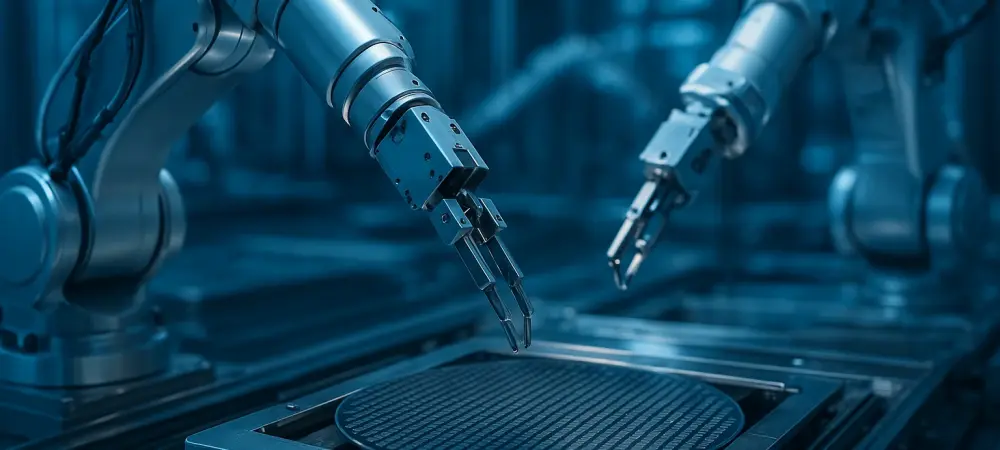
While social media platforms are currently saturated with high-definition clips of agile humanoid machines performing backflips and brewing coffee, a much larger and more consequential robotic revolution has already taken up residence within the global supply chain. This fascination with machines that mimic the human form has created a strange cultural paradox where the general public remains obsessed with the theoretical future of androids while ignoring the massive robotic workforce that has been operational for decades. Five million industrial robots are currently integrated into the global economy, performing intricate tasks with a level of precision and speed that no human could match, yet they rarely receive the same attention as their bipedal counterparts.
The viral nature of humanoid prototypes often obscures the reality of what modern automation actually looks like. Instead of sleek, two-legged assistants, the heavy lifting of global production is handled by stationary arms, automated guided vehicles, and specialized mechanical systems that lack any human-like features. This disconnect between media portrayal and industrial utility has led to a fundamental misunderstanding of the current technological landscape. By focusing on the humanoid form, society overlooks the sophisticated, interconnected ecosystem that dictates the efficiency of everything from automotive manufacturing to semiconductor fabrication.
The Five-Million-Unit Blind Spot in Modern Industry
Data provided by the 2025 World Robotics Report illustrates a staggering disparity between the perceived importance of humanoid robots and the actual installation figures. While approximately 7,000 humanoid units were sold globally for industrial and professional service applications, the global manufacturing sector installed roughly half a million traditional industrial robots within the same timeframe. This existing infrastructure represents a monumental scale of automation that is often treated as background noise in the tech world.
This invisible workforce is not evenly distributed, with Asian markets continuing to lead the charge in robotic density while the Americas and Europe follow at a more measured pace. The massive scale of this deployment suggests that the digital revolution is not something waiting to happen; it is a mature reality. Recognizing the sheer volume of these five million operational units is the first step toward understanding the complex security and operational challenges that now face global manufacturing leaders as they move through 2026.
Beyond the Hype: The Reality of the Machine Workforce
Understanding the shift from isolated mechanical tools to integrated network nodes is essential for grasping the current state of industrial progress. These machines are no longer standalone devices bolted to a factory floor; they are sophisticated agents in an interconnected digital web. This transition has turned what were once simple mechanical concerns into complex issues of data management and operational oversight. The efficiency of modern production relies entirely on the seamless communication between these five million units and the centralized systems that govern their every movement.
Moreover, the dominance of non-humanoid forms in the industrial sector is not an accident of design but a result of specialized evolution. In a factory environment, the human form is often a liability rather than an asset, as specialized arms can reach further, lift more, and move faster in 360-degree arcs. While the humanoid form is romanticized, the reality is that the most effective machines are those designed to excel in the specific physical constraints of the industrial world rather than those trying to navigate it like a person.
The Governance Gap and the Identity Crisis of Machines
As these millions of machines become more connected through the Industrial Internet of Things, a significant governance gap has emerged. Because these industrial robots do not resemble humans, they are frequently excluded from the rigorous security and identity protocols that are standard for human staff members. This oversight creates a unique non-human actor problem, where mobile agents capable of navigating physical spaces and accessing sensitive digital zones lack individual accountability within corporate security frameworks. Experts in the field have warned that the most pressing threat to industrial safety is not a cinematic rebellion, but a phenomenon known as zombie access. This occurs when thousands of autonomous or semi-autonomous machines hold permanent digital permissions that are never monitored or updated by security teams. As robots transition into roles as active nodes on a network, the challenge for organizations has shifted from mechanical maintenance to the sophisticated management of digital identities and physical access controls across the entire fleet.
Expert Perspectives on Humanoids versus Industrial Specialization
Professor George Pappas of the University of Pennsylvania has observed that the fundamental difference lies in the environment for which a machine is built. Industrial robots typically operate within cells, which are highly controlled spaces designed specifically to accommodate the machine’s movements. In contrast, humanoid robots are being developed to function within unstructured spaces designed for humans, such as retail stores or hospitals. This distinction explains why the humanoid market remains small but strategically important for the expansion of automation beyond factory gates. Industry leaders argue that the fascination with the humanoid figure acts as a distraction from the real work of managing automated systems. The core challenge involves managing the identity and permissions of any machine that moves within a facility, regardless of whether it has legs or wheels. As AI continues to evolve, the current humanoid units are viewed as a seed phase, representing a transition toward machines that can finally operate safely in shared human environments alongside specialized industrial fleets.
A Framework for Managing the Modern Robotic Fleet
To navigate this complex landscape, organizations established a new strategic approach that balanced efficiency with security. Leadership teams implemented unique machine identities, ensuring that every unit in a fleet possessed a traceable digital ID for logging and auditing purposes. They also applied granular permission sets, treating robots as if they were third-party contractors by granting only the minimum level of access required for their specific tasks. This shift allowed for greater control over the physical and digital reach of the autonomous workforce. Security systems eventually evolved to include instant revocation protocols, which provided the ability to strip a machine of its access rights the moment a malfunction or breach was detected. Companies also prioritized safety-by-design, moving beyond basic compliance to ensure that AI systems could interpret human movements with absolute precision. This proactive stance on safety and governance solidified the foundation for the next generation of robotic integration, ensuring that as machines and humans shared more spaces, the risks were managed through rigorous identity and permission frameworks.