

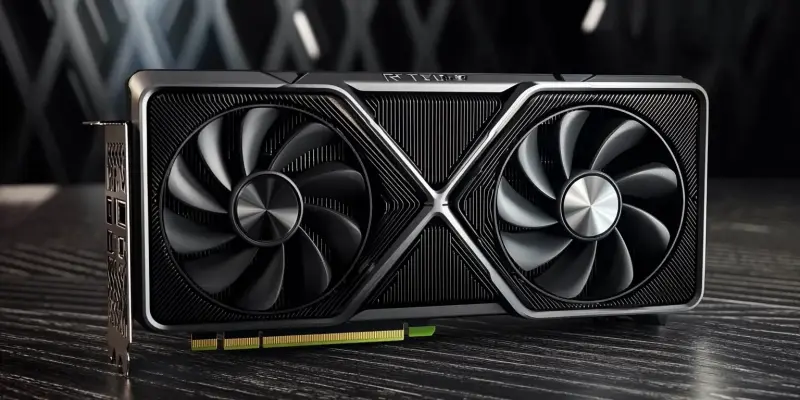
In recent months, a significant surge in demand for NVIDIA’s GeForce RTX 5090 GPUs has been observed in China’s black markets, driven primarily by the increasing popularity of DeepSeek’s AI models. The scenario has sparked widespread curiosity and concern regarding the underlying factors contributing to this trend. Instead of opting for expensive AI accelerators like the ##0, many Chinese tech firms and consumers prefer using NVIDIA’s consumer GPUs to run AI models locally, leading to an underground market boom. Understanding this shift necessitates an exploration of the reasons behind the overwhelming preference for consumer GPUs over AI-specific hardware.
Consumer GPUs Over AI Accelerators
The primary allure of NVIDIA’s GeForce RTX 5090 lies in its formidable specifications, which include high VRAM capacity and advanced features such as 5th Generation Tensor Cores and AI TOPS at 3,352. These capabilities make it an appealing and cost-effective alternative to more expensive AI accelerators. Firms running AI models locally find that the RTX 5090 provides significant computational power required for AI tasks, ensuring efficient performance without investing in prohibitively priced hardware. This consumer-grade GPU’s advanced features allow it to handle AI workloads adeptly, making it a viable choice for Chinese tech firms, which amplifies its demand within black markets.
With the rise of AI models, particularly DeepSeek’s R1, the reliance on consumer GPUs has grown exponentially. DeepSeek’s models effectively leverage the RTX 5090’s capabilities, proving that consumer GPUs can perform on par with AI-specific chips in certain contexts. The accessibility of these GPUs compared to mainstream AI chips makes them a preferred choice for many, contributing to the inflated prices in black markets. Due to the limited availability of these GPUs, prices have soared to as much as $5,000, indicating the lengths tech firms are willing to go to secure these powerful tools. The insufficient supply further exacerbates the issue, feeding into the booming underground market.
The Role of DeepSeek’s AI Models
DeepSeek’s AI models, particularly the R1, have played a crucial role in propelling the demand for GeForce RTX 5090 GPUs. The R1 models are designed to utilize the advanced features of the RTX 5090, making this GPU an optimal choice for running intricate AI processes. The effective performance of DeepSeek’s models on these GPUs means that tech firms can achieve high-level AI computation without the steep costs associated with dedicated AI hardware. This has resulted in an industry-wide shift, reminiscent of the previous cryptocurrency mining boom where GPUs were highly coveted.
The unique capabilities of DeepSeek’s models to run seamlessly on the RTX 5090 have made it a preferred choice, especially in a market where access to mainstream AI chips is restricted. The performance metrics speak volumes; the RTX 5090 not only meets but often exceeds the requirements posed by DeepSeek’s models. This overlap between consumer-grade GPU features and the computational needs of cutting-edge AI models has solidified the RTX 5090’s position in the tech landscape. Consequently, NVIDIA’s consumer GPUs have become synonymous with robust AI performance, indirectly boosting the black market demand.
Economic and Market Implications
The affordability and accessibility of NVIDIA’s consumer GPUs make them a more attractive option for smaller firms and individual users. Furthermore, user-friendly software compatibility and adequate performance capabilities of consumer GPUs for running AI tasks locally contribute to their growing appeal. Rather than investing in costly AI accelerators like the ##0, many Chinese tech companies and consumers are opting for NVIDIA’s consumer GPUs to run AI models locally. This preference has resulted in a boom in the underground market. Understanding these dynamics is crucial to exploring the reasons behind the overwhelming preference for consumer GPUs over specialized AI hardware.