

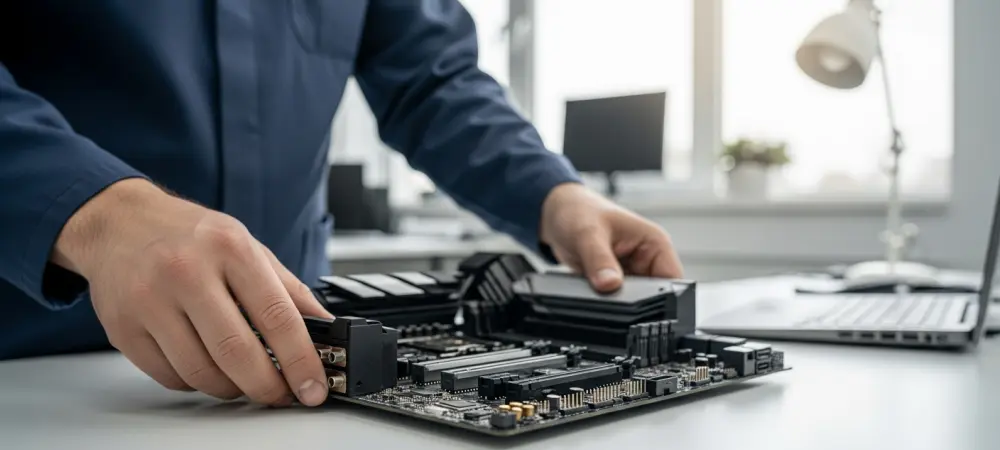
The landscape of personal computer hardware procurement has reached a startling crossroads where the traditional boundaries separating premium enthusiast gear from budget-friendly options have largely dissolved. While the pursuit of a high-end system traditionally necessitated a massive financial sacrifice, recent market fluctuations have flipped the script, making flagship motherboards accessible to a much wider audience. This shift represents a significant departure from historical pricing models where premium chipsets and robust power delivery systems were strictly gated behind paywalls that most casual builders could not justify. Now, consumers are witnessing a scenario where high-performance components are being cleared from retail shelves at prices that would have previously only secured an entry-level board. This development is not merely a localized sale but a broader structural adjustment within the industry, driven by a complex interplay of inventory surpluses and shifting consumer behavior.
Economic Pressures: Shifting Market Dynamics
At the heart of this pricing revolution lies a substantial downturn in motherboard sales, which have plummeted by nearly forty percent as the market enters a period of cooling demand. This decline is largely a byproduct of the high costs associated with other critical system components, specifically high-speed DDR5 memory and Gen5 storage solutions. Because building a modern machine requires a holistic investment in multiple expensive parts, many enthusiasts have opted to delay their upgrades rather than commit to the current high prices of RAM and solid-state drives. This hesitation has created a bottleneck in the ecosystem, as the demand for the motherboards that house these components has effectively cratered. Retailers now find themselves burdened with massive amounts of stock that they are unable to move through traditional channels, leading to a desperate need for pricing strategies that prioritize volume over individual profit margins to maintain business liquidity.
To navigate this stagnation, hardware vendors have pivoted away from conservative pricing to implement aggressive liquidation tactics that were once reserved for older technology generations. Major retail events have served as the primary battlegrounds for these price wars, with some flagship boards seeing reductions that exceed fifty percent of their original manufacturer suggested retail price. This phenomenon is categorized by industry analysts as a temporary over-correction, where manufacturers are more concerned with clearing warehouse space and generating cash flow than maintaining their brand’s premium perception. Such deep discounting is a direct response to a market that overproduced in anticipation of a growth cycle that failed to materialize under current economic conditions. Consequently, the temporary nature of these price cuts suggests that the window for acquiring workstation-grade hardware at mid-range prices will likely close as soon as the broader inventory levels reach stability.
High-End Hardware: Unprecedented Price Points
A standout example of this market-wide trend is the ASRock Z890 Taichi, a motherboard that has historically commanded a premium price of four hundred and sixty dollars but recently hit the market at just two hundred dollars. This specific board is designed for the latest socket architectures and features specifications that are typically overkill for the average user, including a massive twenty-plus-one-plus-two power delivery system. Such robust power phases are essential for extreme overclocking and system stability under heavy workloads, features that are almost never found in the sub-two-hundred-dollar category. Furthermore, the inclusion of modern standards like Thunderbolt 4 and PCIe Gen5 support provides a level of connectivity and throughput that was previously restricted to professional workstations. For a consumer to obtain this level of engineering for the price of a basic board is a rarity that fundamentally changes the value proposition of any modern PC build.
The trend extends beyond the flagship ATX models to encompass specialized segments like small form factor builds, which have traditionally carried an enthusiast tax. The Asus ROG Strix B650E-I, a premium mini-ITX board known for its dense feature set and high build quality, recently saw a forty percent discount that lowered its price to one hundred and eighty dollars. The reduction makes the prospect of building a compact, high-performance machine far more accessible than it has been in several years. Similarly, mid-range and high-tier boards for existing platforms, such as the MSI Z790 Gaming Plus Wi-Fi, have reached all-time lows in the range of one hundred and thirty dollars. This price point allows builders using previous-generation processors to access the high-tier chipset features for the same cost as a generic office motherboard. These examples highlight a broader movement where the hardware once considered aspirational is now being positioned as the new baseline for value.
Future Considerations: Navigating the Hardware Landscape
Beyond immediate performance gains, the focus on future-proofing inherent in these flagship models ensures that a system remains relevant for several years to come. Even at these record-low price points, the featured motherboards include multiple PCIe Gen5 slots and high-speed internal headers, providing the necessary infrastructure for next-generation graphics cards and storage devices. As these peripheral technologies become more common and eventually drop in price themselves, the owners of these flagship boards will be able to upgrade their systems without needing to replace the motherboard. Taking advantage of these temporary market conditions is therefore an effective method for securing a premium foundation that can adapt to the evolving demands of the technology landscape through 2027 and beyond.
The sudden shift in hardware pricing created an unprecedented opportunity for consumers who were ready to capitalize on the industry’s inventory surplus. System builders who prioritized high-tier chipsets found that they could secure workstation-grade stability while spending significantly less than they had originally budgeted. It was essential for buyers to verify the compatibility of their existing components, especially considering the specific power requirements of these robust flagship boards. Looking ahead, those who invested in these premium platforms positioned themselves to handle upcoming technological transitions with ease. The strategic move involved focusing on boards offering PCIe Gen5 and advanced thermal designs, as these features guaranteed the best return on investment. Ultimately, the market correction served as a reminder that patience and timing were as important as technical knowledge when assembling a computer. Monitoring retail trends became the most effective strategy for enthusiasts.