

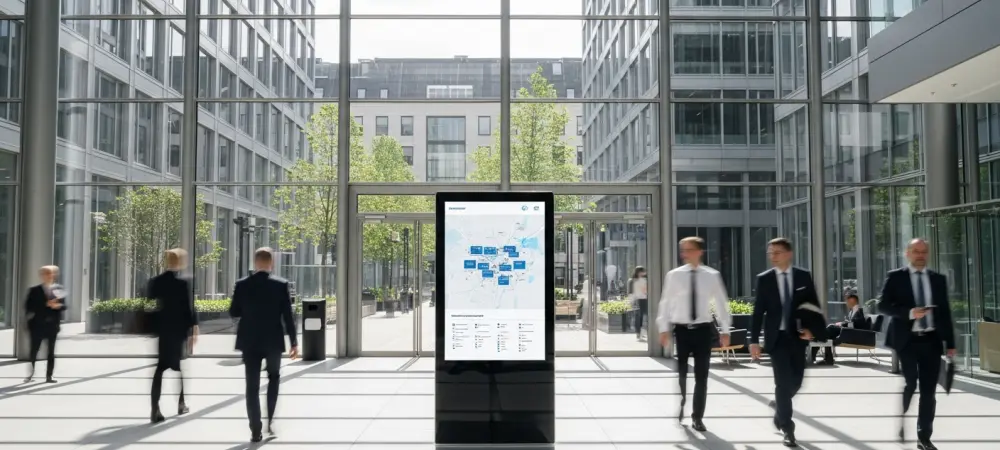
The traditional barrier between high-precision digital targeting and the physical office environment has finally dissolved as marketers look for more tangible ways to reach decision-makers. While digital account-based marketing has dominated the strategy for years, its reliance on mobile screens and social feeds often leads to message fatigue or technical bypasses like ad blockers. The introduction of the ABM Matcher represents a pivotal shift, allowing brands to bridge the gap between abstract data lists and the actual physical buildings where their target clients work. By mapping corporate account lists directly to premium workspace screens across Europe, this technology ensures that B2B advertising is no longer restricted to the chaotic digital landscape. This approach transforms static office screens into dynamic, data-driven assets that reflect the sophisticated intent-based logic usually reserved for programmatic display ads or specific enterprise platforms in the current market. By aligning physical presence with digital precision, firms achieve a unified voice.
Audience Selection: Optimizing Transparency and Precision
Before a single pixel is rendered on a screen, the system serves as a sophisticated pre-campaign intelligence tool that helps agencies qualify their targets with surgical precision. Marketers securely upload their specific target account lists into the system, which then cross-references these names against a proprietary database of corporate residents within premium office towers. This process provides an immediate visual map of where a brand’s most valuable prospects are located, eliminating the guesswork that has historically plagued out-of-home advertising. Instead of buying broad demographic segments or hoping for incidental exposure, planners now build briefs based on confirmed occupancy data. This level of transparency allows for a more accountable allocation of resources, ensuring that every dollar spent is directed toward buildings housing the specific firms identified in the sales funnel. It essentially mirrors the planning phase of a digital campaign by focusing on verified professional hubs.
The tool facilitates a more nuanced understanding of how high-value professionals move within key business hubs such as London, Paris, and Frankfurt. By focusing exclusively on these dense commercial centers, the platform minimizes the advertising wastage typically associated with broad-reach media that captures both business and consumer audiences. The ability to verify which floor a company occupies or which lobby they pass through allows for a highly localized strategy that remains scalable across borders. This geographic concentration ensures that enterprise-level messaging remains relevant to the professional atmosphere, avoiding the dilution that occurs when ads appear in non-business contexts. Furthermore, the secure handling of data ensures that proprietary client lists remain confidential throughout the matching process. This shift from generic visibility to specific account influence marks a new standard in how business services are marketed to the C-suite, providing a clear competitive edge for those who prioritize location-based data.
Programmatic Integration: Streamlining Execution via Infrastructure
The transition from strategic planning to live execution is handled through a robust programmatic infrastructure that connects the matched account data directly to Demand-Side Platforms. Once the target buildings are identified, the relevant inventory is flagged for purchase within the same digital ecosystem that marketers already use for their online ads. This integration removes the traditional friction of manual insertion orders and long lead times, allowing B2B teams to be as agile in the physical world as they are on the web. By treating office screens as programmatic endpoints, the system enables real-time bidding and optimization based on the specific presence of target accounts. This technological synergy means that a marketing team can launch a multi-channel campaign where the messaging in a social feed perfectly aligns with the content seen by an executive entering their building lobby. This creates a powerful reinforcement loop that increases contact frequency while maintaining the professional integrity of the campaign. By synchronizing physical screen deployments with digital intent signals, brands can ensure their physical presence is not just a branding exercise but a strategic touchpoint in a complex sales cycle. This synchronization allows for the delivery of specific creative assets tailored to the stage of the buyer’s journey, whether that involves high-level awareness or bottom-of-the-funnel conversion. The programmatic nature of the platform also ensures that reporting is standardized, making it easier for marketers to prove the impact of their spend to internal stakeholders. Having a unified view of performance across both digital and physical channels simplifies the optimization process, as teams can adjust their budgets based on which locations or accounts are showing the most engagement. This level of technical maturity signifies that physical office advertising has moved from a legacy media format to a core component of the modern marketing stack, offering greater control, efficiency, and the ability to scale international campaigns.
Market Evolution: Strategic Implementation and Results
Marketers who adopted this integrated approach realized that the traditional silo between physical and digital media was no longer sustainable for reaching complex buying committees. By prioritizing data transparency and programmatic flexibility, organizations moved toward a model where every physical impression was backed by specific account intent. The shift necessitated a closer collaboration between sales and marketing teams, as the physical presence of ads in a prospect’s office served as a direct catalyst for outreach. Those who successfully navigated this transition focused on creating high-impact creative content that respected the professional environment while providing clear value propositions. They also utilized the granular reporting provided by the matching tool to refine their list of target accounts, shifting budget away from low-conversion sectors toward high-growth opportunities. This proactive stance allowed brands to establish a dominant presence in several key European markets by ensuring their messaging reached the right people.
The expansion of these capabilities across several major territories established a new benchmark for how localized insights could be applied to international B2B strategies. Companies learned that a one-size-fits-all approach to office advertising was less effective than the account-specific precision offered by the new matching technology. As the ecosystem matured, the integration of physical touchpoints became a standard requirement for any serious account-based marketing plan aimed at the enterprise sector. The focus shifted from simple brand awareness to a more comprehensive understanding of the entire buyer’s journey across multiple environments. Looking back, the introduction of this technology served as the turning point for a more unified marketing landscape where data informed every aspect of the physical experience. This evolution proved that when technology and context were properly aligned, the results were significantly higher engagement rates and a more streamlined path to closing deals, ultimately reshaping the industry views.