

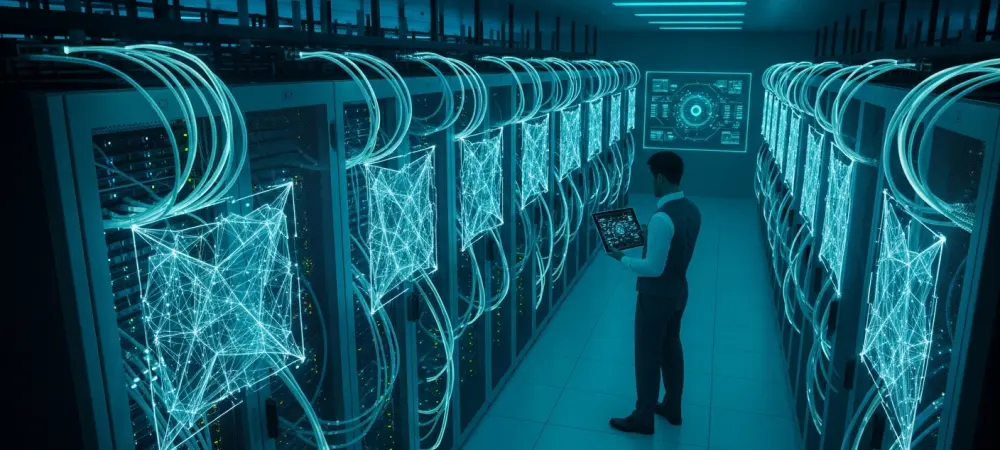
The rapid evolution of computational power has fundamentally transformed the digital landscape, forcing virtual private network providers to abandon traditional encryption methods that once seemed invincible against malicious actors. While the promise of quantum computing brings unprecedented scientific breakthroughs, it simultaneously introduces the Store Now, Decrypt Later vulnerability, which threatens the long-term integrity of encrypted data stored today. Consequently, the industry is undergoing a massive migration toward post-quantum cryptography, ensuring that communications remain secure even when cryptographically relevant quantum computers become common tools for state actors. This transition is not merely a technical update but a total overhaul of the trust model that has defined the internet for decades. Users now demand proof rather than promises, leading to a surge in transparent operations and verifiable security protocols that move beyond the marketing slogans of the previous era. Every connection made today must account for the reality that current encryption could fail.
Integrating Post-Quantum Protocols: The New Standard for Encryption
Modern providers are now deploying standardized algorithms like ML-KEM and ML-DSA, which were recently finalized by the National Institute of Standards and Technology to withstand the brute-force capabilities of quantum processors. These algorithms rely on lattice-based cryptography, a mathematical framework that remains difficult for both classical and quantum systems to solve efficiently. By implementing these hybrid key exchange mechanisms, services can maintain compatibility with older devices while providing a layer of protection that is theoretically immune to quantum-level threats. This approach is critical because it addresses the reality that data intercepted today could be deciphered years from now if it is not protected by quantum-resistant layers. Furthermore, the move to these protocols has required significant optimization of packet sizes and processing overhead to ensure that the increased complexity of the mathematical operations does not degrade the high-speed performance that consumers expect from their tunnel connections.
Transitioning to these advanced standards involves more than just swapping one algorithm for another; it requires a complete redesign of the handshake process that initiates a secure connection between the client and the server. Many leading services have adopted the WireGuard-NT and OpenVPN Quantum-Safe variants, which incorporate post-quantum pre-shared keys to mitigate the risks associated with existing asymmetric encryption. This shift has also necessitated a global upgrade of server infrastructure, as legacy hardware often lacks the specialized instruction sets required to handle lattice-based computations without causing latency spikes. As these technologies become more widespread, the focus is shifting toward ensuring that mobile devices, which often have limited battery and processing resources, can also benefit from these security enhancements without sacrificing usability. The goal is to create a seamless experience where the complexity of the underlying math remains invisible to the end user while providing a level of defense that is calibrated for the threats of the current decade.
Verifiable Privacy: Moving Toward Absolute Transparency and External Validation
Beyond the technical hurdles of quantum resistance, the industry is witnessing an unprecedented push for operational transparency, manifesting in the move away from proprietary black boxes toward open-source architectures. Leading VPN providers are now subjecting their entire codebases to continuous public scrutiny, allowing independent security researchers to verify that no backdoors or vulnerabilities exist within the software. This trend is complemented by the widespread adoption of RAM-only server networks, which ensure that no data is ever written to a hard drive, effectively making it impossible for logs to persist after a server reboot. To provide further assurance, many firms have established recurring, unannounced third-party audits conducted by reputable cybersecurity firms such as Deloitte or Cure53. These audits are no longer one-time marketing events but have become dynamic processes where the auditor has persistent access to the server environment to confirm that the service is operating exactly as described in its privacy policy at all times.
The conclusion of this industry-wide transformation resided in the realization that technical security is only as strong as the human and legal frameworks that support it. Organizations shifted their focus toward implementing multi-hop architectures and privacy-preserving authentication methods that remove the need for personal identifiers like email addresses or billing details. To secure their systems for the coming years, administrators started prioritizing the deployment of decentralized identity solutions and end-to-end encrypted management consoles. The most effective strategy involved a combination of hardware-level isolation and the rigorous application of post-quantum standards across every layer of the networking stack. Users prioritized services that offered verifiable proof of their no-logs claims through real-time monitoring and public bug bounty programs. Evaluating a provider based on its commitment to open standards and its response to the evolving threat of quantum-assisted decryption remained the most prudent path for digital sovereignty.