

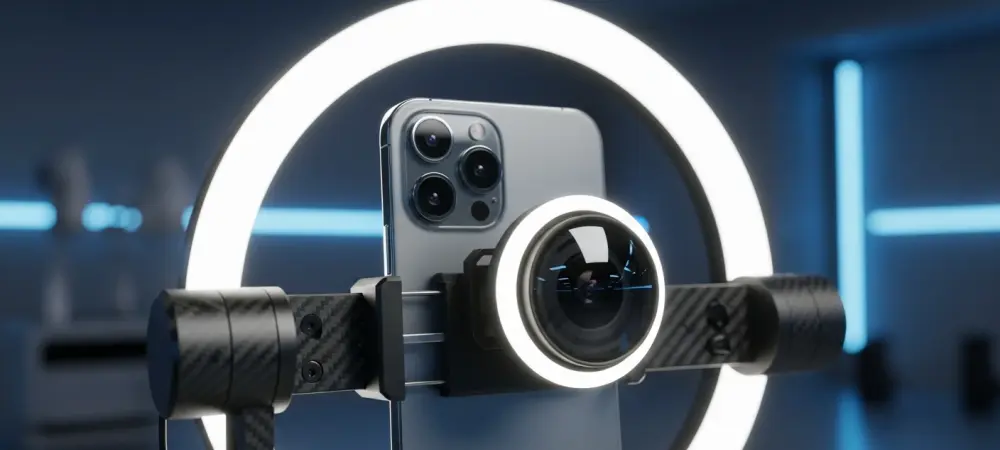
The boundary between professional cinema cameras and pocket-sized mobile devices has never been more porous than it is with the arrival of the Vivo X300 series. While many manufacturers focus on incremental camera updates, this lineup represents a structural shift toward a specialized imaging ecosystem. Emerging shortly after the 2026 Mobile World Congress, the X300 Ultra and X300s demonstrate that a smartphone can serve as a primary workstation for creators who demand high-fidelity optics and immense computational throughput.
Evolution of the Vivo Flagship Philosophy
The design principles of the X300 series move away from the generic sleekness of previous generations, favoring a rugged yet sophisticated aesthetic that prioritizes utility. By integrating specialized hardware like the filmmaking kit, Vivo acknowledges that software optimization alone cannot replicate the physical properties of high-end glass. This strategy positions the series not just as a mobile phone, but as a modular tool designed to challenge the dominance of traditional mirrorless systems in the content creation space.
Furthermore, the context of its release signifies a transition in the broader technological landscape. As mobile computing power begins to rival dedicated laptops, the X300 serves as a bridge between high-performance computing and professional photography. Its emergence reflects a market demand for devices that can handle heavy multitasking and high-resolution video rendering without the need for external processing units or bulky peripheral equipment.
Core Technical Components and Innovations
Professional-Grade Optics and Zeiss Collaboration
The centerpiece of the X300 Ultra is its distinctive circular triple-camera module, which benefits from an intensive partnership with Zeiss. This collaboration extends beyond simple branding; it involves deep optical tuning and the inclusion of a telephoto converter that allows for unparalleled zoom clarity. Such hardware enables the device to capture images with a natural bokeh and color accuracy that typically elude the over-processed look of standard smartphone photography.
The 3nm MediaTek Dimensity 9500 Architecture
Internal performance is driven by the MediaTek Dimensity 9500, an octa-core chipset built on a cutting-edge 3nm process. With a prime core clocked at 4.21GHz and the Mali G1 Ultra GPU, the X300s manages to surpass the 10,000-point mark in multi-core benchmarks. This architecture is vital for maintaining high-frame-rate recording and real-time AI processing, ensuring that the device remains responsive even under the most demanding computational loads.
Emerging Trends in Mobile Hardware Synergy
There is a clear industry-wide movement toward 3nm architecture, which allows for greater transistor density and improved power efficiency. Vivo has capitalized on this trend by aligning its hardware with modular accessories, catering to a growing consumer segment that values physical customization. This synergy between internal processing power and external optical tools marks a departure from the “all-in-one” internal camera philosophy, favoring a more versatile, professional-grade setup.
Real-World Applications for Power Users
Mobile journalism and professional content creation have been the primary beneficiaries of this technological leap. In fast-paced environments where speed is essential, the ability to film, edit, and transmit high-definition footage from a single device is transformative. The inclusion of 16GB of RAM and the streamlined Android 16 interface allows users to run heavy editing suites alongside communication tools without experiencing the typical thermal throttling or lag associated with mobile multitasking.
Market Challenges and Technical Limitations
Despite the impressive specifications, the 3nm architecture presents significant hurdles, particularly regarding thermal management. High clock speeds often lead to rapid heat accumulation, requiring sophisticated internal cooling systems that add weight and bulk to the chassis. Additionally, the reliance on specialized modular accessories may limit the device’s appeal to mainstream users who prefer a simpler, more compact experience, creating a niche market for the Ultra model.
Future Outlook for High-Performance Mobility
The trajectory of Vivo’s flagship technology points toward even deeper integration of AI-driven imaging and the exploration of sub-3nm nodes. As transistors continue to shrink, the potential for embedding even more complex neural processing units increases, which could lead to real-time, hardware-level video retouching that is indistinguishable from professional post-production. The long-term impact will likely involve a complete decentralization of professional film sets, where the smartphone acts as the central hub for all creative output.
Final Assessment of the X300 Series
The X300 series successfully balanced aesthetic sophistication with raw, uncompromised processing power. By prioritizing a modular hardware approach and leveraging the latest 3nm silicon, the brand established a new benchmark for what a professional-tier mobile device should offer. This evolution proved that the future of the industry lies not in universal appeal, but in providing specialized, high-performance tools that empower a new generation of digital storytellers.