

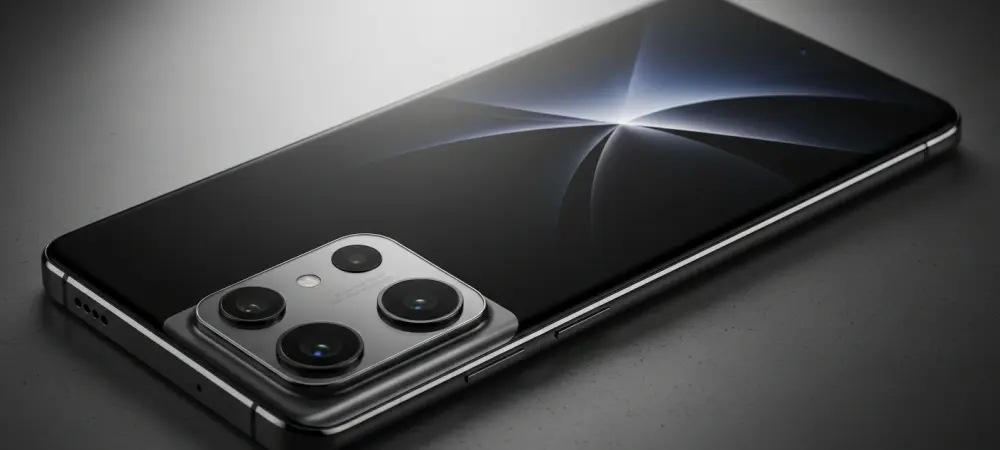
Dominic Jainy is a seasoned IT professional with a profound expertise in high-performance computing, artificial intelligence, and mobile hardware architectures. His career has focused on the intersection of hardware optimization and user experience, making him a leading voice on how next-generation chipsets transform mobile gaming and productivity. With the upcoming release of the OnePlus 15T, Jainy provides a technical deep dive into how specialized silicon and massive battery capacities are redefining the limits of the modern smartphone.
In this conversation, we explore the intricate “Triple-Core” architecture of the new device, the engineering challenges behind its record-breaking benchmarks, and the practical implications of its massive 7,500mAh Glacier Battery. Jainy also breaks down the benefits of bypass charging for power users and explains how the device’s premium memory configurations cater to the most demanding multitaskers in today’s mobile landscape.
The OnePlus 15T utilizes a “Triple-Core” setup featuring the Snapdragon 8 Elite, a G2 Wi-Fi chip, and a specialized touch response chip. How do these components collaborate to maintain 165 fps at 1.5K resolution, and what specific latency improvements should competitive gamers expect during intensive matches?
The synergy within this “Triple-Core” setup is designed to eliminate the traditional bottlenecks found in mobile gaming by distributing specific tasks across dedicated silicon. The Snapdragon 8 Elite handles the heavy lifting of rendering, while the G2 Wi-Fi chip—the same found in the flagship OnePlus 15—ensures a rock-solid data stream to prevent lag spikes during online play. By offloading touch processing to the specialized “Lingxi” touch response chip, the system can achieve a near-instantaneous connection between a player’s finger and the action on screen. This harmony is what allows the device to sustain a blistering 165 fps at 1.5K resolution, providing a visual fluidity that feels incredibly smooth to the touch. For a competitive gamer, this means the window between seeing an opponent and reacting is significantly narrowed, offering a tactile advantage where every millisecond of reduced latency counts toward a victory.
Benchmark scores for this hardware exceed 4.45 million points, largely driven by the new “Wind Chaser Gaming” kernel. What are the technical hurdles of optimizing such a kernel for a 3nm processor, and how does it balance peak frame rates with thermal stability during hours of continuous play?
Optimizing a kernel for a 3nm processor like the Snapdragon 8 Elite is a delicate balancing act because the sheer density of transistors leads to significant heat generation when pushed to its limits. The “Wind Chaser Gaming” kernel acts as the brain of the operation, intelligently allocating power cycles to ensure the device hits that massive 4,450,000 benchmark score without instantly throttling. The primary hurdle is managing the thermal envelope; if the kernel pushes the octa-core CPU too hard for too long, the heat will degrade performance and hardware longevity. To counter this, the kernel likely employs predictive algorithms to adjust clock speeds in real-time, allowing for peak frame rates during intense action while cooling down during less demanding scenes. This sophisticated resource management is what permits the phone to offer over 10 hours of continuous gaming, maintaining a high level of performance that doesn’t drop off as the device warms up.
A 7,500mAh Glacier Battery supports both 100W wired charging and bypass charging functionality. What are the real-world benefits of using bypass charging to protect battery health while gaming, and how does the power efficiency differ between 22 hours of video playback versus 13 hours of active navigation?
Bypass charging is a game-changer for enthusiasts because it allows the 100W SuperVOOC power supply to run the phone’s hardware directly, skipping the battery entirely during active use. This prevents the heat generated by the charging process from mixing with the heat of the processor, which is the leading cause of battery degradation over time. By keeping the 7,500mAh Glacier Battery cool and idle while you play, you significantly extend its overall lifespan and maintain its peak capacity for years. When looking at efficiency, the 22.8 hours of online video playback demonstrates how well the 3nm chip handles static, optimized tasks by sipping power during media consumption. Conversely, the 13 hours of navigation highlights the higher drain caused by constant GPS polling and screen brightness adjustments, yet both figures represent a massive leap in endurance compared to standard mobile power cells.
With configurations reaching 16GB of RAM and 1TB of storage, this device targets heavy multitaskers. How do these high-end memory specifications change the user experience for resource-heavy applications, and which of the new color options—like Pure Cocoa or Relaxing Matcha—best reflects the phone’s premium market positioning?
Stepping up to 16GB of RAM fundamentally changes how a user interacts with their device by virtually eliminating the need to “kill” background apps to save memory. You can jump from a high-fidelity game to a 4K video editing suite and then to a web browser with dozens of tabs open without the system reloading a single page. This level of headroom, paired with up to 1TB of storage, turns the phone into a pocket-sized workstation capable of storing massive local libraries of high-resolution content. Regarding the aesthetic, I believe the “Pure Cocoa” option most effectively mirrors the premium, sophisticated nature of this high-end hardware. While “Relaxing Matcha” and “Healing White Chocolate” offer a unique and refreshing palette, the deep, rich tones of Pure Cocoa suggest a professional durability that aligns perfectly with a device capable of such extreme performance metrics.
What is your forecast for the OnePlus 15T?
I forecast that the OnePlus 15T will set a new high-water mark for the “performance flagship” category, particularly by bridging the gap between niche gaming phones and mainstream premium devices. Its massive 7,500mAh battery and specialized gaming kernel suggest that OnePlus is no longer content with just being fast; they want to be the most enduring powerhouses on the market. As mobile games continue to demand more resources, the “Triple-Core” architecture will likely become a blueprint for how other manufacturers approach specialized hardware integration to maintain high frame rates. Ultimately, this device will appeal to a growing segment of “prosumers” who demand desktop-level multitasking and marathon battery life in a sleek, everyday form factor. Expect this release to push competitors to finally move past the 5,000mAh battery standard that has limited the industry for years.