

The rigid walls between digital intelligence and physical execution are finally crumbling as the robotics industry pivots toward a unified model of improvisational logic that treats the physical world as a vast, learnable dataset. This fundamental shift represents a departure from the traditional era of robotics, where machines were confined to rigid scripts and repetitive motions within highly controlled environments. Today, the focus has moved to a new paradigm where robots possess the capacity to navigate unpredictable spaces through the application of massive scaling and transformer-based architectures. These are the same foundational principles that fueled the meteoric rise of large language models, now being adapted to solve the complexities of physical interaction.
As startups and established technology giants engage in a high-stakes race to gather “real-world” data, the industry is witnessing the birth of a new era. This transition toward general-purpose autonomy is characterized by a move away from task-specific automation toward systems that can adapt to the messiness of everyday life. This evolution is not merely about better hardware, but about the creation of a “physical brain” capable of handling tasks that once required constant human oversight. The following analysis explores the core innovations driving this change, the perspectives of the experts leading the charge, and the broader economic implications of a world where robotic intelligence is truly universal.
The Convergence of Generative AI and Physical Automation
Market Momentum and the “ChatGPT Moment” for Robotics
The robotics sector is currently experiencing a massive surge in both investment and market valuation, signaling a profound shift in how investors perceive the value of autonomous systems. Leading this charge is the startup Generalist, which was founded by a team of experts formerly with Google and Boston Dynamics. Their recent success in securing $140 million in funding—backed by prominent names like Nvidia’s NVentures, Bezos Expeditions, and Spark Capital—has pushed their valuation to nearly half a billion dollars. This influx of capital reflects a broader market bet that the industry is moving beyond specialized machinery and into a software-defined era where intelligence is the primary differentiator.
This momentum suggests that the industry has reached its own “ChatGPT moment,” a point where the scaling of data and neural networks begins to yield capabilities that were previously thought to be years away. Competitors like Physical Intelligence have already seen their valuations climb into the multi-billion-dollar range, reinforcing the idea that the future of robotics lies in “brains” rather than just “bodies.” By prioritizing generative physical intelligence, these companies are positioning themselves to dominate a market that is rapidly shifting away from hard-coded automation. The belief is that once a foundational model for physical movement is established, it can be applied to any number of tasks without the need for bespoke programming for every new function.
Practical Applications and the Rise of Improvisational Logic
The transition to general-purpose intelligence is already delivering tangible results in environments that were once considered too chaotic for robotic deployment. Instead of being limited to high-precision automotive assembly lines, new systems are being integrated into warehouses and logistics centers where they handle “messy” and unpredictable inventory. In these settings, robots are taking on tasks like kitting and flower bundling, which require high degrees of sensory feedback and the ability to adjust to irregular shapes and textures. These applications demonstrate that the new generation of robotic intelligence is far more versatile than its predecessors.
One of the most significant indicators of this progress is the emergence of what experts call “emergent behaviors.” These are actions that a robot performs to solve a problem that were never explicitly written into its code. For instance, in recent trials, a robot tasked with bagging items demonstrated the ability to use a second arm to shake a bag when an object became stuck, an improvised solution derived from its understanding of physics rather than a programmed command. These efficiency gains are substantial; systems led by software intelligence are reportedly folding boxes and sorting items up to three times faster than traditional automation. This adaptability is the hallmark of a system that understands the “why” of a task rather than just the “how.”
Perspectives from Industry Leaders and Experts
The rapid advancement of general-purpose robotics has ignited a significant debate among the most prominent figures in artificial intelligence and mechanical engineering. Pete Florence and Andy Zeng, who were instrumental in the development of Google’s PaLM-E, champion the “scale is all you need” philosophy. They argue that physical movement can be treated as a series of data points in a massive transformer model, similar to how text is processed in natural language models. From their perspective, the primary barrier to achieving human-like robotic versatility is not the complexity of the task itself, but the lack of a large enough dataset to train the underlying models.
In contrast, other veterans of the field, such as former Amazon robotics executive Brad Porter, urge a more cautious approach to the scaling narrative. Porter suggests that while data collection is undoubtedly important, the industry may still be waiting for a fundamental architectural breakthrough that is specific to the physical world. He warns that simply “brute-forcing” data into current transformer architectures might lead to diminishing returns, as robotic dexterity involves unique challenges like haptic feedback and spatial reasoning that text-based models do not share. This tension between the proponents of raw scaling and those advocating for new algorithmic structures remains a central theme in the development of the next generation of autonomous systems.
Future Trajectory and Economic Implications
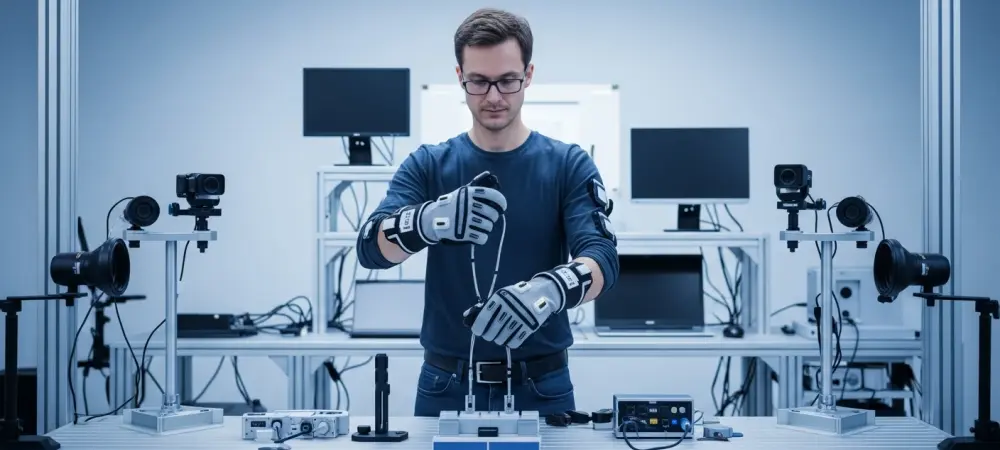
The trajectory of this field will likely be determined by how effectively the “data bottleneck” is addressed in the coming years. Innovations such as “data hands”—specialized wrist-worn devices that allow humans to record visual and tactile data while performing everyday chores—are becoming essential tools for building the massive datasets required for training. As these datasets grow, models like the GEN-1 are becoming increasingly sophisticated, leading to a decoupling of robotic intelligence from the specific hardware it controls. In the near future, a single, highly advanced “brain” could be used to operate a wide variety of machine bodies, ranging from simple industrial grippers to complex humanoid robots.
The economic consequences of this shift are profound and far-reaching. As general-purpose robotic intelligence matures, the distinction between “automatable” and “un-automatable” labor will continue to blur. Tasks that were previously thought to require human judgment and dexterity—such as home care, complex sorting, and varied logistics—will become viable for robotic labor. While this promises a significant boost to global productivity, it also necessitates a re-evaluation of the labor market and how autonomous workers are integrated into the daily economy. The ongoing challenge will be managing the high costs of data acquisition and refining the dexterity of these systems to match human performance across all domains.
Conclusion: The Dawn of Autonomous Generalists
The shift toward general-purpose robotic intelligence represented a definitive turning point in the relationship between humans and machines. By abandoning the “one robot, one task” philosophy, the industry moved toward a future where adaptability was the primary objective. This transition was driven by the realization that massive data scaling could unlock levels of improvisational logic that were once the exclusive domain of biological life. The success of pioneering startups and the significant backing from global technology leaders suggested that the era of the universal robotic worker had arrived, moving from the laboratory into the complexities of the real world.
Ultimately, these advancements paved the way for a radical transformation of the industrial and domestic landscape. As the “brains” behind these machines became more refined, the focus shifted from simple automation to true autonomy. This change provided the foundation for a new economy where robots could navigate the unpredictability of human environments with ease. The progress made in solving the data bottleneck and refining robotic dexterity ensured that autonomous generalists became an integral part of the global workforce. As these systems continued to evolve, they redefined the boundaries of what was possible, marking the beginning of a new chapter in technological history.