

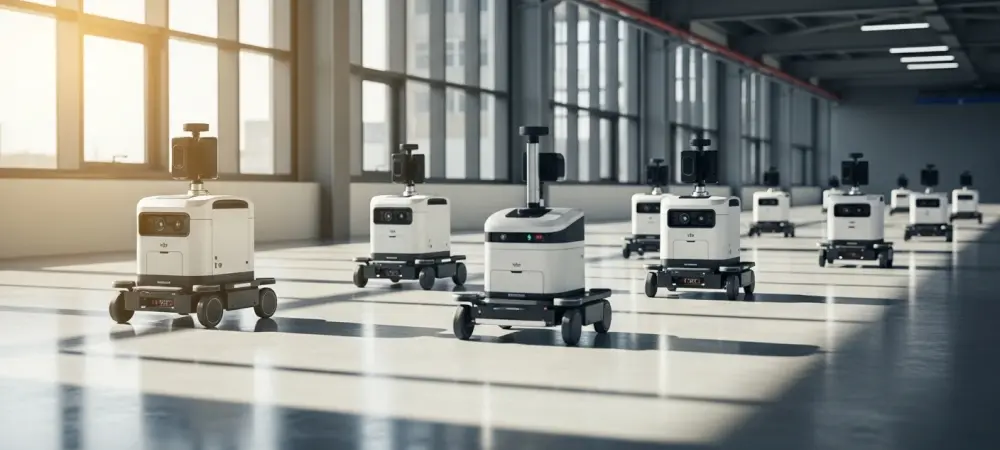
The transformation of digital intelligence into tangible action marks the definitive shift from chat-based interfaces to robotic systems that perceive, reason, and interact with the physical world in a human-like manner. This evolution toward Physical AI represents the next major frontier for global productivity as machines move beyond mere computation into the realm of complex physical labor. By integrating sensory perception with cognitive reasoning, these systems are poised to revolutionize industrial efficiency across the globe. The path to this future rests on three critical pillars: robust cloud infrastructure, high-fidelity simulation environments, and rigorous real-world validation.
Bridging the Gap from Theory to Industrial Reality
The Data Scarcity Challenge and Growth Trends
While Large Language Models flourished by scraping vast amounts of internet text, Physical AI faces a formidable barrier in the form of data scarcity. Unlike digital intelligence, robots require interaction-based training data that captures the nuances of the physical world, which is significantly harder to aggregate. Consequently, there is a burgeoning trend toward cloud-based robotics management, with platforms like Neuraverse emerging to manage expansive robot fleets. Modern workflows are increasingly integrating specialized machine learning tools to bridge this gap, ensuring that developers have the resources needed to transition from code to kinetic movement.
Real-World Deployment and High-Fidelity Simulations
To overcome data limitations, developers are utilizing “Gym” training environments where robots master complex maneuvers through trial and error within virtual spaces. A primary example of this is the strategic partnership between Neura Robotics and Amazon Web Services, which leverages cloud power to simulate millions of interactions before a robot ever touches a factory floor. This collaboration extends into tangible deployment, as Neura’s systems are introduced into high-traffic Amazon fulfillment centers. These environments serve as live laboratories, capturing vital operational data that refined the machines’ ability to navigate unpredictable industrial settings.
Expert Consensus on the Integrated Robotics Ecosystem
Industry leaders emphasize that isolated experimental phases are no longer sufficient; instead, a unified ecosystem combining cloud infrastructure, simulation, and hardware is mandatory. This consensus has fueled cross-industry collaboration between firms like Bosch, Qualcomm, and Kawasaki to accelerate development timelines and establish standardized frameworks. By pooling resources and expertise, these partnerships move the industry away from niche applications toward scalable commercial solutions. A synchronized approach ensures that software updates and hardware improvements occur in tandem, facilitating a more rapid and reliable rollout of autonomous systems.
Future Outlook: The Intelligence Loop and Global Scalability
The concept of the Intelligence Loop describes a self-reinforcing cycle where virtual training and physical feedback continuously sharpen AI capabilities. As these systems scale, they will likely meet the rigorous demands of modern logistics, though technical hurdles in high-traffic environments remain a significant challenge. The socioeconomic impact of widespread robotic autonomy could be profound, potentially increasing operational safety while shifting the nature of the global workforce. Evaluating the path forward requires a balance between technical optimism and a realistic assessment of the hurdles involved in achieving true global commercial reality.
Conclusion: The New Frontier of Embodied Intelligence
Strategic moves by industry leaders successfully transitioned Physical AI from laboratory curiosities to the industrial warehouse floor. This shift proved that the future of robotics depended heavily on bridging the data gap through sophisticated simulation and direct real-world feedback. Organizations that prioritized integrated ecosystems managed to redefine the relationship between artificial intelligence and physical labor. These scalable systems provided a blueprint for how embodied intelligence could eventually handle the most demanding tasks of the modern era.