

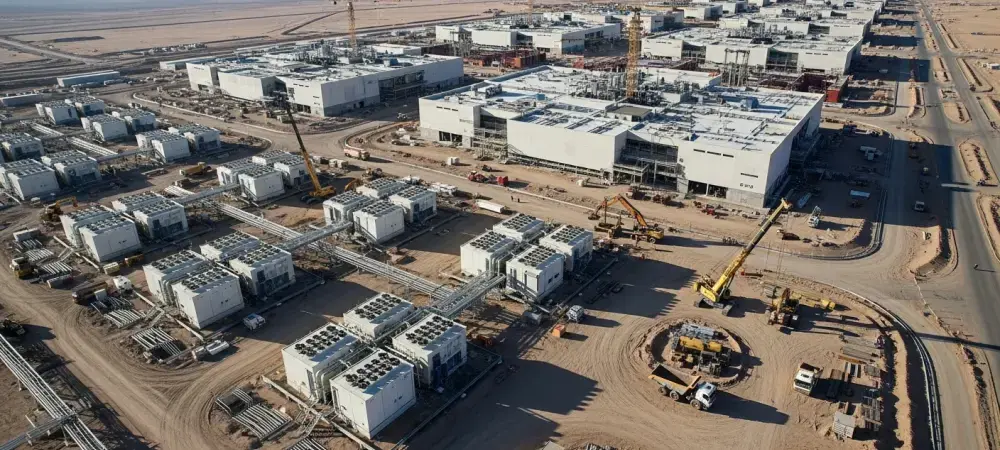
The global race to dominate generative artificial intelligence has moved beyond the digital realm and into a physical competition involving gigawatt-scale infrastructure and ten-billion-dollar investments. This shift marks a departure from traditional data center construction, focusing instead on massive, AI-optimized ecosystems that can handle unprecedented workloads. Modern facilities are no longer mere storage units; they are high-performance powerhouses designed to sustain the next generation of machine learning models. This analysis explores the transition toward megasites, highlighting the engineering innovations and strategic geographic pivots defining the current era of computational expansion.
The Massive Expansion of Computational Power
Data-Driven Growth: The Billion-Dollar Scale-Up
Investment trends show a significant surge in capital expenditure as companies move from million-dollar facilities to $10 billion megasites. This escalation is driven by the necessity of 1-gigawatt power requirements to support advanced AI training clusters. Furthermore, geographic diversification is reshaping the industry, with data hubs migrating from traditional tech corridors toward strategic regions like West Texas and the Southwest, where land and energy resources are more abundant.
Real-World Application: Meta’s Project Seafox
Meta’s Project Seafox in El Paso illustrates this scale-up through its 25.9-million-square-foot campus managed by Wurldwide LLC. The site integrates liquid-cooled, closed-loop systems to replace traditional air cooling, allowing for higher server rack density. To address immediate energy needs, the project utilizes 813 modular gas generators, providing 366 megawatts of bridge power by 2027 to ensure operational readiness despite electrical grid congestion.
Perspectives from Industry Leaders and Infrastructure Architects
Architectural firms like Stantec highlight the engineering hurdles of designing for zero-water cooling and high-density performance. Experts suggest that modular energy solutions are becoming essential to bypass the limitations of aging power grids. Moreover, these hyperscale projects are transforming local economies into high-tech industrial hubs, though they require sophisticated supply chain strategies to succeed.
The Future of AI-Ready Physical Infrastructure
Balancing immense energy demands with carbon-neutral goals remains a primary challenge for the industry. Temporary on-site power generation is expected to evolve into permanent, green-energy microgrids that provide stable, sustainable electricity. However, the physical limitations of land and power availability will likely dictate which organizations lead the AI sector through 2030, as environmental scrutiny of gigawatt-scale consumption intensifies.
Conclusion: Solidifying the Foundation for Intelligence
The transition toward multi-billion dollar, liquid-cooled hyperscale environments established a new baseline for the industry. Stakeholders recognized that software capabilities were inextricably linked to the physical limitations of infrastructure. Consequently, the focus shifted toward prioritizing scalable engineering and sustainable power to meet the inevitable demands of the coming decade. Future success depended on the ability to integrate massive computational power with responsible environmental stewardship.