

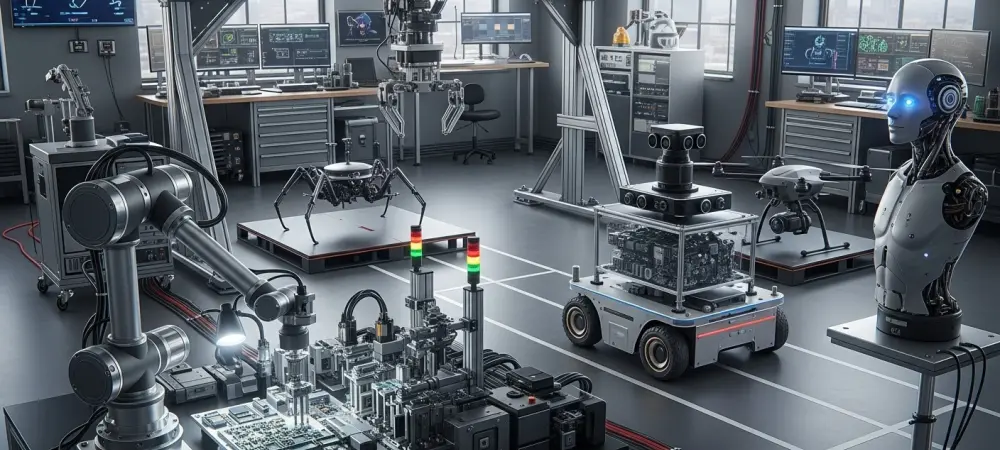
The tech industry is currently witnessing a massive strategic pivot as major AI laboratories move beyond the digital screen to master the complexities of the physical world. OpenAI’s sudden decision to sunset its Sora platform marks a definitive end to the era of purely creative video synthesis, signaling a broader migration toward embodied intelligence. This transition represents a fundamental change in how developers perceive the value of machine learning, prioritizing tactile utility over visual entertainment.
Moving from pixels to physical motion is the next great hurdle in artificial intelligence, requiring systems that understand spatial relationships rather than just aesthetic patterns. While video generation once seemed like the ultimate goal, the industry has realized that the real frontier lies in machines that can navigate and manipulate their surroundings. This overview explores why leaders are abandoning cinematic tools to pursue the untapped potential of robotics and autonomous software.
The Transition from Creative Synthesis to Physical Intelligence
Market Dynamics and the Shift in Resource Allocation
The financial realities of high-fidelity video generation have become increasingly difficult to justify for even the most well-funded organizations. Computing costs for rendering realistic scenes remained unsustainable, while the return on investment for industrial automation offered a much clearer path to profitability. Consequently, resources are being diverted toward training models that can control mechanical limbs or navigate warehouse floors. The dissolution of the high-profile $1 billion partnership with Disney serves as a benchmark for the cooling interest in AI-driven cinematic tools. This collapse proves that licensing intellectual property for synthetic media is a legal and financial minefield. Recent reports confirm that venture capital is migrating toward companies focusing on “embodied AI,” where the software is directly integrated into hardware designed for labor.
Real-World Applications of Repurposed Foundations
The spatial reasoning technology originally developed for video synthesis is now being integrated into advanced autonomous navigation systems. By using the same predictive logic that once generated cinematic frames, developers can teach robots to anticipate how objects move in 3D space. This repurposing of architecture allows for a more fluid interaction between machines and the unpredictable environments they occupy. In sectors like logistics and manufacturing, startups are deploying task-oriented robots that utilize these refined vision models. These systems are trained in simulated environments that mimic reality with extreme precision before they are ever placed on a factory floor. This utilitarian pivot ensures that the research previously dedicated to entertainment now serves to solve pressing supply chain challenges.
Expert Perspectives on the Industrial Realignment
Industry leaders argue that the move away from creative AI is necessitated by both operational viability and safety concerns. There is a growing consensus that the legal risks associated with copyright infringement in media generation are too high for long-term stability. Pragmatic applications in industry do not face the same intellectual property hurdles, making them a more attractive bet for sustainable growth. Thought leaders suggest that the future of AI lies in productivity and labor-saving autonomous systems rather than viral content creation. The focus has shifted toward building “physical intelligence” that can assist in construction, healthcare, and emergency response. This realignment reflects a desire to move the technology from a novelty to a critical infrastructure component.
Future Implications and the Evolutionary Path of Autonomy
The transition from “viral” creators to utilitarian tools is expected to redefine the global workforce. We are likely to see the emergence of sophisticated software capable of managing complex infrastructure without human intervention. These systems will prioritize reliability and safety, moving away from the “hallucinations” that often plagued earlier generative models.
As projects like Sora close, they leave behind a framework for more stable, revenue-driven robotics. The societal impact will involve a balance between increased industrial productivity and the technical challenges of ensuring robot safety in public spaces. This path suggests that the next decade will be defined by how well machines can handle the messy, tangible world.
Conclusion: A New Era of Pragmatic AI
The strategic retreat from synthetic media established a new standard for how technology firms prioritized real-world problem-solving over digital spectacle. By focusing on physical interaction, the industry successfully moved past the limitations of purely creative tools to build something more durable. This shift allowed for a more grounded approach to innovation, where success was measured by operational efficiency rather than social media engagement.
Looking ahead, the focus must remain on developing purpose-built hardware that seamlessly integrates with these new autonomous brains. Future development should prioritize the standardization of safety protocols to ensure that these machines can work alongside humans without friction. The era of cinematic AI provided the necessary training ground, but the true potential of the technology was realized only when it began to move.