

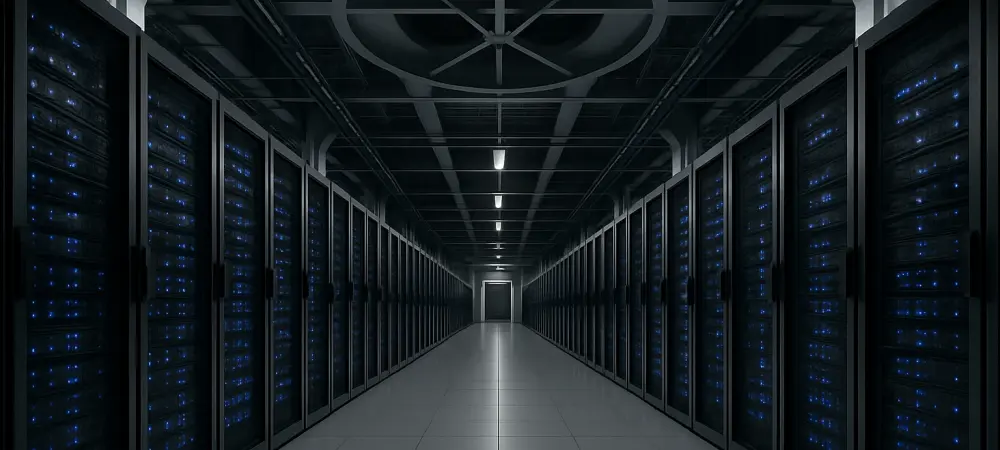
In an era where artificial intelligence is reshaping industries at an unprecedented pace, OpenAI’s Stargate initiative stands out as a monumental leap in infrastructure development, promising to redefine the boundaries of AI computing power with a staggering $400 billion investment in new data centers across the United States. This ambitious expansion addresses the critical shortage of computational resources needed to fuel AI innovations, positioning OpenAI at the forefront of a fiercely competitive tech landscape dominated by giants like Microsoft and Amazon. The significance of this trend lies in its potential to transform how AI services are delivered to millions globally while raising questions about sustainability and financial risks. This analysis explores the scope of the Stargate project, key partnerships driving it, industry perspectives, broader trends in AI infrastructure, and the future implications of such massive investments.
Unveiling the Stargate Initiative: Scope and Scale
Investment and Infrastructure Growth
The Stargate initiative marks a bold financial commitment, with OpenAI allocating $400 billion to construct five new data centers in the US, boasting a combined capacity of 7 gigawatts—enough to power entire cities. This investment aligns with a larger goal of channeling $500 billion into domestic AI infrastructure over the next four years starting from this year, reflecting a strategic push to secure computational dominance. The scale of this endeavor underscores the urgency to meet the skyrocketing demand for AI processing power, a need felt across sectors from healthcare to finance.
Specific locations for these data centers include Abilene and other regions in Texas, alongside sites in New Mexico and Ohio, each chosen for logistical advantages and energy access. During a recent press conference in Abilene, Texas, officials detailed capacity breakdowns, with plans to develop flagship facilities that could serve as models for future expansions. Such targeted growth illustrates a deliberate effort to distribute infrastructure benefits across diverse American regions, enhancing local economies.
Reports indicate that this massive undertaking is not merely a numbers game but a calculated step toward ensuring that OpenAI remains a leader in AI innovation. The investment signals confidence in the long-term value of AI technologies, even as it navigates the complexities of funding and execution at this unprecedented level. This financial commitment sets a benchmark for what infrastructure expansion looks like in the AI era.
Real-World Implementation and Partnerships
Collaboration forms the backbone of the Stargate project, with OpenAI partnering with industry heavyweights Oracle and SoftBank to bring this vision to life. Oracle oversees three sites, managing over 5.5 gigawatts of capacity across Texas, New Mexico, and a Midwest location, ensuring operational efficiency and scalability. Meanwhile, SoftBank contributes to two sites in Ohio and Texas, starting with an initial capacity of 1.5 gigawatts, demonstrating a shared responsibility model.
A prime example of this integrated approach is the flagship Abilene site in Texas, already under development with Oracle’s expertise, alongside an additional 600-megawatt expansion nearby. SoftBank’s involvement extends beyond mere infrastructure, with its subsidiary SB Energy stepping in to power Texas facilities, addressing the critical energy demands of these data centers. This synergy highlights how partnerships can tackle multifaceted challenges in large-scale projects. These collaborative efforts are essential for navigating the logistical and technical hurdles of building data centers on such a grand scale. By pooling resources and expertise, OpenAI and its partners aim to accelerate deployment timelines and ensure that the infrastructure can support the next generation of AI applications. This model of cooperation could very well become a standard for future tech expansions.
Industry Voices: Perspectives on AI Infrastructure Expansion
Expert opinions shed light on the motivations and challenges behind the Stargate initiative, providing a deeper understanding of its place in the AI ecosystem. Sam Altman, CEO of OpenAI, has emphasized the urgent need for expanded compute capacity to drive innovation, arguing that bottlenecks in processing power could stifle progress in AI development. His vision positions infrastructure as the foundation for breakthroughs that benefit global users.
Oracle’s co-CEO Clay Magouyrk reinforces this perspective, stressing that partnerships are indispensable for projects of this magnitude, as no single entity can shoulder the burden alone. His comments reflect a growing industry consensus that collaboration is key to overcoming the financial and operational complexities of scaling AI infrastructure. This trend of joint ventures is becoming increasingly visible among tech leaders.
However, not all views are unreservedly optimistic, with some industry leaders expressing caution about the financial risks tied to such heavy investments. Altman himself has acknowledged concerns about a potential AI market bubble, suggesting that while the technology holds immense promise, overenthusiasm could lead to economic pitfalls. This balanced outlook underscores the need for careful planning and risk assessment in the race to build AI capacity.
The Bigger Picture: AI Data Center Trends and Future Implications
The Stargate initiative is part of a broader industry trend where tech giants are pouring unprecedented resources into AI infrastructure to keep pace with demand. Competitors such as Meta, Alphabet, Amazon, and Microsoft are collectively projected to invest over $344 billion this year alone in similar efforts, signaling a race to secure computational supremacy. This surge reflects a shared belief that AI’s future depends on robust data center networks capable of handling complex models.
Looking ahead, the implications of these investments are vast, potentially enhancing AI service delivery for platforms like ChatGPT, which already serves 700 million weekly users worldwide. Beyond technology, economic benefits are anticipated, with tens of thousands of jobs expected to be created in local US communities hosting these data centers. Such developments could revitalize regions while supporting national tech ambitions.
Nevertheless, challenges loom large, including sustainability concerns over the immense energy requirements of these facilities and unresolved financing models for compute-intensive projects. The specter of overinvestment, reminiscent of the dot-com bubble, also raises red flags, prompting calls for strategic caution. Balancing innovation with fiscal responsibility remains a critical issue as the industry navigates this transformative period.
Wrapping Up: The Significance of Stargate and Next Steps
Reflecting on OpenAI’s Stargate expansion, the journey reveals a historic $400 billion investment, strategic alliances with Oracle and SoftBank, and profound technological and economic impacts that reshape the AI landscape. This initiative underscores the pivotal role of infrastructure in advancing AI capabilities, while also highlighting the delicate balance required to mitigate financial risks. It stands as a testament to ambition matched with pragmatic collaboration. Moving forward, stakeholders are encouraged to closely monitor the evolving dynamics of AI infrastructure, prioritizing sustainable growth strategies to address energy and funding challenges. Industry leaders need to explore innovative financing solutions and renewable energy integrations to ensure long-term viability. Additionally, fostering dialogue among tech firms, policymakers, and communities could help align expansion efforts with societal benefits, paving the way for a more inclusive AI future.