

The shift from remote data centers to local silicon is finally reaching its peak as the computing industry moves away from the latency-heavy cloud models that dominated the early part of this decade. Microsoft and NVIDIA have officially bridged this gap by introducing a platform that promises to turn standard laptops into specialized AI workstations capable of handling intense generative workloads without a persistent internet connection. This partnership signifies a fundamental change in the architecture of the personal computer, prioritizing dedicated neural processing and high-bandwidth memory over traditional general-purpose designs. By integrating cutting-edge graphics processing with energy-efficient instruction sets, the two tech giants are effectively moving the goalposts for what users can expect from their daily-driver machines. This evolution is not merely about speed; it is about providing a localized environment where data privacy and immediate response times are the standard rather than the exception. As professionals demand more autonomy from their tools, this new hardware layer provides the necessary foundation for a transition where every digital interaction is augmented by sophisticated, on-device intelligence. The initiative moves toward a concept described as agentic computing, where the machine is no longer a passive tool but a proactive partner. By combining high-end Blackwell architecture with specialized processors, the companies are ensuring that the next generation of thin-and-light devices delivers power that was previously reserved for massive server racks.
The Silicon Foundation: Blackwell and Arm Integration
The technical core of this new platform represents a significant leap in performance-per-watt efficiency, which is essential for maintaining high-end capabilities in portable form factors. At the center of the hardware stack is the Blackwell GPU architecture, which utilizes up to 6,144 dedicated RTX cores to deliver a staggering one petaflop of AI performance. This level of computational density allows laptops to process complex neural networks and high-fidelity graphical renders simultaneously, a feat that once required a dedicated desktop with a massive power supply. By optimizing the silicon for heavy AI-specific workloads, NVIDIA has managed to reduce the thermal footprint of these chips while increasing their throughput. This breakthrough ensures that heavy-duty tasks, such as training small language models or rendering 3D environments in real-time, can be completed on the move without the device overheating or requiring a constant connection to a wall outlet. The result is a machine that feels significantly more capable than its predecessors, offering a fluid experience for developers who need to iterate on code and models locally. Complementing this graphical power is a sophisticated 20-core CPU built on the Arm architecture, designed specifically to balance background processing with the needs of continuous AI operations. This processor is not just a general-purpose engine; it is deeply integrated with the GPU through a unified memory architecture that supports up to 128GB of shared resources. In traditional PC designs, the bottleneck often occurred when moving data between the CPU and the GPU, but this unified approach eliminates those delays by allowing both units to access the same high-speed memory pool. This is particularly beneficial for AI developers working with large-scale datasets, as it permits the local execution of massive models that would otherwise crash a standard system. By focusing on efficiency, the Arm-based CPU ensures that the laptop remains responsive during everyday tasks like web browsing or document editing, while still having the overhead to jump into intensive AI debugging at a moment’s notice. This synergy between the two types of processors defines a new standard for performance that does not compromise on the mobility that modern professionals require for their workflows.
Rebuilding the Core: Windows Optimizations for AI Efficiency
While the hardware provides the raw power, the software environment had to undergo a massive overhaul to ensure that these resources are utilized effectively. Microsoft has introduced a new feature within the Windows kernel known as Workload Profile Scheduling, which acts as an intelligent traffic controller for the system’s processing power. This system can distinguish between a simple background update and a high-priority AI task, dynamically rerouting power to the Blackwell cores when they are most needed. This granular level of control prevents the system from wasting energy on non-essential processes, thereby extending battery life during intense work sessions. For creators, this means that their video export or 3D render receives the maximum possible resources without the operating system’s overhead getting in the way. It is a proactive approach to resource management that turns the operating system into a performance-oriented layer, specifically tuned for the unique demands of local artificial intelligence. Beyond scheduling, the operating system now includes a refined thermal management framework and enhanced memory handling protocols that are critical for thin-and-light designs. These updates allow the device to stay cool even when the hardware is pushed to its absolute limits, as the OS can now predict thermal spikes and adjust performance curves before the heat becomes a problem. The improved memory handling is equally vital, as it allows Windows to manage the 128GB unified memory pool with much lower latency than seen in previous iterations. This optimization ensures that massive 3D scenes and complex data sets can be manipulated with a level of smoothness that feels instantaneous. By reducing the time it takes for the system to swap data between active and inactive states, Microsoft has made the entire user experience feel more responsive. This technical refinement is what enables the machine to handle professional-grade software and complex AI agents without the stuttering or lag that often plagued earlier attempts at integrating high-performance silicon into portable devices.
Autonomous Intelligence: Secure Local Reasoning and Privacy
The launch of the RTX Spark platform introduces a major focus on local AI agents that can reason over personal and professional data without ever transmitting it to an external server. By utilizing NVIDIA OpenShell, these agents are integrated directly into the Windows environment, allowing them to assist with complex tasks like project management, code generation, and data analysis in real-time. Because these agents have access to the large unified memory pool, they can process vast amounts of context from a user’s local files, providing highly relevant suggestions and automations that are tailored to specific workflows. When sensitive project details and proprietary information stay on the physical device, enterprises and independent creators can use advanced AI tools with the confidence that their intellectual property is not being used to train a remote model or being stored in a vulnerable cloud database.
To support this new era of agentic computing, Microsoft has implemented advanced security “sandboxes” and containment primitives that keep AI activities isolated from the rest of the operating system. These security layers ensure that even though an agent might be working across multiple applications, it cannot access parts of the system it hasn’t been given permission to see. This containment is essential for preventing potential vulnerabilities that could arise when an autonomous agent is given the power to interact with various software suites. By building these protections directly into the hardware and software stack, the companies have created a foundation for a more intelligent PC that can act on behalf of the user within a strictly controlled and secure environment. This setup allows for a new level of productivity where the AI can handle repetitive tasks, search through local documentation, and even draft responses based on previous interactions, all while maintaining a fortress-level security posture that protects the user’s digital identity and private information.
Software Synergy: Bridging Creative and Technical Workflows
A platform is only as strong as the software that runs on it, and the RTX Spark ecosystem is launching with wide-reaching compatibility for the industry’s most critical tools. Professional suites from companies like Adobe, Blackmagic Design, and Blender have been fully optimized to take advantage of the Blackwell architecture and the Arm-based CPU. For a filmmaker using DaVinci Resolve, this translates to faster color grading and the ability to run AI-assisted features like object tracking and noise reduction in real-time at 8K resolutions. Similarly, graphic designers using Photoshop can utilize generative fill and other neural filters with zero latency, as the heavy lifting is handled by the local RTX cores rather than a distant server. This native support ensures that there is no performance penalty for moving to the new architecture, allowing creators to maintain their current workflows while enjoying a significant boost in speed and efficiency that was previously impossible on a laptop. For the technical and research community, the platform brings native support for CUDA-accelerated frameworks like PyTorch and TensorRT, which are the industry standards for AI development. This means that data scientists can now prototype, test, and run their models directly on their Windows machines without having to set up complex cloud environments or remote servers. Even the gaming sector has seen a major upgrade, with popular anti-cheat software now supporting the Arm architecture to ensure that major titles run flawlessly. Games like VALORANT and League of Legends are fully compatible, benefiting from the Blackwell GPU’s advanced ray tracing and neural rendering capabilities. This dual-purpose nature of the hardware makes it an attractive option for users who need a machine that can transition seamlessly between high-stakes professional work and high-fidelity entertainment. By ensuring that both creative and technical tools are ready on day one, Microsoft and NVIDIA have positioned this platform as a versatile powerhouse for any high-end computing need.
Scaling the Infrastructure: From Copilot+ Laptops to Deskside Stations
The rollout of this technology is happening through a premium category of devices known as Copilot+ PCs, featuring flagship hardware from major manufacturers like ASUS, Dell, HP, and Lenovo. These machines are designed to be the ultimate portable workstations, often featuring a unique “triple-processor” setup that includes a CPU, GPU, and an NPU to cover every possible computational scenario. Models such as the Microsoft Surface Laptop Ultra and the MSI Prestige N16 Flip are leading the charge, offering the full 128GB of unified memory and the Blackwell GPU in sleek, mobile designs. These devices are aimed at the top tier of the market, where users require the ability to edit 8K video, train AI models, and run complex simulations while traveling. The focus is on providing a consistent, high-performance experience that does not degrade when the laptop is unplugged, ensuring that professional quality work can happen anywhere at any time.
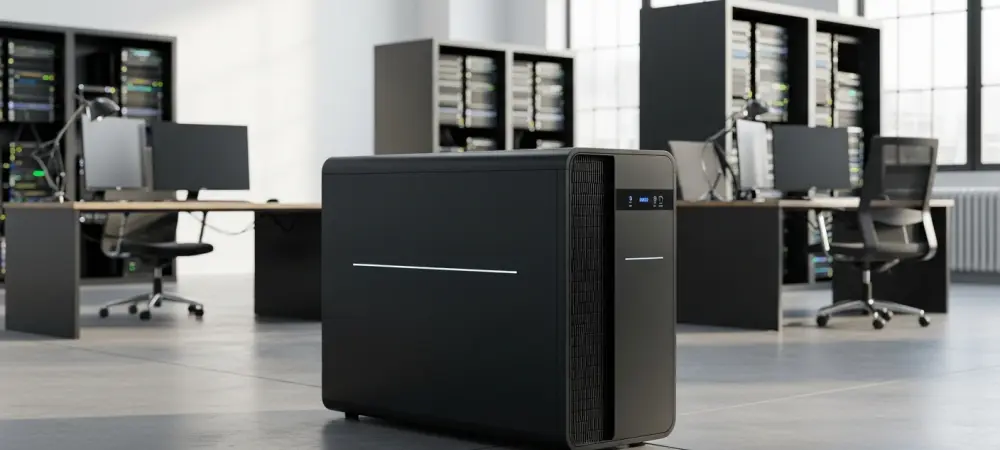
The vision for this collaboration extends far beyond the realm of mobile devices and into the world of localized supercomputing for the enterprise. Microsoft and NVIDIA have detailed a roadmap for the DGX Station for Windows, a deskside powerhouse that utilizes the Grace Blackwell Ultra Desktop Superchip. This machine is designed to handle trillion-parameter AI models locally, allowing businesses to run world-class simulations and private data processing without the need for a full data center infrastructure. This desktop solution is ideal for organizations that must adhere to strict local compliance boundaries but still require unprecedented levels of computing power to stay competitive. By bridging the gap between mobile convenience and data-center strength, this overarching strategy signals a permanent shift toward local, efficient, and intelligent computing. As these devices enter the professional market, they offer a new level of autonomy and performance, marking the beginning of an era where the personal computer finally becomes a truly intelligent and capable partner for every complex task. The launch of the RTX Spark platform represented a significant milestone in the convergence of high-end hardware and local artificial intelligence. Professionals and organizations were encouraged to begin migrating their most sensitive AI development and creative projects to this new architecture to take full advantage of the enhanced privacy and reduced latency. IT departments were advised to evaluate their hardware procurement strategies, prioritizing devices with unified memory and dedicated neural cores to prepare for the widespread adoption of local AI agents. Developers were also prompted to update their software libraries to support the Blackwell and Arm integration, ensuring that their tools remained competitive in a landscape that moved away from cloud dependency. This shift laid the groundwork for a more autonomous computing environment, where the focus remained on maximizing local resources for better efficiency and security. Organizations that adopted these workstations early found themselves better positioned to handle complex data simulations while maintaining strict control over their proprietary information. As the ecosystem matured, the transition toward intelligent, localized computing became the standard for all high-performance workflows.