

The intricate web of high-speed fiber and massive server farms that once defined the digital borders of Europe is currently undergoing a radical geographic transformation. For several decades, the architectural integrity of the digital economy was anchored by a concentrated group of metropolitan hubs collectively known as the FLAP-D markets: Frankfurt, London, Amsterdam, Paris, and Dublin. These cities functioned as the primary gateways for global data, hosting the massive server farms required for everything from high-frequency financial trading to consumer cloud services. However, this era of centralization is meeting an abrupt and definitive conclusion as the limitations of urban infrastructure collide with the insatiable demands of the modern age. A convergence of critical power shortages, increasingly stringent regulatory environments, and the explosive energy requirements of artificial intelligence has created a bottleneck effect. Consequently, the digital map of the continent is being redrawn, shifting investment and infrastructure toward previously overlooked secondary and tertiary markets. The significance of this geographic evolution extends far beyond simple real estate trends; it represents a fundamental restructuring of how sovereign states manage their resources. As power grids in traditional hubs reach their breaking point and AI demands skyrocket, the decentralization of data centers has become a strategic necessity for regional economic resilience. This transition ensures that the digital backbone is not concentrated in a few vulnerable points but is instead distributed across regions that can actually sustain the load. This analysis explores the transition from centralized hubs to secondary markets, examining the catalysts of power scarcity, the impact of the AI revolution, and the future of the European digital landscape. By moving away from the crowded centers of the past, the industry is finding the breathing room necessary to support the next generation of technological advancement while addressing the harsh realities of resource management.
The Drivers of Digital Migration
Market Saturation and the Power Grid Crisis
The defining challenge facing the traditional data center capitals is not a lack of capital or demand, but the physical limitations of electrical grids that were never designed for this scale. Data centers have evolved into the most energy-intensive structures on the planet, and the historical dominance of cities like Amsterdam and Dublin is now being undermined by the sheer scale of their own success. In Dublin, for instance, data centers now consume over 21% of the national electricity supply, a figure that has triggered intense political debate and led to effective moratoriums on new builds. This saturation means that even the most well-funded tech giants cannot simply build their way out of the problem within these traditional boundaries. Grid connection wait times in the London metropolitan area now frequently exceed five years, creating a massive London bottleneck that forces providers to seek immediate capacity elsewhere. Developers can no longer afford to wait half a decade for a connection when the demand for cloud services and compute power is happening in real time. While the FLAP-D markets face a clear physical ceiling, secondary market investment is projected to grow significantly as developers chase available megawatts over traditional geographic proximity. This shift is a pragmatism-driven exodus where the availability of a high-voltage connection is now more valuable than a prestigious metropolitan address.
Real-World Applications of the Decentralization Shift
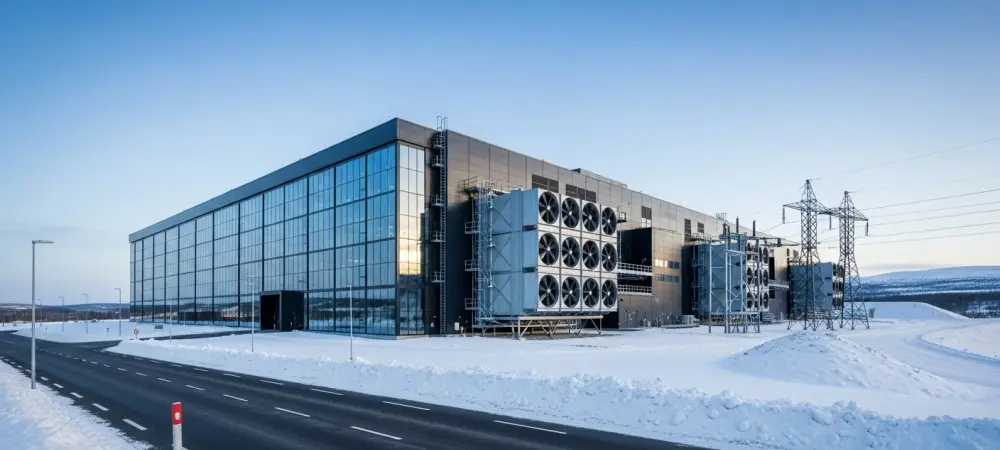
The Nordic countries have emerged as the primary beneficiaries of this shift, leveraging their unique environmental and infrastructure advantages to host a new generation of facilities. Norway and Finland are leveraging surplus hydroelectric power and wind energy to host massive mega-campuses for hyperscalers like Google and Microsoft. These regions offer not only a surplus of green energy but also a naturally cold climate that significantly reduces the electricity required for server cooling. This transition to the north is not just a trend but a structural relocation of the continent’s heavy-compute industrial base.
Southern Europe is simultaneously positioning itself as a vital connectivity bridge, with Madrid and Milan emerging as high-growth zones. Spain’s capacity is expected to double by 2028 due to its robust renewable portfolio and strategic subsea cable access that connects Europe to Africa and the Americas. At the same time, the Warsaw gateway is rapidly becoming the primary digital hub for Eastern Europe. Poland serves as a strategic alternative to the congested Western markets, offering a combination of available land and a rapidly modernizing grid that supports the digital ambitions of the entire Baltic and Central European region.
Industry Perspectives on Structural Change
The internal logic of site selection has undergone a profound transformation as the requirements of the industry have diverged. Industry experts highlight that for AI training, latency or the speed of data transmission is no longer the primary KPI that dictates where a facility should be built. Instead, the availability of power has become the definitive asset that outweighs almost every other consideration. For the large-scale compute clusters required to train modern language models, a location that is three hundred miles away but has immediate access to 200 megawatts is infinitely more valuable than a site in the heart of London that is capped at 10 megawatts.
Thought leaders also emphasize that the sustainability mandate is no longer an optional corporate social responsibility goal but a core operational requirement. The EU Energy Efficiency Directive is forcing a transition toward transparent resource reporting, making sustainability a literal license to operate in new markets. Providers are now expected to demonstrate how they will contribute to the heat networks of local towns or how they will balance their load with renewable generation. This regulatory pressure is accelerating the move toward regions where green energy is not just a marketing claim but a fundamental component of the local power grid.
The rise of public sentiment against large-scale infrastructure, often described as NIMBYism, represents a significant hurdle for operators in both old and new markets. Professionals note that as data centers move into new territories, they must prove their local community value beyond mere infrastructure footprints. It is no longer enough to bring investment; operators must now engage in proactive community planning, ensuring that their presence does not drive up local energy costs or deplete water resources. Those who fail to manage this social contract find themselves facing the same regulatory roadblocks that have stalled growth in the traditional FLAP-D hubs.
The Future of the European Digital Map
Future developments will move away from modest urban facilities toward massive, rural mega-sites that can support the high-density cooling requirements of generative AI. These gigawatt campuses will be the powerhouses of the next decade, located in areas where the physical space and energy infrastructure can accommodate thousands of high-performance liquid-cooled racks. This shift will likely result in a landscape where the old metropolitan hubs handle low-latency consumer traffic, while the heavy lifting of machine learning and data processing happens in specialized, high-capacity zones across the rural landscape.
Decentralization will likely bring high-tech investment to rural regions, providing a significant boost to local economies that were previously bypassed by the digital revolution. However, this redistribution may also lead to a fragmented market if EU-wide infrastructure policies remain uncoordinated. If every nation pursues a different strategy for grid management and data sovereignty, the efficiency of the decentralized model could be hampered by bureaucratic friction. The long-term success of this geographic expansion depends on creating a seamless cross-border energy and data framework that allows capacity to move where it is most needed.
The ability of Europe to compete with the global tech dominance of the United States and China hinges on its success in balancing insatiable AI energy demands with the environmental expectations of local populations. This is a delicate balancing act that requires a fundamental rethink of how infrastructure is planned and executed. If the continent can successfully integrate its massive renewable energy potential with its growing data needs, it will secure a technological standing that is resilient to the pressures of the next half-century. The digital map is no longer a set of isolated points on a map but a fluid network that follows the path of least resistance and greatest resource availability.
Conclusion: Navigating the New Geographic Reality
The transition from the FLAP-D era to a decentralized model was an immutable response to physical power constraints and the evolving technical needs of artificial intelligence. Analysts observed that the geographic boundaries of the past proved too rigid for the fluid requirements of the modern compute cycle. As the industry moved toward the Nordics and the Mediterranean, the old dependencies on a few select cities were finally broken, allowing for a more robust and distributed digital framework. This shift was characterized by a move away from latency-centered planning toward a resource-first strategy that prioritized the long-term stability of the power grid.
As the digital map continues to expand, the next phase of development must focus on the deeper integration of energy and data policies to secure a sustainable technological standing. Stakeholders should prioritize the development of multi-modal infrastructure that combines data processing with local energy benefits, such as district heating and grid-stabilization services. European policy leaders were required to streamline the permitting processes for cross-border connectivity to ensure that decentralized hubs do not become isolated silos. By aligning national energy goals with the realities of the digital era, the continent secured its position as a global leader in sustainable and resilient infrastructure. This proactive integration ultimately ensured that the technological growth of the future was built on a foundation of geographic and environmental reality.