

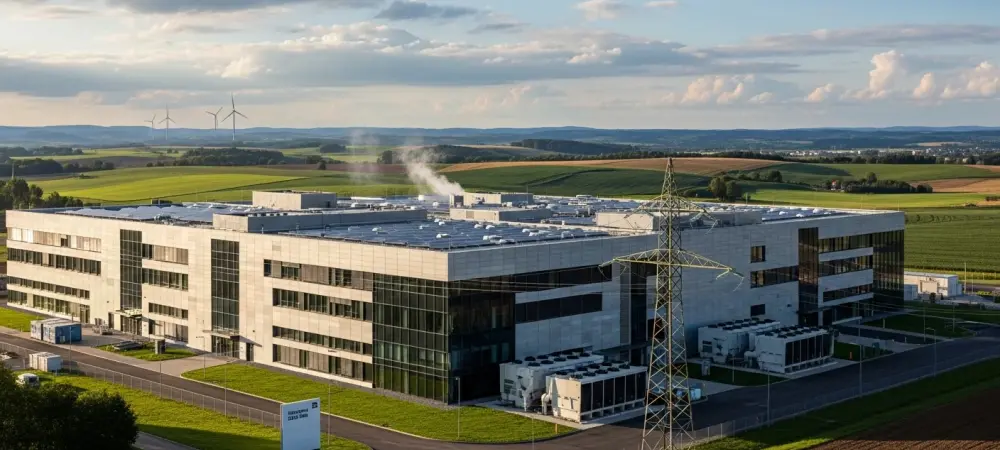
Setting the Stage for a Digital Revolution
In an era where digital transformation dictates the pace of global progress, Europe stands at the forefront of a technological boom, fueled by an insatiable demand for data processing and storage. Data centers, the unsung heroes of this digital age, are becoming the backbone of innovations like artificial intelligence (AI), cloud computing, and the ever-expanding digital economy. Their role in ensuring seamless connectivity and data management cannot be overstated, especially as businesses and governments pivot toward data-driven decision-making. This analysis delves into the remarkable surge of data center expansion across Europe, spotlighting key growth trends, significant players such as Echelon, expert perspectives, and the broader implications for the continent’s tech landscape.
The Surge of Data Center Growth in Europe
Market Trends and Statistics
The demand for data center capacity in Europe has skyrocketed, driven by the rapid adoption of AI technologies, the rollout of 5G networks, and widespread digital transformation across industries. According to recent reports from CBRE, the European data center market is projected to grow at a compound annual growth rate of over 10% through the next five years, with capacity additions expected to surpass 2GW by 2027. This growth reflects the urgent need for infrastructure to support cloud services and big data analytics, positioning Europe as a critical hub in the global tech ecosystem.
Strategic locations such as Frankfurt, Dublin, and Milan have emerged as focal points for this expansion due to their robust connectivity, favorable regulatory environments, and access to power resources. Frankfurt alone accounts for a significant share of colocation capacity, while Milan is gaining traction as a gateway to Southern Europe. Industry insights from Synergy Research Group highlight that hyperscale operators are increasingly targeting these hubs to meet latency and scalability demands, underscoring the continent’s pivotal role in the digital landscape.
Case Study: Echelon’s LIN10 Campus Near Milan
Echelon, an Irish data center company, has made a bold entry into Italy with its €3 billion LIN10 campus near Milan, situated on a 37-acre site in Treviglio, close to Bergamo in Lombardy. Acquired in partnership with affiliates of Starwood Capital Group, this development boasts a total power capacity of 250MW, with 100MW immediately available via an existing substation. The project exemplifies the scale and ambition driving Europe’s data center boom, catering to the needs of hyperscale operators seeking robust infrastructure.
Construction at the LIN10 campus is set to begin imminently, with plans to repurpose existing structures for an initial 72MW of IT capacity, followed by a second building adding 120MW. Sustainability remains a core focus, with on-site solar panels and the use of hydrotreated vegetable oil (HVO) instead of diesel for generators, aligning with Europe’s green energy goals. Echelon anticipates the facility will be operational within 18 to 24 months, marking a significant milestone in its continental expansion.
This Italian venture builds on Echelon’s established presence in Ireland and the UK, where it manages over 600MW of capacity either operational or under development, including 400MW across Dublin and County Wicklow. Additionally, a recent joint venture with Iberdrola in Spain aims to deliver a 230MW campus by 2030, further solidifying Echelon’s footprint across key European markets. This strategic growth reflects a broader trend of data center providers scaling operations to meet escalating demand.
Industry Perspectives on Data Center Expansion
Insights from Echelon and Starwood Capital
Niall Molloy, CEO of Echelon, has emphasized the strategic importance of the LIN10 campus, pointing to its unique advantages in grid power availability, scalability, and flexibility. These factors position the site as a cornerstone for supporting hyperscale clients in one of Europe’s fastest-growing markets. Molloy’s vision underscores how critical infrastructure decisions are shaped by the need for immediate capacity and long-term adaptability in a competitive landscape.
Maximilian Gentile, Senior Vice President at Starwood Capital, a major shareholder in Echelon, has highlighted the exponential global demand for data center capacity, particularly fueled by AI advancements. Gentile noted that Echelon’s commitment to providing substantial power and scale aligns with the evolving needs of customers in a tech-driven world. This perspective reflects a shared industry confidence in data centers as indispensable to technological progress and economic vitality.
Broader Industry Challenges and Opinions
Beyond individual company strategies, industry analysts and thought leaders have raised concerns about balancing rapid data center expansion with sustainability and regulatory constraints in Europe. The pressure to meet ambitious climate goals often clashes with the energy-intensive nature of data centers, prompting calls for innovative solutions like renewable energy integration. Additionally, navigating complex zoning laws and community opposition in densely populated regions poses ongoing hurdles for developers, requiring careful stakeholder engagement to ensure project success.
Future Outlook for Data Centers in Europe
Growth Projections and Ambitions
The trajectory for data center capacity in Europe points to sustained growth, with Echelon’s target of adding 1.5GW over the next five years serving as a benchmark for industry ambition. This scale of expansion signals confidence in the continent’s ability to support the digital economy’s escalating needs. As hyperscale operators and enterprises continue to invest, the focus is shifting toward optimizing infrastructure to handle emerging workloads, particularly in AI and machine learning.
Emerging Trends and Potential Challenges
Looking ahead, the integration of renewable energy sources is expected to become a defining feature of new data center projects, driven by both regulatory mandates and corporate sustainability commitments. Edge computing facilities are also likely to gain prominence, enabling low-latency processing closer to end-users. However, challenges such as land scarcity in prime locations and rising energy costs could temper growth if not addressed through innovative planning and policy support.
Broader Implications and Risks
The economic benefits of data center expansion for European regions are undeniable, creating jobs and fostering tech ecosystems in host communities. Yet, the risk of overcapacity looms if demand projections falter, potentially leading to underutilized facilities. Environmental impacts also warrant scrutiny, as unchecked growth could strain local resources. Competitive disputes, such as Echelon’s legal challenges in the US over data center plans, highlight the high stakes and global nature of the industry, urging caution in strategic expansions.
Reflecting on a Transformative Era
Looking back, the data center boom in Europe marked a pivotal chapter in the continent’s journey toward digital dominance, with companies like Echelon leading the charge through landmark projects such as the LIN10 campus near Milan. The industry’s rapid growth reflected the urgent need for infrastructure to support AI and digital transformation, reshaping economic landscapes across key hubs. Expert insights underscored the delicate balance between expansion and sustainability, painting a complex yet promising picture. As a path forward, stakeholders must prioritize collaborative approaches to address energy and land constraints, investing in green technologies to mitigate environmental footprints. Policymakers and industry leaders should work hand-in-hand to streamline regulations, ensuring that growth aligns with long-term societal benefits. By fostering innovation and dialogue, Europe can solidify its position as a global leader in digital infrastructure, ready to meet the challenges of tomorrow’s data-driven world.