

Redefining the Race: The Clock in Stroke Intervention
When a blood clot suddenly lodges in a cerebral artery, the human brain begins to lose roughly two million neurons every single minute that the obstruction remains in place. This reality defines the urgency behind a $32 million investment from the Advanced Research Projects Agency for Health (ARPA-H). The funding targets Magnendo, an MIT-born startup engineering autonomous robotic systems for endovascular procedures. By moving beyond manual surgery, this technology uses magnetic navigation to clear ischemic strokes with unprecedented speed.
Current healthcare relies on specialized neurosurgeons, which often introduces fatal delays during patient transport. Magnendo’s system utilizes software to guide instruments through the vascular system more precisely than human hands. This automation represents a fundamental change in clot retrieval, focusing on speed as the primary metric for survival.
The Rural Divide: The Need for Decentralized Care
Access to life-saving stroke intervention is currently dictated by geography, creating a divide between metropolitan hubs and remote areas. Specialists are concentrated in urban hospitals, forcing rural patients to wait hours for transport. This logistical bottleneck leads to permanent neurological damage as the window for treatment closes during transit. By automating instrument navigation, the robotic platform aims to bridge this gap. It allows local facilities to initiate treatment the moment a patient arrives, rather than waiting for a specialist. Decentralizing care transforms local clinics into frontline defense centers, ensuring that survival is no longer determined by a patient’s zip code.
Harnessing Magnetic Navigation: Clearing Vascular Blockages
The innovation relies on a software-driven approach that replaces manual manipulation with precisely controlled magnetic fields. Traditionally, surgeons thread catheters through arteries using push-pull mechanics. In contrast, this autonomous system uses magnets to steer tools directly to the blockage. This method allows for smoother navigation and reduces the risk of vessel trauma. This shift also lowers the equipment costs that prevent smaller hospitals from offering stroke care. Traditional suites are expensive and require extensive specialized staffing. By simplifying the interface, the system reduces the operational burden. This efficiency makes it feasible for a broader range of providers to adopt advanced neurovascular capabilities.
Establishing Rigorous Safety Standards: Autonomous Surgery Protocols
The five-year development phase prioritized patient safety through a multi-tiered testing framework. Developers built fail-safe protocols ensuring human clinicians retain ultimate authority. If the system detects resistance, it halts immediately, allowing a physician to take manual control. This collaborative model is essential for gaining the trust of the medical community.
The project progressed through milestones to validate the accuracy of magnetic steering. These measures proved that autonomous systems could operate with reliability matching current surgical standards. This phased approach supported the acquisition of high-end equipment to ensure the robotics performed flawlessly across diverse patient demographics in clinical trials.
Strategies for Integrating Robotic Support: Emergency Protocols
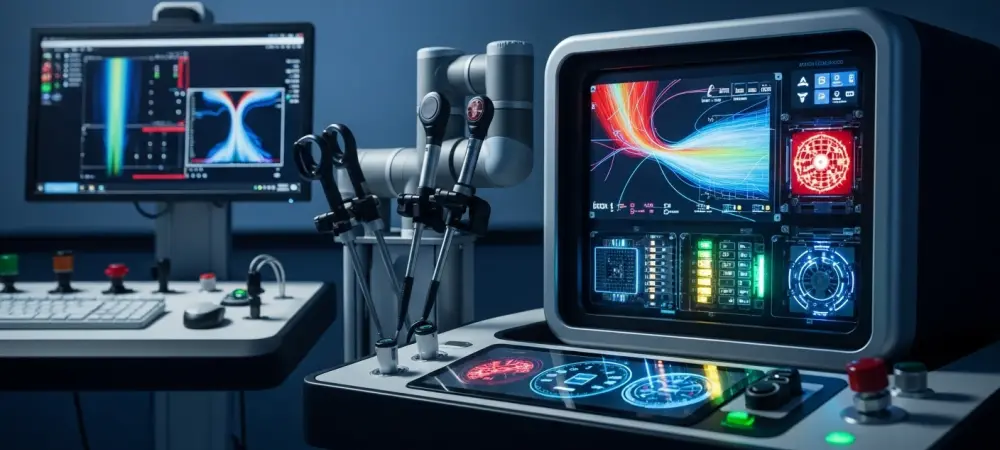
Integrating these platforms required reimagining the standard neurovascular workstation. Instead of a room designed for one surgeon, the model envisioned command centers where personnel monitored autonomous sequences. Training programs focused on supervising robotic movements, ensuring precision without needing an on-site specialist for every routine step.
As these systems moved toward clinical adoption, they provided a scalable blueprint for improving recovery metrics globally. The technology encouraged a forward-looking approach where specialized care was treated as a mobile resource. Ultimately, the successful deployment of these robotic systems established a new standard for vascular health, making advanced treatments accessible to everyone.