

Short introductionI’m thrilled to sit down with Dominic Jainy, a seasoned IT professional whose expertise in artificial intelligence, machine learning, and blockchain offers a unique lens on the evolving tech landscape. Today, we’re diving into the complex dynamics of US-India trade relations and their impact on the data center industry, particularly the recent pause in hyperscaler leases in India. Our conversation explores the root causes of these delays, the broader implications for tech collaborations, and what the future might hold for this critical sector.
Can you walk us through why US hyperscalers are hitting the pause button on leasing data centers in India right now?
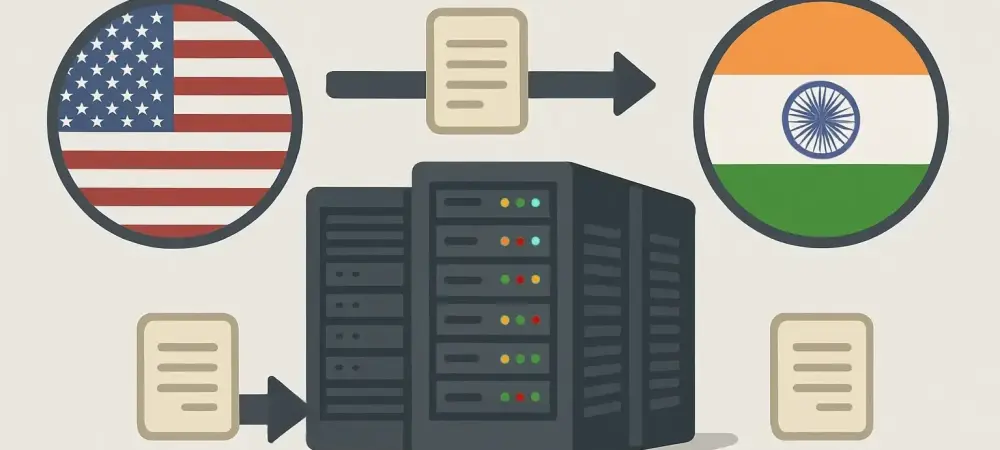
Certainly. The primary reason is the growing trade uncertainty between the US and India. Hyperscalers—major cloud service providers—are hesitant to commit to long-term leases due to unpredictable costs and policy shifts. This stems from recent US tariffs on Indian goods and geopolitical tensions, like India’s purchase of Russian oil, which have created a ripple effect. These companies are essentially waiting for a clearer picture before signing on the dotted line.
How long have these data center deals been on hold, and what’s the sentiment around when they might move forward?
From what I’ve observed, many of these deals have been stalled for over two months now. The general expectation in the industry is that hyperscalers will reassess their plans within the next three to six months. It’s not a full stop, but more of a cautious wait-and-see approach as they monitor how trade relations evolve.
What specific trade issues between the US and India are fueling this hesitation among hyperscalers?
A big factor is the recent US tariffs on Indian goods, which started at 25 percent and escalated to 50 percent. These were imposed partly due to India’s dealings with Russian oil, which has strained diplomatic ties. This creates a challenging environment for US-based hyperscalers who rely on stable costs and supply chains for their massive data center projects in India.
How would you describe the current state of data center agreements with hyperscalers in India?
Right now, most of these agreements are in a holding pattern. They’re still in the pipeline, but hyperscalers are reluctant to finalize anything. It’s like they’ve got the contract ready but are holding off on the signature until there’s more clarity on trade policies and cost implications.
Are these deals being delayed temporarily, or is there a risk of outright cancellation?
I believe it’s more of a delay than a cancellation. The demand for data centers in India remains strong due to the country’s growing digital economy. Hyperscalers are committed to expanding here long-term, but they’re just pushing the timeline out a bit to mitigate risks tied to the current trade environment.
How are data center providers in India feeling the impact of this hesitation from hyperscalers?
Providers are definitely feeling the pressure. They’ve invested heavily in infrastructure expecting these big contracts to come through. Now, with hyperscalers delaying commitments, there’s a cash flow concern and uncertainty about capacity planning. It’s a tough spot, as they can’t fully pivot without knowing the final outcome of these deals.
Can you explain how the recent US tariffs on Indian goods are affecting the data center industry in India?
Absolutely. The tariffs, especially the hikes to 25 and 50 percent, have disrupted global supply chains. Equipment and components critical for building data centers have become more expensive or harder to source predictably. This unpredictability in costs makes it difficult for companies to plan budgets and timelines for new facilities.
Could you share an example of how these tariffs are directly impacting costs or planning for data centers?
Sure. Take server hardware or cooling systems, which often involve components imported through Indian supply chains. With the tariffs in place, the cost of these goods has spiked, forcing companies to either absorb the extra expense or delay projects until they can renegotiate contracts with clauses to offset such increases. It’s a real headache for project managers.
What role does India’s purchase of Russian oil play in this trade tension, and how is it affecting the tech sector?
India’s purchase of Russian oil has been a sticking point with the US, contributing to the imposition of tariffs and other sanctions. This geopolitical friction creates a broader sense of instability for US companies operating in India, including hyperscalers. They’re wary of potential further retaliatory measures that could impact their operations or costs.
How are Indian workers and tech companies being affected by the new $100,000 H-1B visa fee for US job applications?
This fee is a significant barrier for Indian professionals seeking to work in the US. It’s a hefty upfront cost that many can’t afford, which limits the talent pool for US-India tech collaborations. For companies, it means higher expenses to sponsor visas or a potential shortage of skilled workers, which can slow down projects like data center expansions.
Are there ways in which data center contracts in India are evolving to adapt to this uncertain trade climate?
Yes, we’re seeing more adaptive contract structures. Clauses like tariff pass-throughs, which allow cost increases due to tariffs to be passed on, and change-in-law provisions are becoming standard. Additionally, phased capacity agreements—where capacity is rolled out in smaller, manageable stages—are gaining traction to reduce risk exposure.
Looking ahead, what’s your forecast for the future of US-India trade relations and their impact on the data center industry?
I’m cautiously optimistic. Both countries have a vested interest in maintaining strong tech partnerships, given India’s digital growth and the US’s need for scalable infrastructure. However, the next six to twelve months will be critical. If trade tensions ease and tariffs are revisited, we could see a rapid resumption of data center projects. But if geopolitical issues persist, hyperscalers might diversify their investments to other regions, which could slow India’s momentum in this space.