

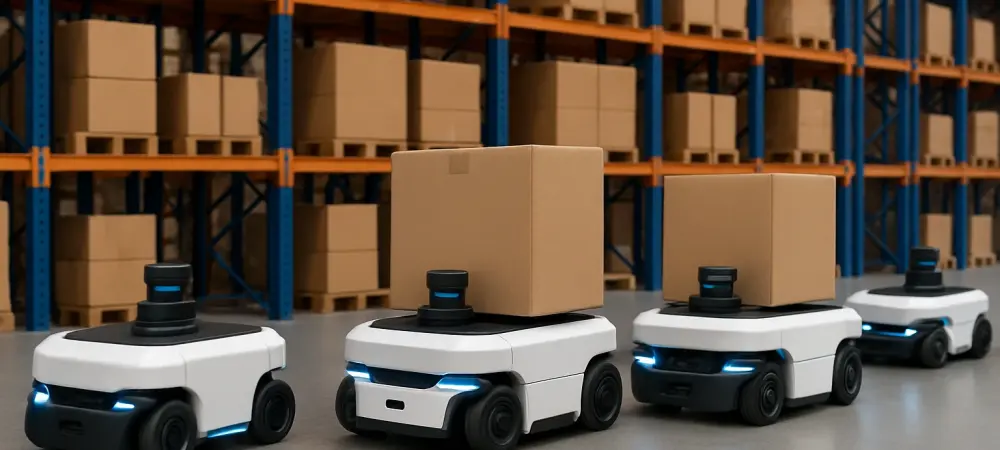
Imagine a bustling packaging facility where robots glide effortlessly through tight spaces, transporting materials and palletizing goods with pinpoint accuracy, all while human workers focus on higher-level tasks, making this scenario no longer a distant vision but a present reality driven by the rapid rise of autonomous mobile robots (AMRs) in the packaging industry. These intelligent machines are transforming operations by addressing critical challenges like labor shortages, escalating costs, and the relentless demand for efficiency. This analysis delves into the current surge of AMRs, explores real-world applications, incorporates industry perspectives, and examines the future potential of this technology in reshaping logistics and packaging workflows.
The Surge of AMRs in Packaging Automation
Market Expansion and Adoption Patterns
The packaging and logistics sectors are witnessing a remarkable uptick in the adoption of AMRs, fueled by the urgent need to streamline operations amid persistent labor constraints. Industry reports indicate that investment in automation has surged, with projections estimating significant growth in the robotics market from 2025 to 2027. This trend reflects a broader shift toward robotic solutions as companies grapple with operational inefficiencies and the high costs of manual labor.
Moreover, the push for automation is not merely a reaction but a strategic move to enhance scalability. Businesses are increasingly recognizing that AMRs can handle repetitive tasks with consistency, freeing up human resources for more complex roles. This shift is particularly evident in warehousing and distribution centers, where the integration of robotics is becoming a cornerstone of modern supply chain management.
Cutting-Edge Applications and Innovations
At a prominent industry event this year, KUKA Robotics showcased its KMP series of AMRs, designed specifically for logistics in confined environments. These robots, equipped with omnidirectional drives and state-of-the-art sensors like 3D cameras and laser scanners, offer a 360-degree field of view to navigate obstacles seamlessly. Their ability to operate in tight spaces makes them invaluable for optimizing internal logistics in crowded facilities.
In a striking demonstration of integrated solutions, KUKA paired its AMRs with high-payload 6-axis robots for dual palletizing and de-palletizing operations. This setup not only highlighted space-saving designs through adaptable safeguarding measures but also underscored how such systems can reorganize warehouse layouts for maximum efficiency. The focus on physical barriers and smart navigation further ensures safety without compromising productivity.
Additionally, KUKA collaborated with Blue Onyx Systems to present a pick-and-place demo featuring a six-axis robot and a high-speed KR SCARA robot. Themed around precision, the display involved placing poker chips on a conveyor with remarkable accuracy and speed, illustrating the potential for AMRs in delicate handling tasks. Another exhibit featured a gripping solution for diverse materials like paint buckets, where a robust robot arm lifted items securely, proving the adaptability of these systems across various packaging needs.
Industry Insights on AMR Implementation
Feedback from industry leaders, including representatives from KUKA Robotics, emphasizes the pivotal role of AMRs in tackling pressing packaging challenges such as labor costs and limited floor space. These experts highlight that the ability of AMRs to perform multiple functions—ranging from material transport to task-switching—offers a practical solution to operational bottlenecks. The consensus is clear: automation is no longer optional but essential for maintaining competitiveness.
Another key point raised by specialists is the importance of user-friendly programming and comprehensive installation support in driving adoption. KUKA’s introduction of an arc welding cell to the US market exemplifies this focus, offering intuitive weld path configurations and safety features that demonstrate a strong return on investment compared to traditional manual setups. Such innovations lower the barrier to entry for companies hesitant about integrating robotics.
Furthermore, the emphasis on measurable outcomes cannot be overlooked. Industry voices stress that AMRs must deliver tangible benefits like reduced downtime and cost savings to justify their upfront costs. This perspective aligns with the broader narrative of automation as a long-term investment, where initial hurdles are offset by sustained improvements in workflow efficiency and resource allocation.
Future Prospects for AMRs in Packaging
Looking ahead, AMRs hold the promise of redefining packaging and logistics through seamless integration with other robotic systems. The potential for these machines to collaborate in real-time, sharing data and coordinating tasks, could lead to fully automated facilities where human intervention is minimal. This vision of interconnected automation is already taking shape with solutions showcased by companies like KUKA.
Anticipated advancements in mobility, precision handling, and gripping technologies are set to further elevate the capabilities of AMRs. Innovations in sensor technology and adaptive grippers, as seen in recent industry displays, suggest that future robots will handle an even wider array of materials and tasks with greater accuracy. These developments are expected to address niche requirements in packaging, from fragile goods to heavy industrial components.
However, challenges remain, including the significant initial investment and the need for skilled technicians to maintain and program these systems. While benefits like reduced operational costs and minimal downtime are compelling, businesses must navigate these hurdles to fully realize the potential of AMRs. The broader implication for the industry lies in how these robots can adapt to diverse needs, potentially transforming operational workflows and setting new standards for efficiency across sectors.
Key Takeaways and Forward-Looking Actions
Reflecting on the trajectory of autonomous mobile robots in packaging, it is evident that their role has grown substantially, with pioneers like KUKA Robotics leading the charge through innovations in efficiency, adaptability, and automation. Their contributions have demonstrated how AMRs can tackle labor shortages, optimize space, and elevate operational performance in tangible ways. The journey forward underscores the necessity for businesses to embrace robotic solutions to remain agile in a fast-evolving landscape. Companies are encouraged to explore AMR technologies as a cornerstone of future-ready operations, investing in training and partnerships to overcome implementation challenges.
As a final consideration, the industry is poised to witness even greater integration of AMRs, with the potential to redefine supply chains on a global scale. Businesses that take proactive steps to assess and adopt these systems are likely to gain a competitive edge, setting the stage for a new era of automation in packaging and beyond.