

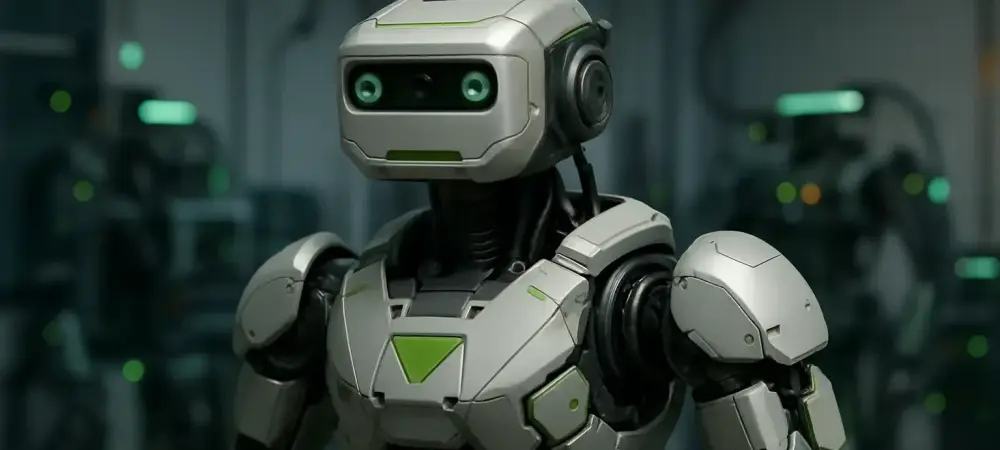
Imagine a world where robots seamlessly navigate chaotic warehouses, assist in delicate surgeries, or assemble intricate machinery with human-like precision, all while adapting to unpredictable environments. This vision is inching closer to reality through a groundbreaking collaboration between Nvidia, a titan in AI and computing, and RealSense, a pioneer in robotic perception technology. Their partnership aims to turbocharge the adoption of physical AI in humanoids and autonomous mobile robots (AMRs), addressing the pressing need for smarter, faster, and more autonomous systems in an era of rapid technological evolution. This review delves into the intricacies of their integrated solutions, evaluating how they are reshaping the robotics landscape.
Core Features and Technological Synergy
Nvidia’s Cutting-Edge Robotics Platforms
At the heart of this collaboration lies Nvidia’s suite of advanced robotics tools, designed to push the boundaries of computational power and simulation. The Jetson Thor supercomputer, tailored for humanoids, delivers unparalleled processing capabilities, enabling robots to handle complex tasks in real-time. Meanwhile, Isaac Sim offers a digital twin environment for developers to test and refine robotic behaviors in virtual spaces, drastically reducing trial-and-error costs. Additionally, the Holoscan Sensor Bridge facilitates seamless data streaming, ensuring low-latency integration of sensor inputs for dynamic decision-making.
These platforms collectively empower robots to function in unpredictable, unstructured settings, such as crowded urban areas or cluttered industrial floors. By providing robust computational frameworks, Nvidia equips developers with the means to create systems that learn and adapt on the fly. This marks a significant leap forward in bridging the gap between theoretical AI models and practical, real-world deployment.
RealSense’s AI-Driven Depth Perception
Complementing Nvidia’s prowess, RealSense brings its innovative AI depth cameras to the table, redefining how robots perceive their surroundings. These cameras deliver precise spatial awareness, allowing machines to map environments in three dimensions with remarkable accuracy. When paired with Nvidia’s tools, the native streaming of depth and image data eliminates bottlenecks, enhancing the speed and reliability of robotic responses.
A standout advantage of RealSense’s technology is its ability to minimize the dependency on extensive pre-training. Robots equipped with these cameras can adapt to new environments more swiftly, a critical factor in industries where time-to-deployment is paramount. This synergy not only boosts autonomy but also opens doors to applications previously deemed too complex for automated systems.
Performance Analysis and Industry Trends
The integration of Nvidia’s platforms with RealSense’s perception technology has yielded impressive performance gains, particularly in terms of speed and efficiency. Developers can now streamline the journey from prototype to production, with tools like Isaac Sim enabling rapid iterations and Holoscan ensuring real-time sensor fusion. This results in robots that not only react faster but also make smarter decisions in dynamic scenarios, a crucial asset for sectors demanding precision and reliability.
Beyond individual performance, this partnership aligns with a broader industry shift toward mainstream adoption of physical AI. The demand for intelligent machines is skyrocketing, driven by the need for shorter development cycles and greater operational autonomy. Investments in humanoids and AMRs are surging, reflecting a collective push to integrate such technologies into everyday workflows, from factory floors to hospital wards.
This collaboration stands as a catalyst in this transformative wave, offering scalable solutions that meet emerging market needs. By addressing the dual challenges of complexity and cost, Nvidia and RealSense are paving the way for broader accessibility, ensuring that even smaller enterprises can leverage cutting-edge robotics without prohibitive expenses.
Real-World Impact Across Sectors
The practical implications of this partnership are vast, spanning multiple industries with diverse needs. In logistics, for instance, AMRs equipped with RealSense depth cameras and Nvidia’s computational power can navigate sprawling warehouses, optimizing inventory management with minimal human oversight. Such systems promise to cut operational delays and enhance throughput in an era of relentless e-commerce growth.
In manufacturing, the technology enables AI-driven assembly lines where robots handle intricate tasks with finesse, reducing errors and boosting productivity. Healthcare, too, stands to benefit, with potential applications in robotic assistants that support patient care through precise movements and real-time environmental awareness. These use cases underscore the versatility of the integrated solutions, demonstrating their capacity to innovate across varied domains.
Scalability remains a key strength of this collaboration, allowing tailored implementations that suit specific industry challenges. Whether it’s adapting to the high-speed demands of logistics or the precision requirements of medical settings, the Nvidia-RealSense framework offers a flexible foundation for growth. This adaptability positions their technology as a cornerstone for future advancements in robotic deployment.
Challenges in Adoption and Integration
Despite its promise, the partnership faces notable hurdles in achieving widespread impact. Technical challenges, such as ensuring seamless compatibility across diverse robotic architectures, pose significant obstacles. Integrating complex systems like Jetson Thor with varying hardware setups can introduce unforeseen glitches, demanding rigorous testing and refinement.
Market barriers also loom large, with cost remaining a primary concern for smaller players looking to adopt these advanced technologies. Regulatory constraints in sectors like healthcare further complicate deployment, as stringent standards must be met to ensure safety and compliance. These factors could slow the pace of adoption if not addressed with strategic pricing and robust policy advocacy.
To counter these issues, Nvidia and RealSense are investing in developer support and continuous innovation. By fostering an ecosystem of tools, tutorials, and community engagement, they aim to lower entry barriers and accelerate troubleshooting. Such efforts are vital to overcoming initial resistance and ensuring that the benefits of physical AI reach a broader audience.
Looking Ahead: The Future of Physical AI
The trajectory of this collaboration hints at exciting possibilities for the evolution of robotics. Anticipated advancements include even greater levels of robotic autonomy, where machines could independently tackle tasks in entirely uncharted environments. Emerging sectors, such as urban planning or disaster response, might soon witness novel applications of these technologies, expanding their societal footprint.
Over the next few years, from 2025 onward, breakthroughs in sensor fusion and simulation accuracy are expected to further refine the capabilities of humanoids and AMRs. Enhanced integration could lead to systems that not only mimic human cognition but also anticipate needs in real-time, transforming industries in ways yet to be imagined. The long-term vision points toward a seamless blend of AI and physical interaction, reshaping daily life.
Reflecting on the broader implications, this partnership could redefine labor dynamics, operational efficiencies, and even human-robot collaboration. As these technologies mature, their influence is likely to extend beyond industrial applications, potentially impacting household automation and public infrastructure. The ripple effects of such progress promise a future where intelligent machines are ubiquitous, driving both innovation and accessibility.
Final Verdict and Next Steps
Looking back, the Nvidia-RealSense partnership has carved a formidable path in advancing physical AI for robotics, blending computational might with perceptive precision to elevate machine autonomy. Their combined efforts have tackled critical gaps in development speed and environmental adaptability, setting a high benchmark for industry standards.
Moving forward, stakeholders should prioritize addressing cost barriers by exploring tiered pricing models that democratize access to these tools. Collaborative initiatives with regulatory bodies could streamline compliance processes, especially in sensitive sectors like healthcare. Additionally, expanding developer resources will be crucial to foster innovation and troubleshoot integration challenges.
As a final consideration, investing in pilot programs across underrepresented industries could uncover untapped potential, ensuring that the benefits of this technology permeate diverse markets. The groundwork laid by Nvidia and RealSense offers a transformative leap, and the next steps lie in building an inclusive ecosystem that propels physical AI into every corner of modern life.