

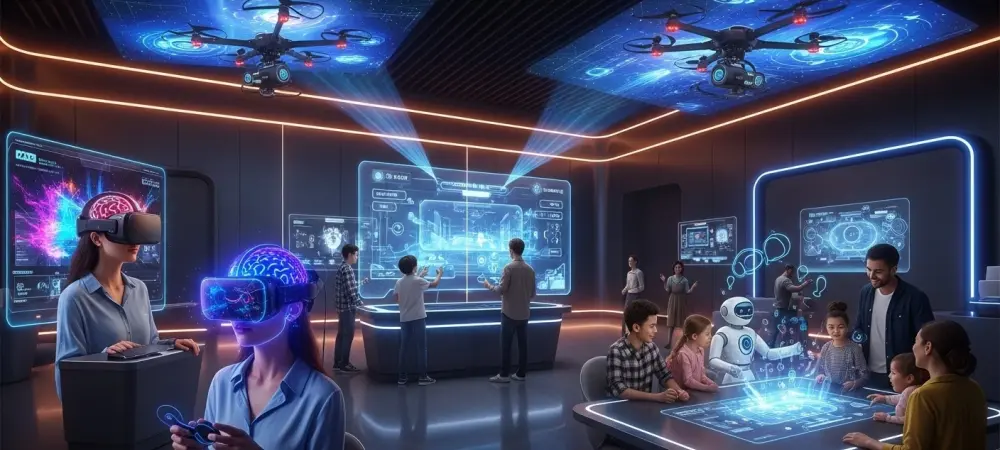
The entertainment landscape is undergoing a seismic shift as artificial intelligence (AI) redefines how content captivates audiences, from tailoring movie picks on streaming platforms to crafting lifelike adversaries in video games, making it not just a tool but a true game-changer. This technology weaves personalization and interactivity into the fabric of modern media consumption, stretching its influence across borders and making entertainment more accessible and engaging than ever before.
The Rise of AI in Entertainment
Growth and Adoption Trends
AI’s integration into entertainment sectors like streaming, gaming, and music is accelerating at a remarkable pace. According to recent market research by reputable firms, the AI entertainment market is projected to grow significantly from this year to 2027, driven by increasing demand for personalized experiences. Streaming giants and gaming studios are adopting AI tools at an unprecedented rate to enhance user satisfaction and operational efficiency. A striking statistic reveals that AI-driven recommendation systems have boosted viewer retention by substantial margins on platforms like Netflix and Spotify. These tools analyze vast datasets of user behavior to suggest content that keeps audiences hooked, demonstrating how technology can transform passive viewing into a curated journey. This trend underscores a broader shift toward data-driven strategies that prioritize individual preferences over one-size-fits-all approaches.
Beyond retention, AI’s adoption is also evident in the rising investment in machine learning solutions by entertainment companies. These investments aim to streamline content production and distribution, ensuring that creators can meet global demand with speed and precision. The trajectory of growth points to a future where AI is not just an add-on but a core component of entertainment infrastructure.
Real-World Applications and Innovations
AI’s practical applications in entertainment are as diverse as they are groundbreaking. Netflix’s recommendation engine stands out as a prime example, using sophisticated algorithms to predict what viewers might enjoy next based on their watching history. This personalization has become a hallmark of modern streaming, setting a standard for user engagement across digital platforms.
In the gaming industry, AI is crafting dynamic environments and non-player characters that adapt to individual play styles, creating immersive worlds that feel alive. Similarly, the music sector has seen innovations like virtual concert avatars, where AI brings digital performers to life for global audiences, blending technology with artistry. These examples highlight how AI enhances the sensory and emotional impact of entertainment.
Unique applications also emerge in niches like online casinos, where AI analyzes odds to assist players in making strategic decisions, while chatbots provide seamless user support. Additionally, AI-assisted scriptwriting is gaining traction in storytelling, helping writers brainstorm ideas and refine narratives with data-driven insights. Such innovations illustrate AI’s versatility, pushing boundaries in both mainstream and specialized entertainment domains.
Industry Perspectives on AI’s Impact
Entertainment industry leaders and tech analysts alike recognize AI as a catalyst for creativity and efficiency. A prominent streaming executive recently noted that AI enables platforms to connect with audiences on a deeply personal level, fostering loyalty through tailored content. This sentiment reflects a consensus that technology amplifies human connection rather than replacing it.
However, challenges loom large, as experts caution against risks like algorithmic bias, which can skew recommendations and perpetuate stereotypes. Ethical concerns surrounding deepfakes—AI-generated fake media—also draw scrutiny for their potential misuse in creating misleading content. Analysts emphasize the importance of transparency in AI systems to maintain trust among users and creators.
Another pressing issue is the risk of job displacement, with automation threatening traditional roles in production and design. Tech thought leaders advocate for a balanced approach, suggesting that AI should complement human skills rather than supplant them. This perspective calls for proactive measures, such as reskilling programs, to ensure that the workforce adapts alongside technological advancements.
The Future of AI in Shaping Entertainment
Looking ahead, AI holds the promise of creating fully immersive virtual worlds for gaming, where players can explore environments indistinguishable from reality. There is also potential for AI to produce entire films with minimal human input, handling everything from script to special effects. Such advancements could redefine the boundaries of creative expression in profound ways. Benefits extend to accessibility, with AI-powered tools like automated subtitling and dubbing breaking down language barriers for global audiences. Yet, challenges persist, including the need for transparent algorithms to prevent unintended biases and the protection of traditional roles from being eroded. Striking a balance between innovation and cultural preservation remains a critical concern for industry stakeholders.
Broader implications suggest a shift toward participatory entertainment, where audiences co-create content alongside AI systems, blurring the lines between consumer and creator. However, there is a risk of cultural homogenization if dominant algorithms prioritize mainstream trends over diverse voices. Managing this tension will be essential to ensure that AI fosters a rich, varied entertainment landscape.
Conclusion and Forward-Looking Insights
Reflecting on the journey of AI in entertainment, it has become clear that this technology has emerged as a powerful force for personalization, interactivity, and innovation across multiple sectors. Its applications have reshaped how content is delivered and experienced, while its challenges highlight the need for ethical stewardship. Industry perspectives underscore both the excitement and caution that accompany this transformation.
Moving forward, stakeholders must prioritize actionable steps to harness AI’s potential responsibly. Developing robust frameworks for transparency in algorithms and investing in reskilling initiatives for affected workers stand out as critical measures. By fostering collaboration between technology and human creativity, the entertainment industry can ensure that AI serves as a bridge to a more inclusive and dynamic future.