

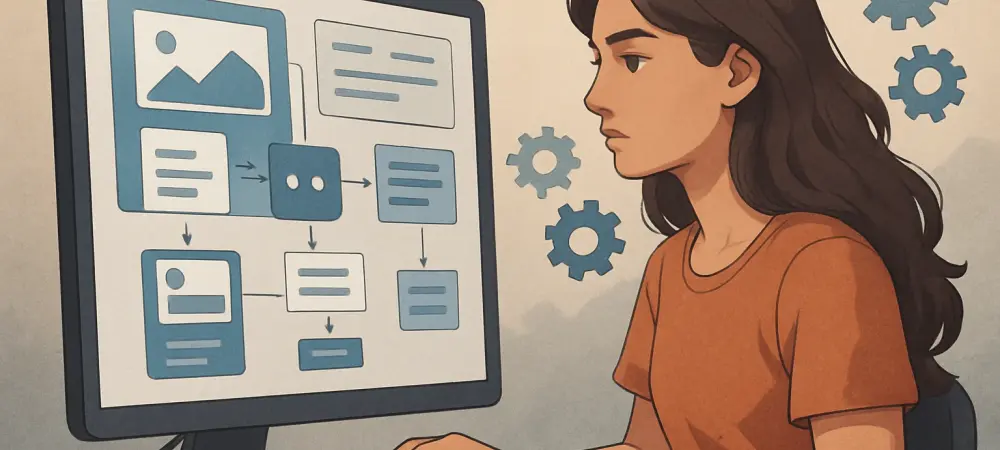
Artificial intelligence has transcended its role as a mere efficiency tool to become a revolutionary force that redefines creativity itself, transforming raw imagination into tangible reality at unprecedented speed. This seismic shift is not just about automating tasks but about fundamentally altering how ideas are conceived and brought to life. Across industries, AI is empowering professionals to bypass traditional constraints, turning fleeting thoughts into polished outputs with minimal effort.
The significance of this trend cannot be overstated, as AI continues to reshape creative sectors like advertising, design, and software development. By breaking down barriers between concept and execution, it enables developers, designers, and marketers to innovate rapidly in a digital landscape that demands agility and originality. This technology is not merely a facilitator but a catalyst for reimagining workflows and unlocking potential that was once out of reach.
This analysis delves into the multifaceted impact of AI-driven creative automation, exploring its current influence across industries, showcasing real-world applications, sharing insights from industry leaders, and projecting its future trajectory. It also emphasizes the importance of embracing this evolving trend as a means to redefine success through vision and ingenuity.
The Rise of AI in Creative Automation
Growth and Adoption Trends
The adoption of AI tools in creative industries has surged dramatically, with market research indicating a profound shift in how professionals approach their work. Reports from credible sources like Statista project that the global market for AI in creative applications, spanning advertising and design, will grow at a compound annual rate of over 25% from the current year to 2027. This rapid expansion reflects a growing reliance on AI to enhance productivity and innovation across sectors.
Technological advancements, particularly in natural language processing and visual recognition, have fueled this trend by enabling seamless integration into creative platforms. These tools now allow users to input simple descriptions or sketches and receive fully realized designs or content in seconds. Such capabilities are streamlining workflows, reducing the time spent on repetitive tasks, and allowing focus on higher-level ideation.
Moreover, the democratization of these technologies means that small businesses and individual creators can access tools once reserved for large enterprises. This widespread availability is evident in the increasing number of AI-powered platforms catering to diverse needs, from graphic design to content generation. The result is a more inclusive creative ecosystem where barriers to entry are significantly lowered.
Real-World Applications and Case Studies
AI-driven creative automation is already making waves through platforms like Creatopy, which empowers users to craft and scale personalized advertisements effortlessly. By leveraging AI, this tool automates complex design processes, enabling marketers to produce tailored campaigns without requiring deep technical expertise. Such platforms exemplify how technology can simplify intricate tasks while maintaining high-quality output.
Specific use cases further illustrate AI’s ability to bridge the gap between concept and execution. For instance, designers can now input rough sketches or textual prompts, and AI algorithms generate multiple polished iterations in moments. Similarly, marketing teams benefit from automated content creation, where a brief description transforms into engaging copy or visuals, drastically reducing production timelines.
These applications highlight a broader shift toward efficiency and accessibility in creative workflows. By minimizing manual intervention, AI ensures that ideas are not lost in translation due to skill limitations or resource constraints. This trend is reshaping industries by prioritizing speed and adaptability, allowing professionals to meet the fast-paced demands of modern markets.
Insights from Industry Leaders on AI’s Creative Impact
Expert perspectives shed light on the profound implications of AI in creative automation, emphasizing its role as a transformative enabler. Thibault Imbert, Chief Product & Growth Officer at Creatopy, describes AI as a “courage multiplier” that diminishes the risks associated with experimentation. This concept underscores how technology emboldens professionals to pursue daring ideas without the fear of costly failures.
Industry leaders also note that AI democratizes creativity by dismantling technical barriers, thus amplifying diverse voices in the creative process. This inclusivity allows individuals from varied backgrounds to contribute meaningfully, fostering innovation that might otherwise remain untapped. As a result, the creative landscape is becoming richer with perspectives that challenge conventional norms.
Furthermore, experts argue that while AI handles execution, the competitive edge shifts to uniquely human qualities such as taste, judgment, and vision. In an era where anyone can produce polished work through automation, the ability to conceptualize impactful ideas becomes paramount. This evolution positions professionals as curators of creativity, guiding AI tools to achieve outcomes that resonate deeply with audiences.
The Future of AI-Driven Creative Automation
Looking ahead, advancements in AI are poised to further collapse the gap between ideas and their realization, making creative processes even more intuitive. Emerging technologies could enable direct communication of intent—whether through voice, emotion, or abstract visuals—resulting in outputs that mirror human thought with uncanny precision. Such developments promise to redefine interaction with creative tools entirely.
The benefits of this trajectory include accelerated innovation cycles and greater inclusivity, as more individuals gain the means to express their ideas. However, challenges loom, particularly the heightened demand for originality in a landscape where technical proficiency is no longer a differentiator. Standing out will require a renewed focus on crafting unique narratives and solutions that capture attention amid a flood of automated content.
Broader implications across industries also warrant consideration, including the risk of oversaturation with AI-generated material. Balancing automation with human insight will be critical to ensuring that outputs retain authenticity and emotional impact. As AI continues to evolve, the interplay between technological capability and human creativity will shape the future of meaningful innovation.
Embracing the Era of Imagination
Reflecting on this transformative journey, it becomes clear that AI has played a pivotal role in eliminating execution barriers, fostering a meritocracy where imagination reigns supreme. Its capacity to redefine success through vision and originality marks a turning point for creative industries. The technology has empowered professionals to focus on ideation rather than implementation, unlocking unprecedented potential.
The era of AI-driven creative automation has proven itself a liberating force, allowing innovation to flourish without the traditional fear of failure. This shift has encouraged a bolder approach to experimentation, where risks are minimized, and learning from missteps becomes integral to progress. The impact is evident in the diverse outputs emerging across sectors.
As a next step, professionals are urged to leverage AI not just as a tool but as a partner in pushing boundaries, harnessing its capabilities to explore uncharted creative territories. Embracing the role of visionaries, they are encouraged to prioritize bold concepts and refine their unique perspectives. This approach promises to drive the next wave of innovation, ensuring that human creativity remains at the heart of technological advancement.