

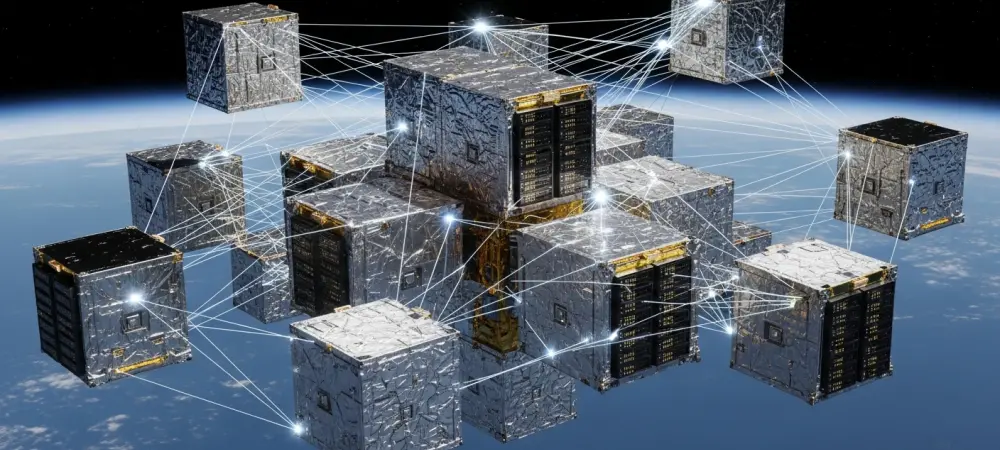
The unrelenting demand for computational power has pushed the boundaries of terrestrial infrastructure to a breaking point, forcing tech giants to look toward the celestial horizon for the next generation of data processing environments. As of 2026, the global technology sector is witnessing a fundamental paradigm shift in how digital infrastructure is conceived. This movement is driven primarily by the insatiable appetite for Artificial Intelligence (AI) compute power, which has outpaced the growth of ground-based utility capacity. The central subject of this market analysis is the viability of orbital data centers—a concept that seeks to relocate high-density computing tasks from the Earth’s surface into Low Earth Orbit (LEO) to bypass the limitations of our home planet.
This transition from ground-based server farms to satellite-based AI clusters represents a strategic pivot for the industry. While the idea of “cloud computing” has always been a metaphor for decentralized servers, the literal move into the atmosphere is becoming a pragmatic necessity. By examining the mounting failures of terrestrial infrastructure, the strategic vision of orbital pioneers, and the competitive landscape involving heavyweights like SpaceX, this analysis provides a roadmap for the future of off-planet processing. The goal is to determine if the vacuum of space can provide the breathing room that global AI infrastructure so desperately needs to maintain its current trajectory of innovation.
The Terrestrial Crisis: Why Earth Is Running Out of Room for AI
The impetus for moving compute workloads into space is rooted in the visible exhaustion of ground-based resources. Currently, the construction of new data centers on Earth faces a triple threat of challenges that have turned once-routine projects into multi-year logistical nightmares. First and foremost is the energy constraint; AI training and inference require massive amounts of electricity, often exceeding what local grids can provide without radical and costly upgrades. In many major tech hubs, the wait time for a high-capacity power interconnection now stretches toward the end of the decade, effectively stalling the expansion of digital services.
Second is the increasingly scrutinized cooling requirement. Traditional facilities consume millions of gallons of water annually or require complex, energy-intensive refrigeration systems to keep high-performance chips from melting. As water scarcity becomes a more pressing global issue, the environmental footprint of a data center is no longer just a corporate social responsibility concern; it is a regulatory liability. Third is the growing community and regulatory opposition. Local populations in tech corridors are increasingly resisting the noise, land use, and immense resource consumption associated with massive server farms, leading to a surge in zoning restrictions and legal challenges that further slow down the deployment of essential hardware.
These background factors define the ceiling of terrestrial growth. If the AI revolution continues its current pace, the physical limitations of our planet will become the primary bottleneck for technological advancement. Relocating these workloads to orbit is not a flight of fancy but a calculated response to the diminishing availability of industrial-scale resources on the surface. By moving servers to a place where solar energy is abundant and cooling is a natural byproduct of the environment, companies can bypass the bottlenecks of the terrestrial grid entirely.
Engineering the Orbital Cloud
Validating Hardware in the Harsh Vacuum of Space
The specific engineering approach for orbital computing involves constellations of satellites equipped with high-performance GPUs, such as the Nvidia units that power modern AI. A major focus of current missions is testing whether enterprise-grade hardware can function reliably in the harsh vacuum and radiation of space. Unlike terrestrial chips that sit in climate-controlled, dust-free rooms, orbital hardware must withstand extreme temperature fluctuations and cosmic rays that can cause hardware degradation. This requires a rethink of structural engineering, moving away from heavy shielding toward software-defined resilience and specialized thermal management systems.
The benefits of this transition are substantial. In orbit, solar panels deliver approximately five times the effective energy per panel compared to those on Earth because they are not hampered by atmospheric interference, weather patterns, or the typical day-night cycle. Furthermore, by dissipating heat directly into the vacuum of space through radiative cooling, these satellites eliminate the need for water-based systems. This transition from convection-based cooling—which relies on air or water—to radiative cooling represents a fundamental shift in thermal management. This allows for higher density configurations that would be physically impossible to cool on the ground without catastrophic energy costs.
A Multipolar Race for Celestial Supremacy
The competition for the orbital cloud is heating up as multiple players stake their claims in the high-frontier market. SpaceX and xAI have initiated plans to deploy a massive constellation of solar-powered data center satellites, utilizing intersatellite optical laser links to integrate with the existing Starlink network. This creates a seamless global mesh where data can be processed in transit, rather than being beamed down to a congested ground station. This integration of connectivity and compute represents the next logical step for the space industry, turning satellites from simple relays into active processing nodes.
Other market participants are looking even further afield to find stable environments for data. Some enterprises have successfully tested data center payloads on the lunar surface, suggesting that the Moon could serve as a permanent site for cold storage or disaster recovery data, safe from terrestrial natural disasters or geopolitical conflicts. Meanwhile, specialized startups are exploring the deployment of quantum computers in space. The naturally low temperatures found in certain orbital pockets could theoretically assist in maintaining the delicate cryogenic states required for quantum processing, potentially solving one of the most significant engineering hurdles facing that field on Earth.
Navigating the Technical and Economic Hurdles
Despite the rapid progress, there are formidable barriers that remain a point of contention among industry analysts. Radiation resilience is a top priority; the high-radiation environment of space can cause bit flips or permanent hardware failure in standard silicon chips. While shielding can mitigate this, it adds significant weight to the payload, which increases launch costs. Therefore, the industry is moving toward “rad-hardened” chip designs and error-correcting software that can handle the occasional cosmic ray hit without crashing the entire system.
Lifecycle management also presents a unique problem for the orbital cloud. Data center hardware typically has a refresh cycle of three to five years to remain competitive with the latest chip architectures. Deorbiting and replacing thousands of satellites every few years to keep up with new GPU releases presents a massive logistical challenge and raises concerns about space debris. Furthermore, while laser links are incredibly fast, the round-trip time for data traveling from Earth to orbit still introduces networking latency. This makes space-based centers less suitable for time-sensitive applications like high-frequency trading, though they remain ideal for bulk processing tasks and asynchronous AI inference.
The Future of Off-Planet Infrastructure and AI
The landscape of orbital computing is set to evolve rapidly as launch costs continue to drop due to the maturity of reusable rocket technology. As the price per kilogram to reach LEO decreases, the economic argument for space-based compute becomes much more compelling. We can expect to see a shift in design philosophy, where the primary constraint is no longer the weight of the satellite but the efficiency of the surface area used for power generation and heat dissipation. This will likely lead to the development of modular data satellites that can be docked together to form massive, interconnected orbital server farms.
Regulatory changes will also play a crucial role in this evolution. As more companies look to the stars to bypass terrestrial utility queues, international space law will need to adapt to manage the influx of compute constellations. Experts predict that space compute will first find its footing in “edge” applications, where data collected by Earth-observation satellites is processed in-orbit. This reduces the amount of bandwidth needed to send information back to Earth, as only the relevant insights are transmitted. Eventually, this will evolve into a tiered infrastructure where Earth handles the initial training of massive models, while space handles high-speed global inference.
Key Takeaways for the Digital Age
The transition to orbital data centers offers several critical insights for businesses and technology professionals navigating the mid-2020s. First, it is clear that speed-to-market is becoming the primary driver for infrastructure decisions. The ability to deploy a satellite cluster in months, rather than waiting years for a terrestrial permit, provides a massive competitive advantage for AI-driven firms. Second, the market is shifting toward niche dominance, where the most successful players will be those who identify specific workloads—such as secure government communications or real-time environmental monitoring—that benefit most from an orbital location.
For professionals in the field, the takeaway is to prepare for a hybrid cloud environment that extends beyond the atmosphere. Understanding the interplay between terrestrial power constraints and orbital scalability will be essential for future infrastructure planning. As the industry matures, the focus will likely shift toward sustainable lifecycle management, ensuring that the new space race does not result in an unmanageable cloud of debris. Companies that can master the art of space-based thermal management and radiation-resilient computing will be the leaders of the next industrial era.
Conclusion: The Long Road to a Stellar Grid
The initial missions into orbital computing proved that high-performance GPUs could survive and perform efficiently under solar power and radiative cooling. This validation laid the engineering foundation for a new era of infrastructure that bypassed the physical limitations of the Earth. However, the transition from pilot missions to a mature, sustainable infrastructure option was recognized as a process that would span several years. It was determined that space-based data centers functioned best as a viable extension of the global compute grid, rather than a total replacement for ground-based facilities.
Ultimately, the focus shifted toward actionable next steps in the development of “space-hardened” hardware that could match the performance of ground-based equivalents without the need for heavy shielding. Industry leaders realized that the conflict between unlimited data demand and limited planetary resources required a radical solution. The success of these early orbital ventures provided a strategic roadmap for integrating celestial resources into the global economy. By leveraging the unique environment of space, the technology sector ensured that the progress of artificial intelligence would not be throttled by the boundaries of the Earth, creating a resilient, off-planet backbone for the digital future.