

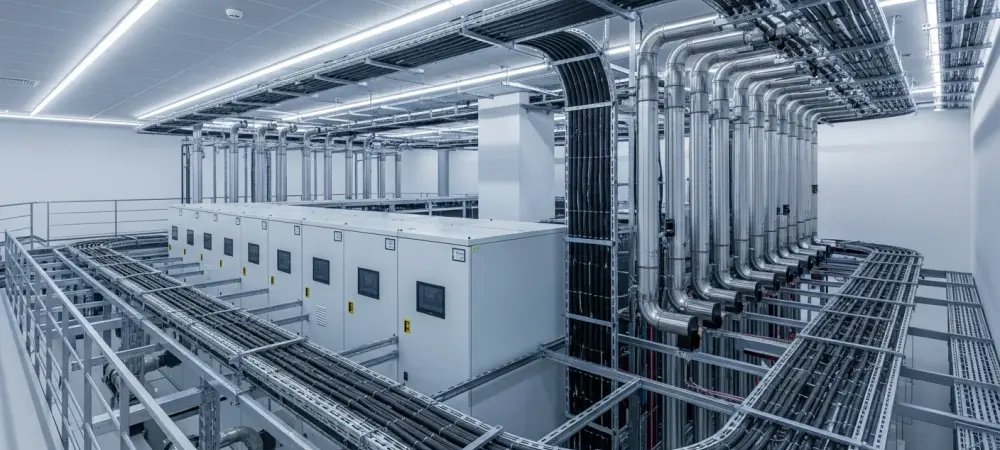
The global digital landscape has shifted so violently toward high-performance computing that traditional telecommunications facilities now resemble relics of a slower, simpler age. As artificial intelligence moves from a theoretical novelty to the primary engine of the global economy, the physical structures housing this intelligence have been forced to undergo a radical biological evolution. These sites are no longer just warehouses for servers; they have become the “nerve centers” of modern civilization, where the sheer density of data processing requires a total reimagining of electrical engineering and thermal physics. This transition marks the end of the discrete server era and the beginning of a unified, high-density compute environment that challenges every existing architectural standard.
Evolution of Modern AI Data Centers and Infrastructure Standards
The shift from classic telecommunications to AI-ready infrastructure represents more than a mere hardware upgrade; it is a fundamental change in the core principles of digital connectivity. Historically, data centers were designed to manage steady, predictable streams of traffic from wireline and wireless networks. However, the emergence of massive GPU clusters has introduced a level of volatility and power intensity that traditional infrastructure was never built to sustain. This evolution has pushed the industry to rethink how data centers are integrated into the broader technological landscape, moving them from the periphery of network design to the very center of strategic economic development. Modern infrastructure must now prioritize the “logical compute node” over the individual server. In the past, a single box performed a single set of tasks, but today, an entire row of racks functions as a single, massive computer. This shift requires a highly sophisticated interplay between structured cabling and power distribution systems that can scale rapidly without risking catastrophic failure. As we look toward the next several years, the relevance of these facilities will only grow, serving as the foundation for every sector from autonomous transportation to personalized medicine, making their reliability a matter of global stability rather than just corporate uptime.
Foundations of AI-Ready Physical Infrastructure
Modernized Design Standards and the ANSI/TIA-942 Framework
Establishing a baseline for reliability in this new environment requires rigorous adherence to modernized standards, with the ANSI/TIA-942 framework leading the charge. This standard provides a comprehensive roadmap for data center excellence, categorizing facilities into four distinct reliability tiers that evaluate everything from structured cabling to physical security. By implementing these tiers, operators can ensure that their infrastructure is not just powerful, but resilient against the “Single Points of Failure” that often plague uncertified sites. The framework acts as a universal language, allowing global stakeholders to verify that a facility in Singapore meets the same rigorous demands as one in Virginia.
The true value of such a standardized approach lies in its ability to mitigate risk in a high-stakes environment. As AI workloads become mission-critical, the cost of a single hour of downtime can reach millions of dollars. ANSI/TIA-942 addresses this by mandating strict performance requirements for power redundancy and environmental controls. This structural discipline is what separates professional hyperscale operations from makeshift server rooms, providing a level of third-party assurance that is becoming a prerequisite for institutional investment and government contracts.
High-Density Rack Design and Advanced Thermal Management
As power densities climb to unprecedented levels, the industry has reached the physical limits of traditional air cooling. Standard server racks that once drew five to ten kilowatts are being replaced by high-density configurations that demand fifty kilowatts or more per cabinet. This massive energy concentration creates a thermal challenge that cannot be solved by simply blowing more cold air into a room. Instead, we are seeing a strategic transition toward liquid cooling technologies, which are far more efficient at absorbing and transporting heat away from sensitive silicon components.
Managing these extreme densities requires a holistic approach to facility design. Operators are increasingly adopting hybrid systems that combine traditional cooling with direct-to-chip liquid solutions to maximize efficiency. This technical pivot is not merely a preference but a necessity for maintaining the longevity of expensive hardware. By integrating advanced thermal management into the early stages of site planning, engineers can optimize the airflow and liquid circulation paths, ensuring that the facility remains operational even under the most demanding computational loads.
Recent Innovations and Quality Management Initiatives
The fragmentation of the global supply chain has long been a bottleneck for rapid data center expansion, leading to the development of consensus-based models like the DCE 9000 quality standard. For years, major hyperscalers operated under their own proprietary requirements, forcing vendors to navigate a confusing maze of different specifications. DCE 9000 aims to harmonize these disparate demands into a single “quality playbook” that focuses on operational rigor and process-oriented requirements. This initiative, supported by a broad coalition of tech giants and equipment manufacturers, represents a significant step toward industrializing the data center construction process.
Harmonizing the supply chain does more than just speed up construction; it significantly reduces operational inefficiencies and material waste. When vendors follow a unified quality standard, the likelihood of receiving defective or incompatible components drops dramatically. This synchronization is crucial as the industry faces a trillion-dollar annual infrastructure spend. By establishing a baseline of data center excellence, the sector can move away from bespoke, artisan-style builds toward a scalable, repeatable model that can meet the explosive demand for AI compute capacity.
Real-World Applications and Sector Deployments
The practical application of these standards is most evident in the massive hyperscale campuses currently being deployed across the globe. These “megasites” serve as the backbone for cloud services and generative AI platforms, relying on standardized certifications to maintain uptime across thousands of interconnected nodes. Equipment manufacturers have also embraced these certifications to prove their readiness for the AI era, using them as a competitive advantage to win contracts from risk-averse enterprises. The result is a more transparent marketplace where performance metrics are verified rather than merely claimed.
Beyond the tech hubs, we are seeing unique use cases where legacy industrial buildings are being converted into modern digital hubs. This trend is revitalizing local economies that were once dependent on heavy manufacturing. By retrofitting an old factory with high-performance computing infrastructure, developers can leverage existing power grids while bringing high-tech jobs and tax revenue to underserved areas. This repurposing of older structures demonstrates the flexibility of modern infrastructure standards, proving that even a twentieth-century building can be transformed into a twenty-first-century engine of innovation.
Critical Challenges and Regulatory Obstacles
Despite the technological breakthroughs, significant hurdles remain, particularly when it comes to retrofitting existing facilities for high-performance computing. Many older data centers simply do not have the structural integrity to support the weight of liquid cooling systems or the electrical capacity to power dense GPU clusters. The cost and complexity of these upgrades can be prohibitive, leading to a growing divide between “legacy” sites and “AI-native” facilities. Overcoming these technical hurdles requires a delicate balance of architectural ingenuity and heavy capital investment.
Furthermore, the rapid expansion of physical infrastructure is often stymied by regulatory issues and community resistance. Permitting delays can add years to a project timeline, while local concerns about noise, water usage for cooling, and energy consumption frequently lead to political friction. Navigating these social and legal landscapes is just as critical as the technical engineering itself. Without a proactive approach to community engagement and sustainable design, the industry risks a public backlash that could slow the roll-out of the very infrastructure needed to power the next generation of digital services.
Future Outlook: Edge Computing and the 6G Horizon
Looking toward the horizon, the proliferation of edge data centers will redefine the relationship between localized compute and global connectivity. As 6G technology enters its initial deployment phases, the need for ultra-low latency will drive computing power away from centralized hubs and closer to the end-user. This move to the edge will enable real-time AI applications that were previously impossible, such as fully autonomous traffic management and immersive augmented reality. These smaller, localized facilities will face the same density and thermal challenges as their hyperscale counterparts, requiring a miniaturized version of current infrastructure standards.
The long-term impact of this localized power will be a more resilient and responsive global network. By processing data at the source, edge centers reduce the strain on long-haul fiber routes and improve the speed of AI-driven decision-making. Potential breakthroughs in photonics and advanced power storage will further enhance these capabilities, allowing edge sites to operate with minimal environmental footprints. The integration of 6G and AI-ready infrastructure will eventually create a seamless digital fabric that connects every device and sensor in real-time, fulfilling the promise of a truly connected world.
Summary and Strategic Assessment
The transition toward a unified digital infrastructure narrative has fundamentally altered the landscape of the telecommunications and data center sectors. This evolution moved the industry from fragmented, company-specific frameworks to a standardized global model that prioritizes reliability, scalability, and quality management. The emergence of specialized standards and quality playbooks provided the necessary structure for operators to manage the extreme demands of artificial intelligence. These initiatives ensured that the physical foundations of the digital economy could keep pace with the rapid advancements in software and processor technology.
Ultimately, the successful deployment of AI-ready infrastructure depended on the industry’s ability to balance technical innovation with rigorous assurance programs. The focus on certified reliability and supply-chain harmonization mitigated the risks associated with rapid growth and high-power density. As the sector looked toward a future defined by edge computing and 6G, the groundwork laid through these standardized models proved essential for maintaining global connectivity. Organizations that embraced these unified standards positioned themselves to lead the next era of technological progress, ensuring that the nerve centers of the global economy remained robust and efficient.