

Dominic Jainy is a seasoned IT strategist with deep expertise in the convergence of artificial intelligence, machine learning, and decentralized infrastructure. As the digital landscape shifts toward highly distributed models, Dominic has become a leading voice in reimagining how enterprises manage data away from traditional centralized hubs. His insights into the integration of emerging technologies provide a roadmap for organizations navigating the complexities of modern IT restructuring and the expansion of the “edge.”
The following discussion explores the rapid growth of edge computing—projected to reach over $327 billion by 2033—and the critical challenges of maintaining security, standardization, and interoperability in an increasingly fragmented environment.
Edge computing is projected to grow significantly through 2033, moving data away from central hubs. How does this shift transform the traditional “glass house” concept, and what specific physical hardware must be deployed at remote sites to ensure they can operate independently?
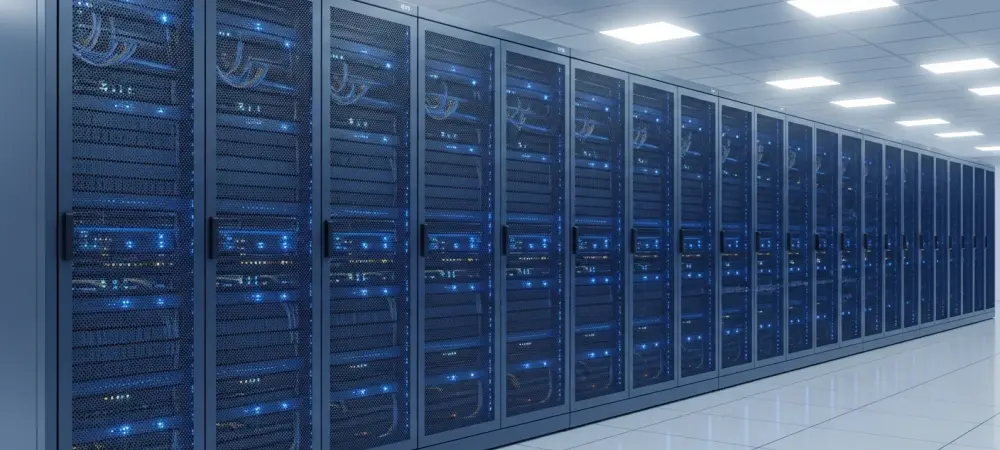
The “glass house” used to represent a single, controlled fortress within a corporate headquarters where all data lived and died. This shift toward the edge, growing at a 33% compound annual growth rate, effectively shatters those walls, turning the data center into an amorphous entity that stretches from the core to the most remote retail store or medical device. To make this work, we are moving toward a world of micro data centers that must be self-sufficient yet perfectly synchronized. Deployment starts with the physical installation of dedicated servers, storage racks, and network hardware at every single remote site to handle local processing. We follow this by moving independent software stacks, backup equipment, and communication tools to the site so it can function even if the umbilical cord to the central cloud is severed.
Many IoT devices rely on proprietary operating systems with minimal vendor support. How can companies prevent “citizen IT” users from purchasing incompatible hardware, and what role does C-level endorsement play in enforcing strict equipment standards across distributed facilities?
The danger of “citizen IT” is that well-meaning managers buy off-the-shelf sensors or RFID readers that use homegrown operating systems which IT cannot patch or monitor. To stop this, organizations must implement a policy where central purchasing acts as a strict gatekeeper, ensuring every device—from handheld scanners to campus building sensors—meets enterprise standards. This isn’t just a middle-management task; it requires a full-throated endorsement from the CEO and other C-level executives to make the policy stick across distributed logistics or manufacturing sites. Without that top-down pressure, the friction between local convenience and global security becomes a massive liability, especially when dealing with vendors who provide zero long-term support for their specialized hardware.
To keep software interoperable, enterprises are increasingly using containerized micro-systems at the edge. What specific challenges arise when updating underlying infrastructure components across these containers, and how can IT teams ensure these changes remain uniform throughout the entire supply chain?
The biggest headache is ensuring that a container running in a distribution center in the Midwest is identical to one running in a remote clinic. When we deliver these containerized “micro-systems,” they include the OS, the infrastructure components, and the application itself, but the moment you update one underlying component, you risk breaking the interoperability of the whole chain. To manage this, IT must perform a synchronized rollout where the updated container image is pushed across every edge location simultaneously to maintain a uniform environment. We treat the entire infrastructure as code, ensuring that the versioning remains consistent so that tracking cargo or monitoring patients doesn’t fail because one site is running a slightly different infrastructure patch than the rest.
Most security breaches stem from human activity, and the growth of edge sites expands the potential attack surface for deepfakes. How do zero-trust networks enable IT to monitor modified assets in real-time, and what specific protocols protect remote users from AI-driven phishing?
With 60% of 2025’s security breaches tied to human behavior, we have to assume the perimeter is already breached, especially with AI-powered deepfakes and sophisticated social engineering. Zero-trust networks are the solution because they provide a “never trust, always verify” layer that allows us to observe any IT asset—whether it’s being added, subtracted, or modified—in real-time, regardless of where it sits on the map. This is why the market for zero-trust is surging from $1.34 billion to over $4 billion by 2030, as it provides the only reliable way to monitor security-vulnerable IoT devices. By enforcing strict authentication protocols and continuous monitoring, we can catch the moment an employee interacts with a malicious AI-driven attachment before the infection spreads through the edge network.
Identity management often functions differently in the cloud compared to central data centers. How does identity governance and administration provide a “single pane of glass” for tracking users, and how should access credentials be managed as employees move between different edge locations?
The struggle is that standard Identity Access Management (IAM) for data centers and Cloud Infrastructure Entitlement Management (CIEM) for the cloud often work in silos, creating blind spots. We bridge this gap by using Identity Governance and Administration (IGA) as an umbrella software that pulls both worlds into a single pane of glass for total visibility. When an employee moves from one edge micro data center to another, their credentials must be dynamic; they might need high-level access at a manufacturing plant but restricted rights when logging in from a retail branch. The integration involves linking the IGA framework to all edge endpoints, ensuring that user activities and authorizations are tracked centrally even as the user physically roams between different nodes of the distributed infrastructure.
What is your forecast for data center restructuring?
I foresee 2026 being the definitive “Year of Restructuring” where the central data center evolves into a coordination hub rather than a storage silo. We will see a massive surge in spending on zero-trust security and containerization tools as the traditional “glass house” is replaced by thousands of micro-environments. Organizations that fail to standardize their IoT and identity management now will find themselves buried under the weight of unsupportable, disconnected hardware. Ultimately, the data center of the future won’t be a place you go to; it will be a invisible fabric that blankets every car, truck, and storefront in the enterprise’s ecosystem.