

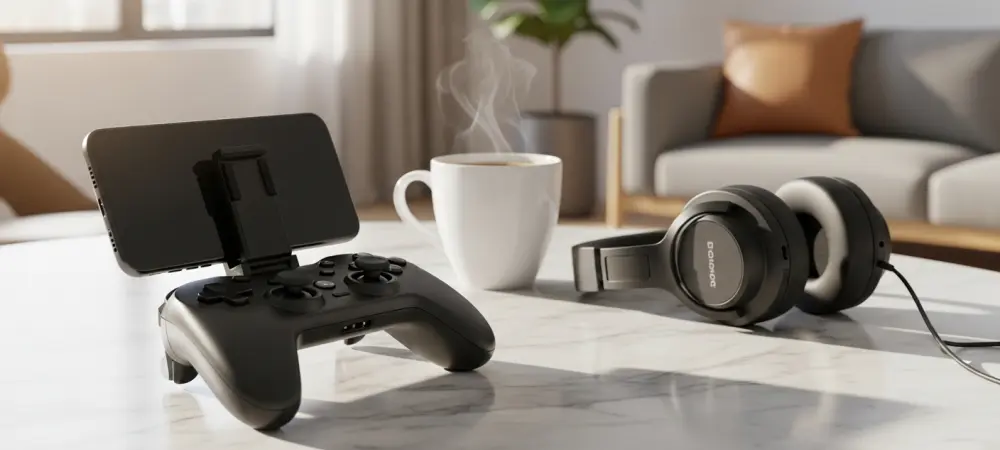
The sensation of tactile feedback beneath a thumbstick remains one of the few constants in a gaming industry that otherwise evolves at a breakneck, almost dizzying pace. As digital ecosystems expand from stationary consoles to the expansive world of mobile cloud gaming, the hardware used to navigate these virtual spaces has become more specialized and more contentious. Within this shifting environment, the SteelSeries Stratus+ occupies a peculiar niche, serving as a physical manifestation of the industry’s struggle to create a truly universal input device. It represents a design philosophy that prioritizes technical internal components over the external ergonomics required for portable play, resulting in a peripheral that feels like a masterwork of engineering and a failure of mechanical foresight all at once.
The fundamental appeal of this controller lies in its dual identity, promising a seamless transition from the high-fidelity world of Windows desktops to the convenience of Android smartphones. However, the experience of switching between these platforms reveals a stark contrast in quality and reliability. While the device functions with remarkable precision when tethered to a workstation, its performance on the go is marred by a series of physical and digital hurdles. This dichotomy forces a re-evaluation of what makes a mobile controller successful, suggesting that internal specifications are only half the battle when the physical interface fails to support the hardware it was designed to carry.
Why a $25 Controller Can Feel Like a Steal and a Headache Simultaneously
The market dynamics of gaming peripherals often dictate a product’s reputation long before a consumer even removes it from the packaging. When the Stratus+ originally entered the market at a premium price point of sixty dollars, it was positioned as a high-end alternative to first-party console gamepads, yet its subsequent price drop to approximately twenty-five dollars changed the narrative entirely. At this lower cost, the device transformed into a budget-friendly powerhouse that offered technical features usually reserved for luxury equipment. This price volatility creates a unique paradox where the controller is simultaneously an incredible value for the money and a source of irritation for those who expect the polished experience of a flagship product. The primary source of this frustration stems from the “generic” design language that SteelSeries adopted for the unit. By attempting to appeal to both PlayStation and Xbox enthusiasts, the manufacturer created a hybrid shape that incorporates the symmetrical stick layout of the former with the shell silhouette and button mapping of the latter. For a user accustomed to the ergonomic standards of 2026, this compromise often feels like a step backward, resulting in a device that fits everywhere but excels nowhere in particular. The sensation of using a $25 tool that contains $60 internals is one of constant cognitive dissonance, as the high-quality button presses are often interrupted by the realization that the overall package lacks a cohesive identity.
Moreover, the lack of a dedicated software ecosystem for mobile users exacerbates this feeling of a missed opportunity. While PC gamers benefit from the plug-and-play nature of XInput, Android users are left to navigate a landscape where some games recognize the controller and others ignore it completely. Without a companion app to bridge this gap, the Stratus+ feels like an abandoned project that relies solely on its physical durability to stay relevant. It is a device that rewards the patient, budget-conscious gamer while testing the limits of those who prioritize a smooth, integrated user experience over raw hardware savings.
The Evolution of Mobile Peripherals and the Fall of the Standard Phone Clip
The landscape of mobile gaming underwent a radical transformation in the years leading up to 2026, moving away from traditional “clipped” controllers toward integrated telescopic designs. In the early days of smartphone gaming, attaching a plastic bracket to a standard console pad was the only way to achieve a portable console-like experience. However, the rise of devices like the GameSir G8+ and various “Switch-style” grips has rendered the traditional mount nearly obsolete. The Stratus+ stands as a stubborn defender of this older design philosophy, utilizing a detachable phone clip that highlights exactly why the industry moved toward more integrated solutions.
The mechanical failure of the traditional clip system is most evident in its impact on weight distribution and balance. When a modern, large-screen smartphone is secured to the top of the Stratus+, the center of gravity shifts dramatically toward the top of the unit. This makes the controller feel heavy and awkward during extended sessions, putting unnecessary strain on the wrists as the hands fight to keep the screen upright. This top-heavy nature also means the controller cannot be set down on a flat surface without tipping over, a minor but persistent annoyance that highlights the lack of ergonomic foresight in its physical construction.
Furthermore, the design of the clip itself often interferes with the very technology it is supposed to enhance. The tension-based clamps frequently exert pressure on the volume or power buttons of Android phones, necessitating a clumsy, off-center placement of the device to avoid accidental shutdowns. In an era where mobile peripherals are becoming more streamlined and intuitive, the bulky, “fiddly” nature of the Stratus+ mount feels like a relic of a bygone era. The industry has largely moved on to designs that cradle the phone rather than hoisting it into the air, leaving the Stratus+ to struggle with a mechanical architecture that no longer meets the needs of the modern mobile gamer.
Dissecting the Hardware: Premium Hall Effect Triggers versus Ergonomic Limitations
Beneath the unassuming plastic exterior of the Stratus+ lies a surprising commitment to high-end input technology. The standout feature is undoubtedly the inclusion of Hall Effect magnetic sensors in the triggers, a specification that remains rare even in some of the most expensive controllers of 2026. Unlike traditional mechanical triggers that rely on physical contact and wear down over time, Hall Effect sensors use magnets to measure distance, providing a smooth, frictionless linear pull that is both durable and incredibly precise. This technology is particularly beneficial for racing simulators and games requiring nuanced throttle control, as it eliminates the “mushy” feeling often found in budget-level peripherals.
However, these premium internals are housed in a shell that struggles with basic ergonomic comfort. The symmetrical placement of the ALPS thumbsticks forces the thumbs into a lower, more cramped position compared to the offset layout found on most modern controllers. For gamers with larger hands, this can lead to discomfort during long sessions, as the thumbs are frequently brought into close proximity, occasionally colliding during intense gameplay. While the D-pad is remarkably firm and provides a satisfying tactile click, it cannot fully compensate for the overall lack of contour and grip that characterizes more specialized mobile or console controllers.
The build quality also presents a mixed bag of results when subjected to the rigors of daily use. While the buttons and bumpers feel solid and responsive, the overall weight of the unit—approximately 244 grams—feels somewhat light and hollow when the phone mount is detached. This lightness is a double-edged sword; it makes the controller easy to carry in a backpack, but it also contributes to the balance issues when a heavy phone is attached. The use of high-end magnetic sensors alongside a generic, somewhat cramped shell suggests a product that was designed by two different teams—one focused on internal longevity and the other on minimizing manufacturing costs for the exterior.
Performance Benchmarks: The Divide Between Wired PC Fluidity and Bluetooth Latency
The utility of the Stratus+ is fundamentally split by its method of connection, creating a “Tale of Two Platforms” where performance is dictated by the cable. When used as a wired USB-C gamepad for Windows, the device is virtually indistinguishable from a high-end first-party controller. It utilizes the XInput standard, ensuring that it is immediately recognized by the Steam library and other major gaming platforms without the need for manual configuration. In this wired mode, the latency is non-existent, and the Hall Effect triggers truly shine, allowing for a high degree of precision in competitive titles. It is, quite simply, one of the most reliable budget wired controllers currently available for the PC market.
In contrast, the wireless mobile experience over Bluetooth LE reveals the inherent limitations of the platform’s connectivity. Testing across various Android devices frequently uncovers a noticeable amount of input lag, which becomes particularly problematic in fast-paced titles or during cloud gaming sessions. In games like racing simulators where millisecond timing is crucial, the delay between a button press and the on-screen action can lead to a frustrating sense of “pre-empting” maneuvers. While this latency might be tolerable for turn-based strategies or casual puzzle games, it severely hampers the “pro-level” experience that the SteelSeries branding often promises.
Software compatibility further complicates the mobile performance narrative. Because there is no dedicated Android application for the Stratus+, users are entirely at the mercy of the game developer’s native controller support. While titles like Fortnite function with relatively few issues, other major mobile releases fail to recognize the controller’s inputs or misidentify the button mapping entirely. This lack of a software bridge means there is no way to create custom touch-screen overlays or adjust dead zones, leaving the user with a “what you see is what you get” experience that feels increasingly outdated in a market where customization is the standard.
A Buyer’s Framework: Navigating the Trade-offs of the Stratus+
Navigating the purchase of a hybrid controller requires a clear understanding of one’s own gaming priorities and platform habits. For those who primarily game on a PC and are looking for a secondary, budget-friendly wired controller, the Stratus+ is an easy recommendation. Its durability, battery life, and high-quality triggers make it a formidable alternative to more expensive options, provided the user does not mind the symmetrical stick layout. In this scenario, the mobile features can be viewed as a “free” bonus rather than the primary reason for purchase, mitigating the frustration of the poorly designed phone clip and the inconsistent Bluetooth performance.
Conversely, dedicated mobile gamers should apply a more critical lens to the Stratus+ before committing. If the goal is to play precision-heavy shooters or racing games on an Android device, the Bluetooth latency and ergonomic imbalances may outweigh the benefits of the Hall Effect sensors. Those who spend more than an hour at a time in portable sessions will likely find that the top-heavy distribution of the phone mount leads to significant physical fatigue. In such cases, investing in a specialized telescopic controller—even at a higher price point—is often the more sustainable choice for long-term comfort and compatibility.
Ultimately, the decision to purchase the Stratus+ hinges on the current market price. If the unit is found for thirty dollars or less, its technical flaws become much easier to overlook in favor of its sheer utility as a multi-platform tool. However, if the price approaches the original sixty-dollar MSRP, the competition from first-party Xbox and PlayStation controllers becomes impossible to ignore. A savvy buyer must weigh the impressive ninety-hour battery life and magnetic triggers against the mechanical clumsiness of the phone mount and the lack of mobile software support. It is a tool of specialized excellence and generalized frustration, serving as a reminder that in the world of peripherals, a great internal sensor cannot always fix a flawed external design.
The journey of the SteelSeries Stratus+ through the gaming market demonstrated how technical innovation could be overshadowed by the rapid evolution of ergonomic standards. While the inclusion of Hall Effect triggers and an expansive battery life provided a solid foundation for high-level play, the mechanical execution of the phone mounting system proved to be a significant barrier for mobile enthusiasts. Users found that the controller thrived best when stripped of its mobile pretensions and utilized as a dependable, wired PC gamepad. This shift in utility suggested that future peripheral design required a more holistic approach, where the physical connection between the player and the device was treated with the same importance as the sensors buried beneath the buttons. The legacy of the device rested on its ability to offer premium internal hardware at a budget price point, effectively democratizing high-end sensor technology for the casual market. However, the move toward integrated telescopic grips in the mobile sector left the traditional clip-on design feeling like a historical footnote. Those who sought a seamless, lag-free portable experience eventually looked toward more specialized hardware that addressed the balance and compatibility issues inherent in the Stratus+ design. The market ultimately decided that while raw specs were important, the physical comfort of the interface remained the primary driver of the gaming experience. As the industry progressed, the lessons learned from the Stratus+ encouraged manufacturers to prioritize ergonomic stability alongside technical precision, ensuring that the next generation of universal controllers would truly be fit for every platform.