

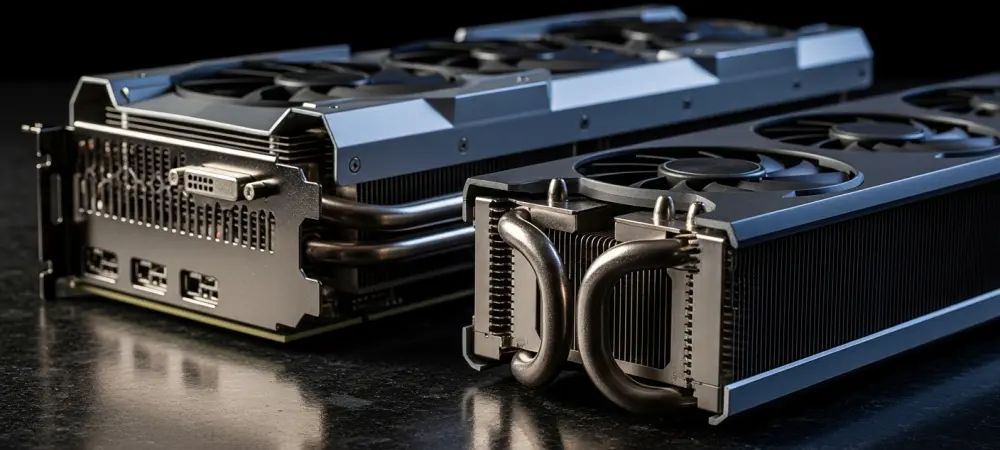
The global hardware market is currently grappling with a relentless surge in component costs that has left even the most seasoned PC enthusiasts questioning the viability of their next upgrade. As the midpoint of 2026 approaches, the industry is witnessing a third major wave of price adjustments for graphics processing units, a development that marks one of the most volatile periods in the history of personal computing. Nvidia, the undisputed leader in the graphics sector, is reportedly at the epicenter of this trend, as the company prepares to implement yet another price hike across its entire GeForce RTX product stack. This persistent inflationary pressure is not merely a localized issue but a systemic shift that reflects the increasing complexity and cost of producing high-end silicon in an era where artificial intelligence demand competes directly with consumer gaming needs. While the previous two price increases earlier this year were met with frustration, this third adjustment signals a more permanent change in the cost of high-performance computing for the average user, potentially redefining what it means to own a modern gaming rig.
Economic Drivers and Supply Chain Struggles
The Role of Global Memory Scarcity: Impact of High-Bandwidth Demands
The primary catalyst for the current price surge is the extreme scarcity and rising cost of specialized video memory, commonly known as VRAM. Modern graphics cards, particularly the latest generation released throughout 2026, rely on high-speed GDDR7 and HBM3e memory chips to process the massive amounts of data required for ultra-high-definition textures and real-time ray tracing. Because AI data centers require high-bandwidth memory in unprecedented volumes, the supply available for consumer-grade graphics cards has dwindled, leading to a fierce bidding war between hardware segments. This competition has naturally driven up the per-unit cost of memory chips, leaving GPU manufacturers with little choice but to pass these expenses down the line to the retail market.
Furthermore, the transition to newer memory standards has proven to be more expensive than initially projected at the start of the year. While the industry hoped that production yields for GDDR7 would stabilize by the second quarter of 2026, technical hurdles have kept supply low while manufacturing costs remain high. The specialized equipment required to produce these high-frequency chips is currently at maximum capacity, and any downtime in the fabrication plants leads to immediate price spikes. Consequently, memory producers are prioritizing orders for data centers over those for consumer electronics, a strategic pivot that has left the PC gaming market in a vulnerable position as it fights for the remaining scraps of high-speed memory supply.
Manufacturing Pressures on Board Partners: The Struggle of Third-Party Manufacturers
Nvidia operates by selling comprehensive GPU-and-memory kits to its primary board partners, such as ASUS, MSI, and Gigabyte, who then design and manufacture the finished graphics cards found on store shelves. Recent reports from industry insiders indicate that the price of these essential kits is set to rise by another 20% to 30%, marking the steepest single increase seen so far this year. Because these kits represent the vast majority of the bill of materials for a finished card, third-party manufacturers have virtually no room to absorb these costs without slipping into a deficit. Unlike previous years where partners could find savings in cooling solutions or aesthetic shroud designs, the sheer magnitude of this kit-price hike makes such cost-cutting measures irrelevant. As a result, these manufacturers have started notifying retailers that the next shipments of inventory will carry significantly higher price tags to maintain their operational margins.
The timing of these price notifications is particularly concerning for the retail environment, as it suggests that consumers will see the impact almost immediately. As new stock arrives at warehouses, the updated pricing will be reflected on digital and physical storefronts, often overnight. This creates a highly unpredictable market for PC builders who may have been saving for a specific model only to find it hundreds of dollars more expensive by the time they are ready to purchase. For the board partners, this situation presents a logistical and public relations nightmare, as they are often the ones blamed by the public for the rising costs, despite the fact that the underlying pricing structure is dictated by the cost of the silicon and memory provided by the primary vendors. The rapid turnaround of these price shifts means that the typical hardware lifecycle is being disrupted by economic volatility that moves faster than the actual release of new technology.
Tracking the Trajectory of GPU Costs
A Timeline of Rising MSRPs in 2026: Persistent Inflation Across All Tiers
The trajectory of GPU costs throughout the current year has been characterized by a series of escalations that have fundamentally altered the market landscape. The year began with a broad price increase in January, which was largely attributed to the rising logistics costs and the initial shortages of next-generation memory modules. At that time, consumers saw a moderate bump of 10% to 15%, which many hoped would be a one-time adjustment. However, a more targeted hike followed in May, specifically impacting the high-end flagship models that demand the most advanced cooling and power delivery systems. This third wave, occurring now, is notably different because it is much more pervasive than its predecessors. It does not just target the elite enthusiast hardware; instead, it spans the entire spectrum from the cutting-edge RTX 50-series down to the mid-range models that have traditionally served as the backbone of the gaming community.
Unlike the spikes seen in previous hardware cycles which often focused on a single generation, this new adjustment covers both the newest architectures and the previous RTX 40-series cards that remain popular for their value. This means that mid-range buyers, who previously felt shielded from the most extreme price volatility, are now facing the reality of a significantly higher entry point for modern gaming performance. The cumulative effect of these three separate price hikes has pushed the cost of a standard gaming setup into a new, higher bracket that was previously reserved for professional workstations. This trend suggests that the era of affordable high-performance computing is undergoing a major contraction, as the baseline price for a capable graphics card continues to drift further away from the historical norms established over the last several hardware generations.
Unusual Market Strategies and Retail Realities: The Return of Legacy Hardware
In a surprising move to combat the shortage of affordable modern components, Nvidia has reportedly begun the process of reintroducing graphics cards that are several years old back into the primary supply chain. This strategy of reviving legacy hardware is a rare and desperate measure in the fast-paced world of technology, highlighting the extreme difficulty manufacturers face in maintaining a supply of budget-friendly options. By producing older architectures that use more mature and less expensive memory standards, the company aims to provide some form of inventory for buyers who have been completely priced out of the current-generation market. While these older cards cannot compete with the performance of the 2026 lineup, they represent a necessary compromise for users who simply need a functional system for less demanding tasks or older titles.
On the retail side of the equation, the impact of these economic shifts is becoming visible through a phenomenon known as price creep on popular models. High-end cards have been observed jumping in price by hundreds of dollars in just a few months, often without any official change in specifications or features. Retailers are essentially preempting the next wave of inflation to protect their own inventory replacement costs, leading to a situation where the suggested retail price becomes a theoretical figure rather than a practical reality. This environment of shifting prices makes it nearly impossible for consumers to plan long-term builds, as the value of their budget can fluctuate significantly within the span of a single quarter.
Global Industry and Consumer Consequences
Pressures on Competitors and Home Consoles: A Systemic Hardware Crisis
The economic pressures currently facing Nvidia are not unique to one company, as competitors like AMD and Intel are forced to navigate the same global supply chain and memory chip shortages. These companies utilize the same fabrication facilities and compete for the same pools of GDDR and HBM memory, meaning they are equally vulnerable to the rising costs of these essential components. Industry analysts expect that AMD and Intel will have to follow suit with their own price adjustments in the coming weeks to protect their financial stability and maintain their R&D budgets. The lack of a lower-priced alternative from competitors further cements the new, higher price floor for the entire graphics card category.
The ramifications of this component scarcity also extend deeply into the home console market, which has traditionally offered a more stable and affordable entry point for gamers. Systems like the PlayStation and Xbox series rely on high-speed unified memory architectures that share many of the same physical properties as the chips used in discrete graphics cards. If the cost of these memory modules does not stabilize, future console revisions or the next generation of hardware could see launch prices that are significantly higher than the industry has historically seen. This systemic issue is effectively squeezing every corner of the gaming world, from the DIY PC builder to the casual console player. The interconnected nature of the global semiconductor supply chain means that a spike in the cost of memory for an AI server in a data center eventually manifests as a higher price tag for a gaming console on a department store shelf.
The Evolving Landscape for PC Gaming Enthusiasts: Adapting to the Luxury Era
For the broader community of PC gaming enthusiasts, these consistent and aggressive price hikes signal a potential end to the traditional budget-oriented build. It is becoming increasingly difficult, if not impossible, to assemble a capable gaming machine without allocating a disproportionate amount of the total budget to the graphics card alone. This shift could lead to a significant period of market stagnation, as users are incentivized to hold onto their existing equipment for much longer than the usual three-to-four-year upgrade cycle. If the cost of entry remains this high, the demographic of the PC gaming market may shift toward a more affluent audience, transforming high-performance gaming from a mainstream hobby into a specialized luxury pursuit. This transition has profound implications for the diversity of the player base and the types of hardware configurations that developers must target when creating new content.
Ultimately, these rising costs may force a change in how video games are developed and optimized in the coming years. If the majority of the player base is unable to afford the latest hardware upgrades due to these recurring price hikes, game developers will be forced to prioritize optimization for older and mid-range systems to ensure their titles remain commercially viable. This could lead to a plateau in visual fidelity, as the “brute force” approach of relying on ever-more-powerful hardware becomes less practical for the average consumer. Developers may instead focus on software-based solutions, such as more efficient upscaling algorithms and procedural generation, to bridge the gap between static hardware capabilities and the demands of modern graphics. This shift reflects a new reality where the industry must learn to innovate within the constraints of a high-cost hardware environment, rather than relying on the consistent price-to-performance gains of the past.
The examination of the 2026 hardware market demonstrated that the era of predictable component pricing has been replaced by a complex, AI-driven economic reality. For those looking to navigate this landscape, the best course of action involved delaying non-essential upgrades until memory production facilities reached full capacity or exploring the secondary market for refurbished units. Users found success in prioritizing software optimizations and driver updates to extend the life of their current systems rather than competing for overpriced new inventory. As the industry moved forward, the most effective strategy for enthusiasts was to pivot toward more efficient mid-range components or cloud-based gaming services that offloaded the hardware cost to enterprise providers. The shift in market dynamics required a fundamental reassessment of value, prompting a move away from chasing the latest flagship models in favor of sustainable, long-term hardware investments.