

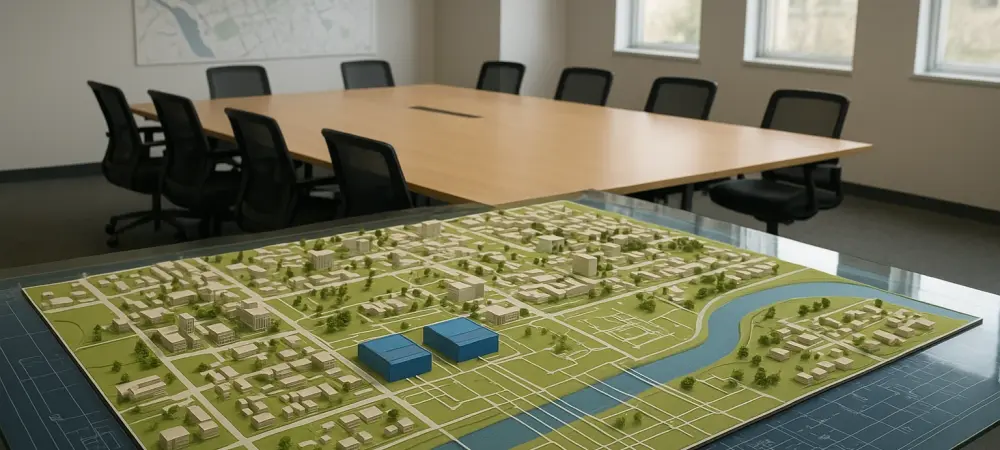
The debate serves as a microcosm for a global challenge regarding how to balance urgent digital expansion with the physical constraints of municipal energy grids. As Ottawa continues to foster a reputation as a leading North American technology corridor, the city finds itself at a pivotal intersection between its digital ambitions and the finite capacities of its electrical infrastructure. Unlike the software booms of previous decades, the current surge in high-density computing requires physical resources on a scale previously reserved for heavy industrial manufacturing. Municipal planners are now forced to confront the reality that every megawatt allocated to a new data facility is a megawatt unavailable for residential expansion or public transit electrification. This tension has sparked a rigorous public inquiry into whether the city should implement a formal pause on new construction to reassess its long-term viability. The outcome of this decision will likely determine whether the region remains a competitive player in the global intelligence economy or becomes a cautionary tale of unchecked development.
Resource Management and Technical Infrastructure
Technical Demands and Grid Constraints
The technical demands of AI processing distinguish these new facilities from the standard data storage centers of the past. Traditional data centers primarily functioned as digital filing cabinets, requiring consistent but manageable power levels to keep servers online and accessible. In contrast, modern facilities designed for training large language models rely on dense clusters of specialized processors that operate at near-maximum thermal limits for months at a time. This transition from passive storage to active computational training has resulted in an exponential increase in power density per square foot of floor space. Local energy providers have noted that a single large-scale AI hub can consume as much electricity as several thousand residential homes, putting an unprecedented strain on local substations. This shift necessitates a complete re-evaluation of how electrical loads are projected and managed within the urban core and surrounding suburbs to prevent outages.
Water consumption has emerged as another critical pressure point within the local infrastructure framework. Beyond the sheer volume of electricity required to power the servers, the heat generated by high-intensity computing requires massive industrial cooling systems, many of which rely on evaporation-based water cycles. In periods of high heat or drought, the competition for municipal water between these private facilities and the public can become a significant point of contention. Industry leaders and municipal planners have had to admit that power and water are finite resources, sparking fears that unchecked expansion could lead to higher utility costs for citizens or even localized grid instability during peak demand periods. Without a structured approach to resource management, the rapid proliferation of these centers threatens to outpace the city’s ability to maintain its basic service levels, forcing a hard look at the current pace of industrial zoning approvals and the long-term impact on the regional water table.
Economic Realities and Sustainable Oversight
Beyond the physical grid, the debate touches on the actual value these centers provide to the local community versus their environmental cost. Critics often point to a hollow economic impact, noting that while these facilities occupy vast amounts of land and consume massive resources, they create relatively few long-term jobs compared to the manufacturing or retail sectors. Once the initial construction phase is complete, a massive data facility might only require a handful of security personnel and high-level technicians to remain operational. This creates a spatial paradox where hundreds of acres of prime industrial land are dedicated to machines rather than people, offering little in the way of traditional community revitalization. For a city like Ottawa, which is balancing a need for housing with industrial growth, the trade-off becomes increasingly difficult to justify when the tax revenue generated does not always offset the long-term strain on public infrastructure and environmental health. The municipal government eventually determined that a strategic pause was the only viable path forward to ensure a sustainable technological future. This decision allowed planners to implement a comprehensive framework that mandated higher efficiency standards and direct financial contributions toward grid modernization from all new applicants. City officials shifted their focus toward a localized model where data centers were required to integrate with urban heat networks, effectively turning waste products into a public utility. By moving away from a hands-off regulatory approach, the administration established a blueprint for how a mid-sized city could integrate high-tech infrastructure without compromising the quality of life for its residents. These actions provided a clear signal that growth must be coupled with responsibility, ultimately leading to a more resilient urban ecosystem. Future developments were then screened through a lens of resource circularity, ensuring that technology served the city rather than the city serving the technology.