

I’m thrilled to sit down with Dominic Jainy, an IT professional with deep expertise in artificial intelligence, machine learning, and blockchain. With a keen interest in how cutting-edge technologies transform industries, Dominic brings a unique perspective to the table. Today, we’re diving into the Schwarz Group’s groundbreaking data center project in Lübbenau, Germany. Our conversation explores the strategic vision behind this massive initiative, its innovative sustainability features, the technological advancements it promises, and the broader impact on the local community and digital sovereignty in Europe.
Can you walk us through the vision behind the Schwarz Group’s new data center in Lübbenau, Germany?
Absolutely. The Lübbenau data center is a flagship project for Schwarz Digits, the IT and digital arm of the Schwarz Group. It’s not just about expanding capacity; it’s about creating a secure, scalable infrastructure that supports Europe’s digital sovereignty. The idea is to build a facility that ensures companies and citizens can control their data in an era of increasing hybrid threats and digital dependencies. Lübbenau is positioned as a cornerstone for this mission, leveraging state-of-the-art technology to safeguard critical infrastructure.
What made Lübbenau the ideal location for this ambitious project?
Lübbenau, located in Brandenburg about 90 kilometers south of Berlin, offers a strategic advantage. It’s a brownfield site, previously home to a coal power plant that operated for 40 years before shutting down in 1996. Choosing this location reflects a commitment to revitalizing industrial areas while tapping into existing infrastructure potential. Plus, its proximity to major urban centers like Berlin makes it a practical hub for connectivity and accessibility.
How does the site’s history as a former power plant shape the project’s design or goals?
The history of the site plays a significant role. Since it was already an industrial zone, there’s a foundation of robust infrastructure to build upon. More importantly, the project emphasizes sustainability by repurposing the site rather than developing on untouched land. It’s about transforming a relic of the past into a beacon for future digital innovation, aligning with broader goals of environmental responsibility and community integration.
Can you tell us about the scale and timeline planned for the Lübbenau data center?
The project is massive in scope. The first phase, set to be completed by the end of 2027, includes three modules that will lay the groundwork for operations. Once both phases are done, the campus will boast a 200MW capacity and house up to 100,000 GPUs. This scale positions it as a powerhouse for cloud computing and data processing, catering to the needs of Schwarz’s cloud division, StackIT, and potentially other European entities seeking secure, high-performance infrastructure.
What role does sustainability play in the design of this facility, especially with initiatives like material reuse?
Sustainability is at the core of this project. Over 20,000 cubic meters of concrete and stones, 110 tons of steel, and 20 tons of wood from the old power plant have been recycled and reused in the construction. This approach minimizes waste and reduces the environmental footprint of the build. It’s a powerful statement about how industrial redevelopment can align with green principles, preserving resources while creating something entirely new.
How will the data center’s technology, like liquid cooling, contribute to its efficiency?
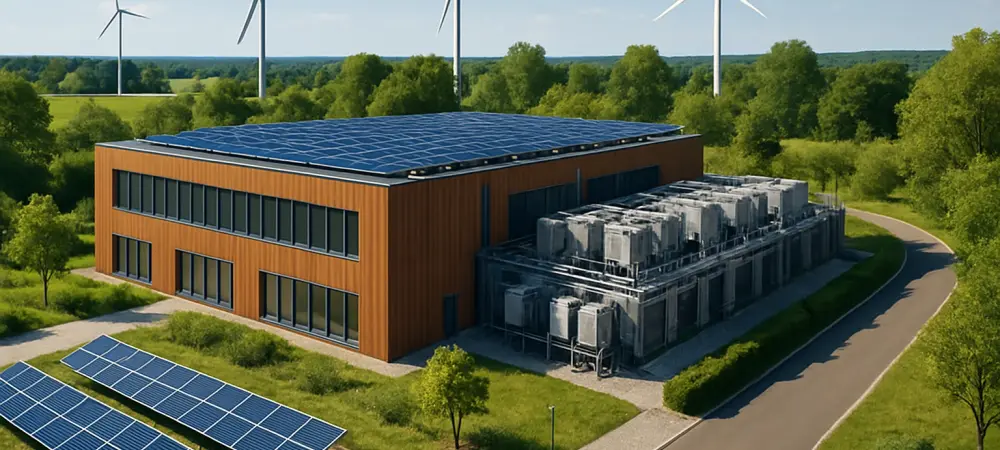
The Lübbenau site will utilize advanced liquid-cooling technology, which is far more efficient than traditional air-cooling systems for high-density computing environments. This method dissipates heat more effectively, especially for the thousands of GPUs the campus will host. It lowers energy consumption significantly, ensuring the data center operates at peak performance without excessive power demands, which ties directly into the broader sustainability goals.
Can you explain how the waste heat from the data center will benefit the local community?
One of the most innovative aspects of this project is the integration of waste heat into the local district heating network, managed by a regional energy supplier. The heat generated from the data center’s operations will be redirected to warm homes and businesses in Lübbenau. This not only reduces energy waste but also provides a tangible benefit to the community, fostering a symbiotic relationship between the facility and the town.
With an €11 billion investment, why is this project such a priority for Schwarz Group?
This is the largest single investment in Schwarz Group’s history, and it underscores the critical importance of digital infrastructure in today’s world. The €11 billion reflects the cost of cutting-edge technology, sustainable design, and the sheer scale of a 200MW campus. More than that, it’s an investment in security and independence for European businesses, ensuring they have access to a robust, locally controlled cloud solution through StackIT. It’s about future-proofing the digital economy.
What impact do you anticipate this data center will have on the local economy in Lübbenau?
The economic impact will be substantial. Revitalizing a former industrial site brings new life to the region, attracting businesses and talent. The project will create jobs in construction, IT, operations, and maintenance, while also stimulating growth in related sectors. Lübbenau, already home to a Schwarz logistics center since 1996, will further cement its status as a key economic hub in Brandenburg, benefiting the wider community through increased opportunities.
What is your forecast for the role of data centers like Lübbenau in shaping Europe’s digital future?
I believe data centers like Lübbenau will be pivotal in defining Europe’s digital landscape. As concerns over data privacy and security grow, having independent, state-of-the-art facilities will be crucial for maintaining control over sensitive information. These hubs will drive innovation in cloud computing, AI, and other transformative technologies, while also setting new standards for sustainability and community integration. I foresee them becoming the backbone of a more autonomous and resilient digital Europe.