

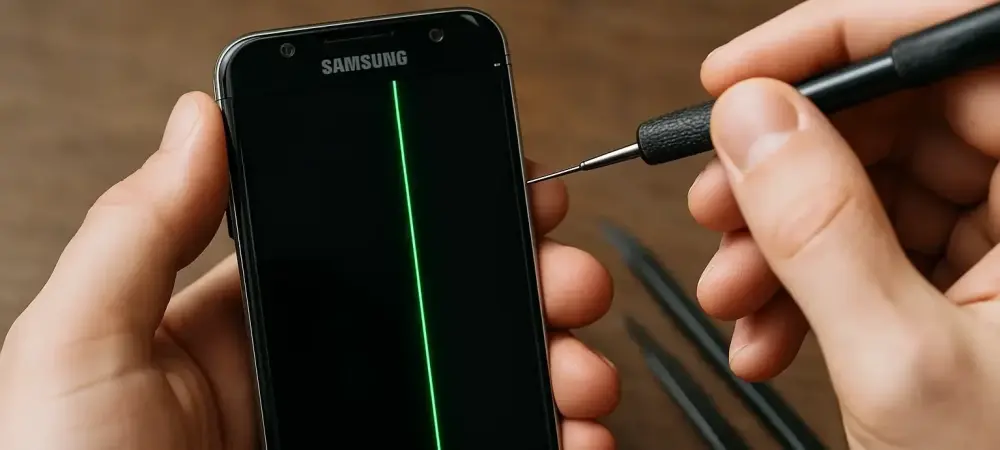
Imagine opening your premium Samsung smartphone, only to be greeted by an unsightly vertical green line slicing through the vibrant display—a frustrating defect that has plagued countless users across India, sparking widespread discontent among loyal customers. This persistent hardware issue, particularly prominent in flagship models like the Galaxy S23 and S23 Ultra, has become a significant concern. This review delves into Samsung’s targeted response through a limited-time free screen replacement policy, assessing its effectiveness, scope, and impact on user trust in one of the world’s leading smartphone brands.
Overview of the Green Line Display Defect
The green line issue is a hardware flaw that manifests as a distracting vertical line on the screen, often rendering parts of the display unusable. Primarily affecting high-end devices such as the Galaxy S23 and S23 Ultra, this defect has been a recurring headache for Samsung users in India. Reports indicate that the problem stems from internal display component failures, unrelated to user mishandling, making it a critical concern for a brand synonymous with cutting-edge technology.
Beyond individual devices, this issue reflects a broader pattern of display-related challenges in Samsung’s smartphone lineup. While the company has long been praised for its AMOLED screens, such defects undermine the premium experience expected from flagship models. Understanding the root of this glitch is essential to evaluating Samsung’s remedial efforts and their implications for product reliability.
Samsung’s Free Screen Replacement Policy: Features and Scope
Eligibility and Terms of the Offer
Samsung’s response to the green line defect includes a free one-time screen replacement policy for affected users in India, specifically targeting Galaxy S23 and S23 Ultra owners. To qualify, devices must be within three years of purchase, show no signs of physical or water damage, and be accompanied by an original purchase invoice. This structured approach ensures that only genuine cases are addressed, though it places a burden on users to meet stringent criteria.
A notable condition is that while the screen itself is replaced at no cost, labor charges are the responsibility of the customer. This additional expense, though minor compared to a full repair, may deter some from taking advantage of the service. The policy’s limited window adds further urgency, requiring users to act swiftly to benefit from this initiative.
Implementation at Authorized Service Centers
The replacement process is facilitated exclusively through Samsung’s authorized service centers across India, ensuring a standardized quality of repair. Users must book appointments for inspection, with final eligibility determined on-site by technicians. This focus on controlled environments aims to prevent fraudulent claims and maintain repair consistency, a crucial factor for a brand of Samsung’s stature.
However, this centralized approach poses accessibility challenges, particularly for users in remote or rural areas where service centers may be scarce. The requirement for in-person visits can be a significant barrier, potentially leaving some affected customers without a viable solution. Samsung’s reliance on physical centers highlights a gap in accommodating a diverse user base.
Historical Patterns in Samsung’s Display Issue Responses
Samsung’s handling of the green line defect is not an isolated effort but part of a recurring strategy to address display flaws. Earlier initiatives in recent years extended similar replacement offers to older models, including the Galaxy S20, S21, S22, and Note 20 series, indicating an ongoing struggle with screen quality across generations. This history reveals a pattern of reactive measures rather than preemptive solutions.
Each policy extension has been framed as a commitment to customer satisfaction, aiming to rebuild trust among frustrated users. Yet, the repetition of such defects raises questions about underlying manufacturing or design challenges that continue to surface. Samsung’s consistent response through free repairs demonstrates accountability, though it also underscores the need for more robust long-term fixes.
User Experience and Real-World Effectiveness
For many Galaxy S23 and S23 Ultra users in India, Samsung’s replacement policy offers a much-needed reprieve from a glaring defect that diminishes the smartphone experience. Reports from service centers suggest that eligible users have successfully received new screens, restoring functionality and alleviating frustration. These positive outcomes highlight the policy’s potential to mend both devices and customer perceptions.
Nevertheless, the initiative’s impact is tempered by its restrictive conditions. Users unable to provide original documentation or those with devices just outside the three-year purchase window are often left without recourse. Such exclusions create a divide between those who benefit and those who remain burdened by the defect, revealing the policy’s incomplete reach.
Challenges in Policy Design and Accessibility
A critical limitation of Samsung’s initiative lies in its narrow timeframe, which pressures users to act quickly or risk missing out. The obligation to cover labor costs, though relatively small, adds an unexpected financial element to what is marketed as a free fix. These constraints can alienate customers who view the defect as a manufacturer’s responsibility, not their own. Geographical barriers further complicate the policy’s effectiveness, as authorized service centers are not uniformly distributed across India. For users in less accessible regions, the journey to a center may be impractical, effectively barring them from the solution. This accessibility gap points to a need for alternative support mechanisms, such as mobile repair units or broader service networks.
Future Implications for Samsung’s Display Technology
Looking ahead, Samsung’s approach to display defects will likely shape its reputation for hardware reliability in the competitive smartphone market. Enhancing quality control during manufacturing could reduce the incidence of issues like the green line, addressing the root cause rather than relying on post-purchase fixes. Investments in durable screen technology may prove pivotal in preventing future recurrences.
Additionally, expanding replacement programs or introducing more flexible eligibility criteria could bolster user confidence. If Samsung extends support to a wider range of models or regions over the coming years, it might solidify its standing as a customer-centric brand. The trajectory of these efforts will be crucial in determining long-term loyalty among tech-savvy consumers.
Verdict on Samsung’s Green Line Solution
Reflecting on Samsung’s free screen replacement policy, it was a commendable step toward addressing a significant hardware flaw in the Galaxy S23 and S23 Ultra models. The initiative provided relief to many affected users in India, restoring device functionality through authorized service centers. However, its restrictive terms, limited timeframe, and accessibility challenges left gaps in its overall impact. For future considerations, Samsung could have explored options like waiving labor costs or establishing temporary service points in underserved areas to enhance inclusivity. Developing partnerships with local repair networks might have also eased the burden on users far from authorized centers. As the company moves forward, prioritizing preventative measures in display design and broader support frameworks becomes essential to rebuilding unwavering trust among its global user base.