

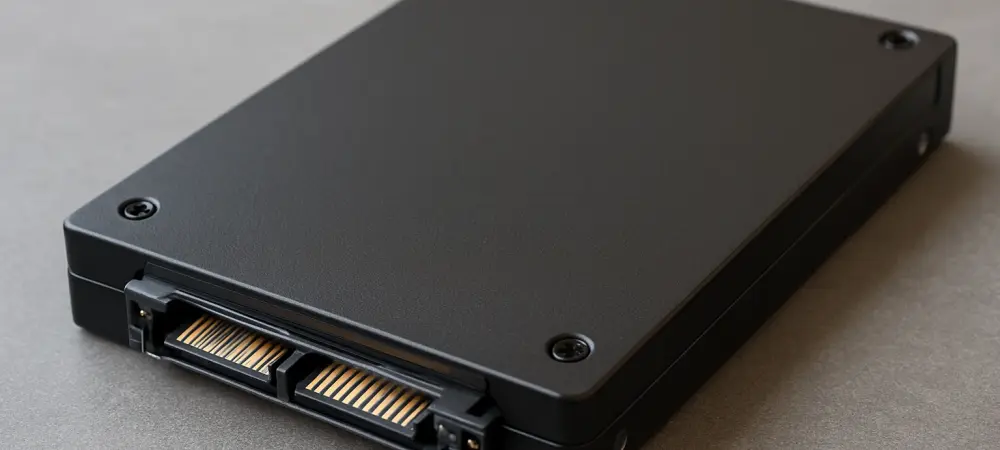
Imagine a world where data storage needs for sprawling enterprise data centers and personal creative projects are met by a single, compact device capable of holding an unprecedented 61.44 terabytes. In an era where data generation is exploding, with businesses and individuals alike grappling with how to manage vast digital footprints, Samsung has unveiled a solution that redefines the boundaries of solid-state storage. This review dives deep into the capabilities of this monumental SSD, exploring its technical prowess and real-world potential to transform how data is stored and accessed.
Technical Breakdown and Standout Features
Unrivaled Capacity with Cutting-Edge Performance
At the heart of this SSD lies its staggering 61.44TB capacity, a figure that positions it as a titan in the storage realm, catering primarily to enterprise demands. Built on a PCIe 5.0 x4 NVMe interface, it leverages QLC V-NAND flash technology to achieve read speeds of up to 14,200MBps and write speeds of 2,100MBps. Beyond sequential performance, it boasts random read performance of 850,000 IOPS and 30,000 IOPS for writes, paired with impressively low latency of 150 microseconds for reads and 30 microseconds for writes, making it an ideal fit for read-intensive workloads.
This performance profile ensures that massive datasets, such as those used in analytics or cloud computing, can be accessed with lightning-fast efficiency. The 2.5-inch U.2 form factor further enhances its suitability for server environments, where space and speed are critical. Such specifications highlight how this device is engineered to handle the most demanding tasks without breaking a sweat.
Built for Endurance and Security
Durability is another cornerstone of this SSD, with an endurance rating of 29,153TB and a reliability metric of 0.26 drive writes per day. These figures underscore its capacity to withstand the rigors of continuous operation in high-stakes settings like data centers. Beyond raw staying power, it incorporates advanced features such as TCG Opal 2.0 security and AES-XTS 256-bit hardware encryption to safeguard sensitive information.
Additional enterprise-grade functionalities include power-loss protection to prevent data corruption during unexpected outages, along with data path integrity for consistent performance. Support for S.M.A.R.T. monitoring and wear leveling further ensures that the drive maintains optimal health over extended use, reducing the risk of premature failure and offering peace of mind for mission-critical applications.
Cost Analysis and Market Value
The pricing of this high-capacity SSD reflects a strategic approach to accessibility despite its premium positioning. Initially listed at $7,500, it is now available at a reduced rate of $5,950 through select retailers, with further discounts bringing the cost down to $5,593. This translates to a remarkable value of under $0.09 per gigabyte, an exceptional rate for a device in the ultra-high-capacity PCIe Gen5 segment.
Such competitive pricing broadens the appeal of this SSD beyond traditional enterprise buyers to include niche individual users with substantial storage needs. When compared to other high-end storage solutions, this cost efficiency stands out as a significant factor, potentially reshaping perceptions of value in the premium storage market.
Practical Uses Across Diverse Environments
Designed with enterprise server systems in mind, this SSD excels in environments such as data centers and cloud storage infrastructures where vast amounts of data must be accessed rapidly. Its ability to handle intensive read operations makes it a preferred choice for hosting large-scale databases or supporting virtualized environments. Companies managing big data analytics or AI training models will find its capacity and speed particularly advantageous.
Surprisingly, its utility extends to personal computing as well, thanks to compatibility with USB adapters like the Sabrent EC-U2SA, available for $34.99. This adapter, supporting high power draw and protocols like TRIM and UASP, enables power users, content creators, and developers to integrate the SSD into standard PCs or laptops. For individuals managing extensive media libraries or complex software projects, this adaptability opens up new possibilities without requiring server-grade hardware.
Potential Drawbacks and Considerations
Despite its impressive capabilities, the SSD is not without challenges, particularly in terms of power consumption. It demands 23.8 watts during read operations, 24.7 watts for writes, and 5 watts at idle, which may pose compatibility issues in systems not equipped to handle such requirements. This high energy draw could limit its use in certain consumer-grade devices or portable setups where power efficiency is a priority.
Additionally, non-enterprise users may face hurdles in integrating the drive due to the need for specialized hardware or adapters. Market barriers, such as limited awareness of its personal use potential, could also slow broader adoption. Samsung continues to explore avenues to optimize power usage and enhance accessibility, addressing these concerns for future iterations.
Looking Ahead in Storage Innovation
The trajectory of high-capacity SSDs appears poised for even greater leaps, with Samsung hinting at a potential 122.88TB model in the coming years. This signals a trend toward increasingly larger storage solutions at progressively lower costs per gigabyte, driven by advancements in NAND technology and manufacturing efficiencies. Such developments promise to further democratize access to high-performance storage across industries.
The long-term impact of devices like this SSD could redefine data management practices, from enterprise infrastructure to personal computing. As capacities grow and prices drop, the ability to store and process massive datasets locally may spur innovation in fields like artificial intelligence, media production, and scientific research, setting the stage for a data-centric future.
Final Thoughts on a Storage Revolution
Reflecting on the evaluation, the Samsung 61.44TB SSD BM1743 emerged as a formidable force in the storage landscape, blending unparalleled capacity with robust performance at a compelling price point of $5,593. Its technical strengths and surprising adaptability for personal use through affordable adapters underscored its versatility. The review process revealed its transformative potential for both enterprise and individual users. Moving forward, stakeholders should consider investing in compatible hardware to fully leverage this SSD’s capabilities, especially as power efficiency improvements are anticipated. Exploring partnerships with accessory manufacturers could further ease integration for non-enterprise users. As the storage industry evolves, keeping an eye on Samsung’s next moves will be crucial for staying ahead in managing ever-growing data demands.