

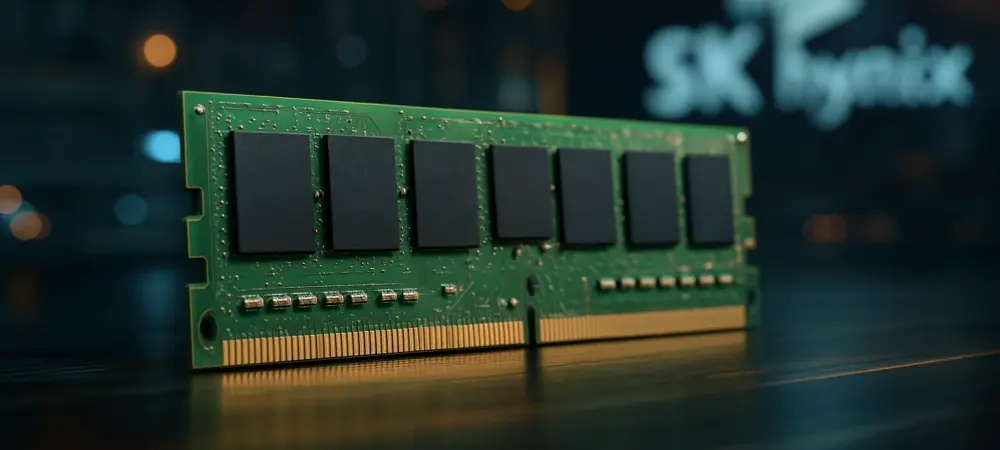
What if the future of gaming and artificial intelligence hinges not on faster processors, but on the unsung hero of tech—memory? In a world where every millisecond counts, whether rendering lifelike game worlds or training AI models to predict global trends, SK Hynix stands at the forefront of a memory revolution. This South Korean giant is crafting solutions that promise to turbocharge GPUs and AI systems, addressing the insatiable demand for speed and capacity. With cutting-edge innovations rolling out now, the digital landscape is on the cusp of a transformation that could redefine how technology shapes daily life.
The Critical Role of Memory in Today’s Tech
At the heart of this seismic shift lies a simple truth: memory is the backbone of modern computing. As AI applications process terabytes of data and gamers push for hyper-realistic visuals at 8K resolution, the strain on traditional memory systems has become glaring. SK Hynix recognizes that without advanced memory, even the most powerful processors falter under the weight of today’s computational demands, making their mission to innovate not just timely but essential.
This urgency isn’t merely theoretical—it’s driven by hard numbers. Industry reports indicate that AI workloads have grown by over 80% in data processing needs since 2025, while gaming hardware struggles to keep pace with frame buffer requirements doubling in the same span. SK Hynix’s focus on next-gen memory isn’t a luxury; it’s a necessity to prevent bottlenecks that could stall progress in these transformative fields.
Pushing Boundaries with GDDR7 for Gaming
One of SK Hynix’s flagship advancements is the 24 Gb GDDR7 memory module, a game-changer for graphics processing units (GPUs) tailored to gaming and high-end graphics. Unlike its predecessor, the 16 Gb standard that offered 2 GB per module, GDDR7 boosts capacity by 50% to 3 GB per module. This leap translates to potential frame buffers of up to 36 GB and bandwidths soaring to 1728 GB/s, dwarfing older standards like GDDR5X, which maxed out at 12 GB and 547 GB/s.
Such specs aren’t just numbers on a spec sheet—they’re a lifeline for gamers and developers. Imagine playing a title with sprawling open worlds or virtual reality environments without a hint of lag, all powered by GPUs like NVIDIA’s rumored RTX 50 SUPER series, expected to leverage this tech soon. A hardware engineer from a leading GPU firm noted, “GDDR7 is the key to unlocking visuals we’ve only dreamed of—it’s not an upgrade; it’s a reinvention.”
Beyond raw power, SK Hynix’s ability to scale production ensures these modules aren’t stuck in labs but are hitting the market swiftly. This rapid deployment means gamers won’t wait long to experience the difference, with industry whispers suggesting major releases incorporating GDDR7 as early as this year.
HBM4: Fueling the AI Revolution
While GDDR7 targets gamers, SK Hynix’s HBM4 (High Bandwidth Memory 4) is engineered for the colossal needs of AI and high-performance computing (HPC). Designed to handle the massive datasets that fuel machine learning and predictive analytics, HBM4 offers bandwidth and efficiency leaps over previous generations. Initial evaluation supplies are already in the hands of tech titans like NVIDIA and AMD for their next-gen products, signaling a tight integration into future AI hardware.
The impact of HBM4 can’t be overstated in a field where speed equates to breakthroughs. An AI researcher shared, “Training models that once took weeks could shrink to days with HBM4’s capabilities—it’s a game-changer for innovation cycles.” This memory solution is poised to support projects from autonomous driving algorithms to real-time language processing, areas where every efficiency gain reshapes entire industries.
Additionally, SK Hynix is diversifying with LPDDR-based server modules, set to debut this year, ensuring they address a spectrum of computing needs. This strategic breadth demonstrates a commitment to not just lead but dominate in memory solutions for AI, keeping pace with a market that shows no signs of slowing.
Industry Echoes and Market Momentum
SK Hynix isn’t operating in a vacuum—their strides are part of a broader industry race toward memory supremacy. Competitors like Samsung are also rolling out GDDR7 modules, validating the urgent need for higher capacity and speed across the board. Yet, SK Hynix’s edge shines through in their recent earnings call, revealing record-breaking quarterly results fueled by soaring DRAM and NAND flash shipments, alongside projections of HBM sales doubling from last year’s figures.
Market analysts are taking note of this momentum. One expert commented, “Their balance of innovation with mass-production scalability sets them apart—SK Hynix isn’t just responding to demand; they’re shaping it.” This confidence is mirrored in partnerships with major GPU and AI hardware makers, positioning the company as a linchpin in the tech supply chain where timing and reliability are paramount.
The ripple effects are already visible. With memory becoming a bottleneck for next-gen tech, SK Hynix’s proactive approach ensures they’re not just meeting current needs but anticipating future challenges, cementing their role as an industry pacesetter in a fiercely competitive arena.
Real-World Wins for Gamers and Innovators
For the gaming community, the arrival of GDDR7 means a tangible leap in experience—think seamless 8K gameplay or VR worlds so immersive they blur the line with reality. Hardware enthusiasts and developers stand to gain as well, with the ability to design or upgrade rigs using GPUs that harness this memory for unparalleled performance. Upcoming releases rumored to feature GDDR7 could redefine benchmarks, offering a glimpse into gaming’s next frontier.
On the AI front, HBM4 equips researchers and tech firms with the tools to tackle bigger challenges faster. Whether it’s processing complex datasets for medical diagnostics or accelerating neural network training, the bandwidth gains translate directly to efficiency. Industry insiders suggest integrating HBM4-compatible hardware from partners like NVIDIA or AMD could yield up to a 40% reduction in processing times based on early tests—a statistic that speaks volumes.
What ties these benefits together is SK Hynix’s focus on delivery. Unlike conceptual tech that lingers in development, these memory solutions are rolling out now, ensuring that both gamers and AI innovators can harness cutting-edge performance without delay. This accessibility turns potential into reality, bridging the gap between innovation and application.
Reflecting on a Memory-Driven Legacy
Looking back, SK Hynix carved a path that reshaped the technological landscape with GDDR7 and HBM4, addressing the critical demands of gaming and AI with unmatched precision. Their efforts not only met the challenges of escalating computational needs but also set a standard for what memory could achieve in driving progress. Each advancement became a stepping stone for industries hungry for speed and capacity.
As the dust settled, the focus shifted to sustaining this momentum. Stakeholders across gaming and AI spheres began exploring how to integrate these memory solutions into broader ecosystems, ensuring long-term scalability. The journey underscored a vital lesson: memory wasn’t just a component—it was the heartbeat of innovation.
Moving forward, the challenge lay in anticipating the next wave of tech evolution. With SK Hynix’s foundation, the industry had a robust platform to build upon, urging developers, researchers, and enthusiasts to push boundaries further. The legacy of these breakthroughs invited a collective effort to reimagine what technology could accomplish in the years ahead.