

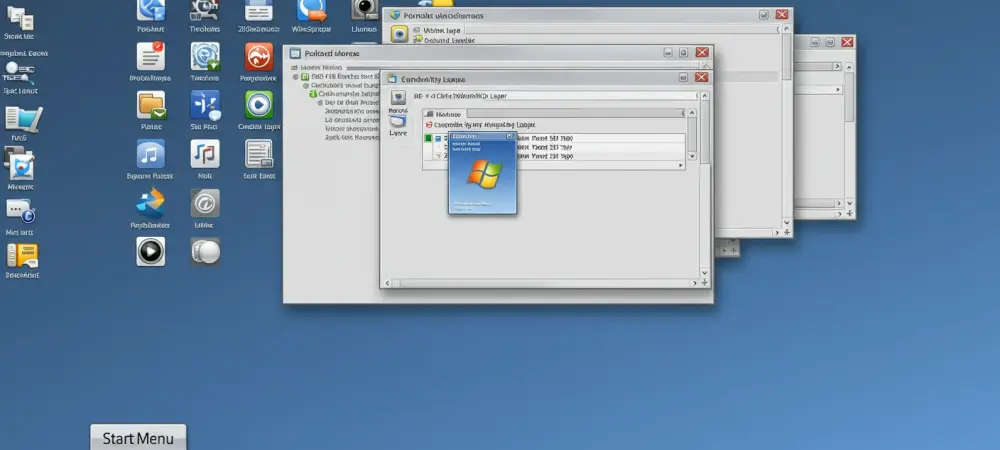
Imagine a world where you could have the aesthetics and functionality of Windows 11 without the constant barrage of updates and privacy concerns. Enter Linuxfx, a Linux distribution endeavoring to capture the Windows experience in an open-source package. With Linuxfx, users disillusioned with Windows have a chance to transition smoothly to Linux, offering a product that addresses user frustrations while retaining a familiar interface. This review aims to explore whether Linuxfx stands as a valuable alternative, focusing on its usability, performance, and suitability for different user needs.
Detailed Overview of Linuxfx
Linuxfx has taken significant strides in mimicking the Windows 11 interface with its latest version, 11.25.07 “NOBLE.” Based on Ubuntu 24.04.2, this distribution offers core features including the KDE Plasma 5.27, modern App Center, driver manager, and firmware updater. The combination of these features allows Linuxfx to provide increased customization and speed, catering to the needs of users transitioning from a Windows environment. A noteworthy aspect of Linuxfx is its compatibility with Windows applications, facilitated through an updated Wine environment. This support extends to gaming needs with pre-installed software like Steam and Heroic Launcher. Additionally, Linuxfx’s Pro version caters to advanced users with Active Directory support, OneDrive integration, and enhanced AI tools such as ChatGPT and Copilot. These elements contribute to a streamlined experience, making Linuxfx appealing to both casual and professional users.
Performance Assessment
Evaluating Linuxfx’s performance reveals its capability to handle Windows applications efficiently. The OS runs smoothly on older hardware, owing to minimal system requirements of 2GB RAM and a dual-core 64-bit CPU. Users migrating from Windows will appreciate the seamless transition and stable environment. Moreover, for gaming enthusiasts, Linuxfx offers satisfactory performance with its pre-installed game launchers and broad hardware compatibility through Linux Kernel 6.14.
Linuxfx also shines in terms of resource management. It performs well even with limited hardware, providing a responsive user experience. The integration of experimental features like TPM-backed full disk encryption and ZFS encryption further enhances its appeal for security-conscious users or IT professionals seeking tailored solutions.
Pros and Cons of Linuxfx
Linuxfx presents a series of advantages, beginning with its familiar interface that eases the transition for Windows users. Its low system requirements allow for installation on older machines that struggle with Windows updates. Being an open-source platform, it offers the freedom for users to customize and modify as needed, encouraging an expansive and interactive community.
On the downside, Linuxfx may give rise to misconceptions about Linux as merely a Windows clone. Advanced users might find it limiting due to its strong focus on replicating the Windows environment. While its attention to user-friendly design is commendable, some may argue that it lacks the depth and flexibility that traditional Linux distributions offer.
Final Assessment
Based on its features and performance, Linuxfx emerges as a strong contender for anyone seeking a Windows alternative. It successfully blends the familiarity of Windows with the versatility of Linux, providing a stable and user-friendly platform without many of the challenges associated with Windows. Its support for older hardware and wide range of compatible software applications further solidify its status as a viable choice for different categories of users.
Conclusion and Recommendations
Linuxfx demonstrated its potential as a compelling Windows alternative in the review. It catered to individuals seeking a smooth transition from Windows, offering a stable environment that combined a familiar interface with open-source flexibility. For casual users, IT professionals, or those with older hardware, Linuxfx was undoubtedly worth considering. Future adopters were encouraged to evaluate their specific needs, recognizing Linuxfx’s strengths in providing a Microsoft-free environment with plenty of customization options. Users who valued privacy, control, and seamless integration found Linuxfx an ideal solution in their computing journey.