

The metallic clang of traditional assembly lines is finally being replaced by the precise, rhythmic hum of domestic innovation as Raedbots unveils a suite of industrial machines that redefine local manufacturing. For decades, the Egyptian industrial sector remained shackled to the high costs of European and Asian imports, making the dream of a fully automated factory floor an expensive luxury for most. However, the arrival of Raedbots marks a paradigm shift where sophisticated robotics are no longer defined by foreign shipping manifests but by local intellectual property.
A Half-Price Revolution: Industrial Automation for All
The economic barrier to entry has historically been the primary deterrent for small and medium enterprises looking to modernize their production lines. By offering advanced robotic systems at approximately 50% of the cost of international competitors, Raedbots is effectively democratizing high-tech manufacturing. This price reduction is not achieved through compromised quality but through the elimination of import duties, international shipping fees, and the high premiums typically associated with global branding. This localized economic model allows regional manufacturers to achieve a return on investment in nearly half the time compared to using foreign hardware. Furthermore, the availability of domestic spare parts and local maintenance teams removes the fear of prolonged downtime that often accompanies imported technology. By making automation financially viable, this initiative empowers local businesses to scale their operations toward a level of efficiency previously reserved for multinational corporations.
Bridging the Modernization Gap: The Middle East Context
Regional manufacturers have long struggled with “white-labeled” systems that offer little flexibility and require expensive third-party licenses for any minor operational adjustment. Raedbots addresses this modernization gap by providing a transparent and accessible pathway to digital transformation. The company recognizes that for the Middle East and Africa to maintain industrial relevance, the transition from manual labor to automated precision must be seamless and culturally integrated into the local workforce. Beyond the hardware itself, the launch represents a move toward industrial sovereignty. By reducing the reliance on external tech giants, Egypt is positioning itself as a hub for deep-tech exports rather than just a consumer of foreign goods. This shift is critical for ensuring that regional economies can withstand global supply chain fluctuations while maintaining a competitive edge in an increasingly automated global economy.
Vertical Integration: The Power of Physical AI
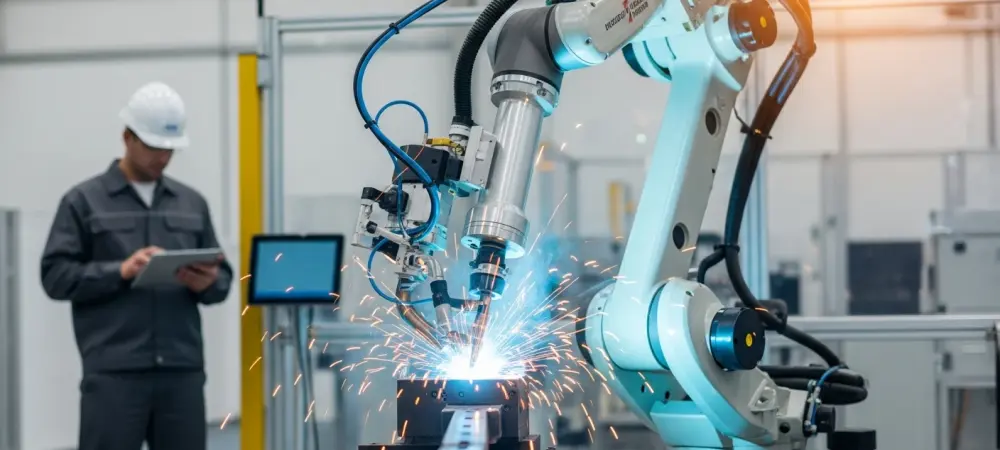
The technical core of these machines lies in a vertically integrated model where every component, from the mechanical chassis to the proprietary control software, is developed in-house. Raedbots has introduced the concept of “Physical AI,” a specialized branch of artificial intelligence designed to govern hardware in high-precision environments. These systems are capable of managing complex tasks such as welding and CNC machine tending with a level of accuracy that matches or exceeds traditional standards. By utilizing proprietary control systems, the company eliminates the need for expensive third-party software licenses that often bloat the operational budgets of modern factories. These machines are versatile enough to handle diverse applications, including intricate material handling, rapid packaging, and complex warehouse logistics. The hardware is specifically tailored to the unique environmental and operational demands of regional factories, ensuring longevity in varied climates and conditions.
Strategic Alliances: Specialized Expertise and Support
The credibility of this homegrown movement is bolstered by high-level collaborations with global technology leaders and national institutions. As a member of the NVIDIA Inception program, Raedbots utilizes cutting-edge simulation and AI infrastructure to refine how its robots execute autonomous tasks in real-time. This partnership allows for the creation of digital twins, where robotic movements are perfected in a virtual environment before a single motor turns on the factory floor.
On the national front, the company’s alignment with the Technology Innovation and Entrepreneurship Center (TIEC) under Egypt’s Ministry of Communications and Information Technology validates its role in the “Designed and Made in Egypt” initiative. The engineering team consists of veterans from world-class global corporations who bring rigorous technical standards to every deployment. This combination of local passion and global experience ensures that the technology remains at the forefront of the robotics industry.
Implementation Strategies: Frameworks for Local Manufacturers
Adopting local robotics requires more than just purchasing a machine; it necessitates a structured strategy to ensure safety and peak productivity. Raedbots provides a comprehensive framework for manufacturers to begin their digital journey by identifying high-repeatability tasks, such as packaging or material handling, as the first candidates for automation. By starting with these high-impact areas, factories can see immediate improvements in throughput and a reduction in manual error.
To further enhance the human-robot workflow, the focus is shifting toward the integration of collaborative robots, or cobots. These machines are designed to work alongside human operators, taking over strenuous or repetitive tasks while allowing workers to focus on quality control and creative problem-solving. This symbiotic relationship on the factory floor proved to be the most effective way to modernize without displacing the essential human element of the manufacturing process.
As the first domestic deployments reached their full operational capacity, the regional manufacturing landscape began to stabilize around a more resilient, tech-driven foundation. Industry leaders moved beyond simple automation toward a future of predictive maintenance and adaptive manufacturing. The success of these initial systems confirmed that local engineering could meet global standards, paving the way for a more self-reliant and technologically advanced industrial sector across the continent.